Under sustained write loads, the 1TB iPhone 18 Pro Max averages just 79.4 MB/s. It can fall as low as 25.6 MB/s, speeds that HOMOLAB’s FIO tests, summarized by multiple outlets including Android Headlines, characterize as slower than many budget microSD cards.
For a flagship device priced well above $1,500, that result demands explanation. It comes down to one decision Apple reportedly made on storage hardware: QLC flash.
QLC packs more storage density per cell than TLC, but it trades write speed and endurance to get there. At this price point, that trade-off carries real consequences for the right buyer.
How the Cache Cliff Works
The phone routes every write through three stages before QLC becomes the bottleneck, and the slowdown stays hidden until those buffers run out.
First, a fast SLC cache absorbs incoming data. Then a secondary buffer that behaves closer to TLC flash takes over. Finally, once both are exhausted, raw QLC writes begin, according to HOMOLAB’s testing as summarized by Android Headlines.
For everyday tasks, that layered system is invisible. Short bursts of data, such as a photo upload or a downloaded podcast, never push past the SLC layer, so most users will not encounter the slowdown.
The Fill-Level Problem
The performance picture worsens considerably as the drive fills, shrinking the fast cache and exposing the raw QLC floor.
At 60% capacity, the SLC cache reportedly shrinks from roughly 250GB to just 58GB. The TLC-like buffer slows to 396 MB/s, and raw QLC writes average 45 MB/s, per Android Headlines’ coverage of the HOMOLAB results.
The floor at that fill level: 1.1 MB/s. Independent testing confirmed that figure across multiple FIO runs, per Android Headlines. A 1TB iPhone 18 Pro Max at 60% capacity can, under sustained write pressure, move data more slowly than a mechanical hard drive from the mid-2000s, which typically sustained sequential writes in the range of tens of megabytes per second.
Where the Slowdown Actually Hits You
HOMOLAB’s direct comparison between the QLC and TLC models puts concrete numbers behind what most benchmarks only hint at.
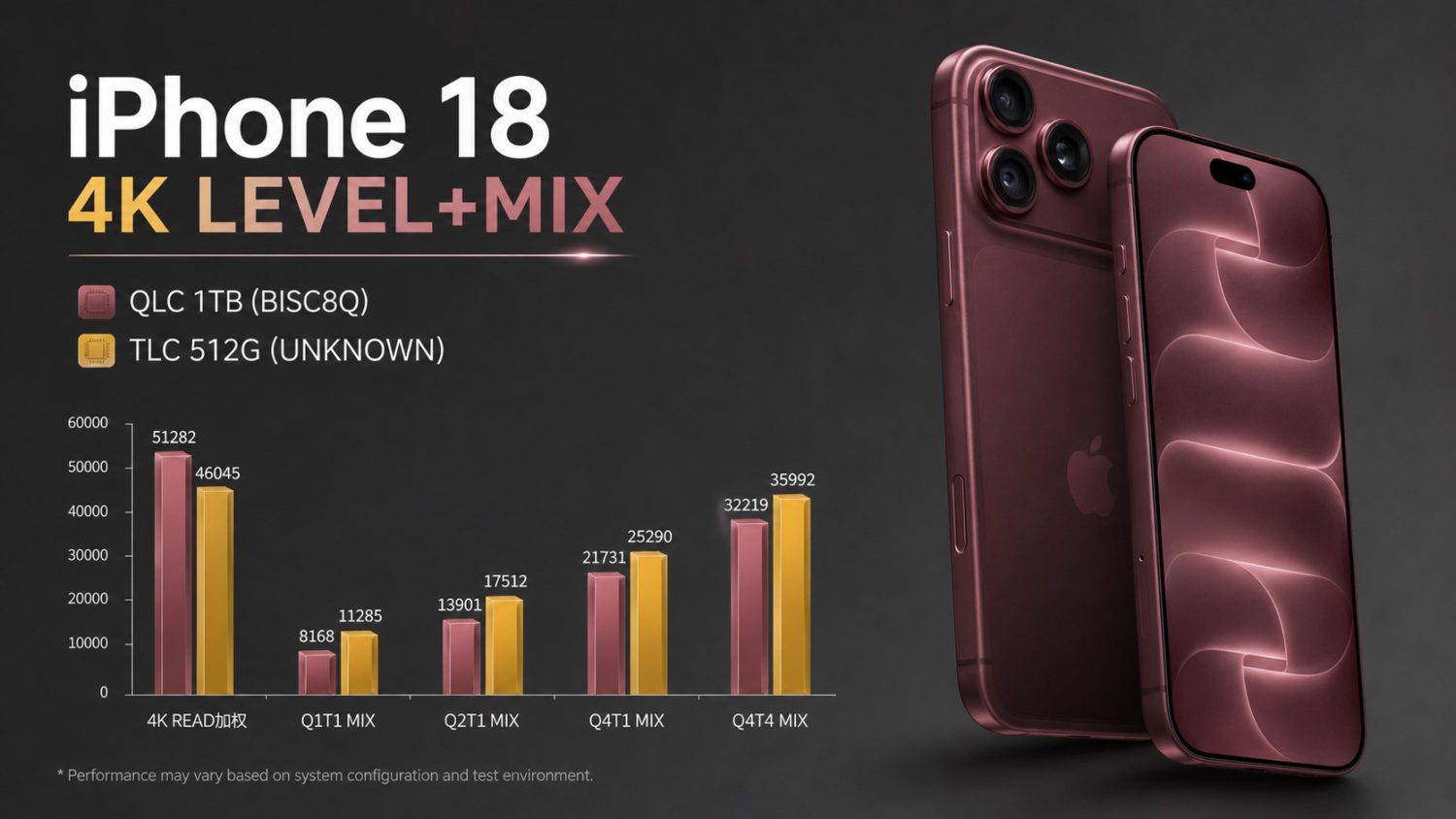
HOMOLAB’s head-to-head between the 1TB QLC iPhone 18 Pro Max and the 512GB TLC iPhone 18 Pro shows a clear gap. Weighted 4K read scores came in at 46,045 for the QLC model versus 51,282 for the TLC version, as reported by Android Headlines.
Mixed workloads favor the TLC model by roughly 38% at low queue depth and around 12% under heavier load. Those gaps are not catastrophic for most tasks, but they become consequential for specific ones.
Video professionals shooting long 4K or ProRes clips are the most likely to exhaust the cache. Users transferring large file archives or restoring sizable backups face the same risk.
Social media use, web browsing, and photo bursts stay well within the cache’s comfort zone and should see no meaningful impact. The question worth asking before purchase is whether your workload regularly pushes past that SLC layer.
The 1TB model exists because buyers genuinely need that capacity, and QLC is how Apple reportedly delivers it at this size. The storage tier used to hit that number carries a measurable cost when the cache runs dry. That cost falls hardest on the creators and professionals most likely to fill a 1TB phone in the first place.