




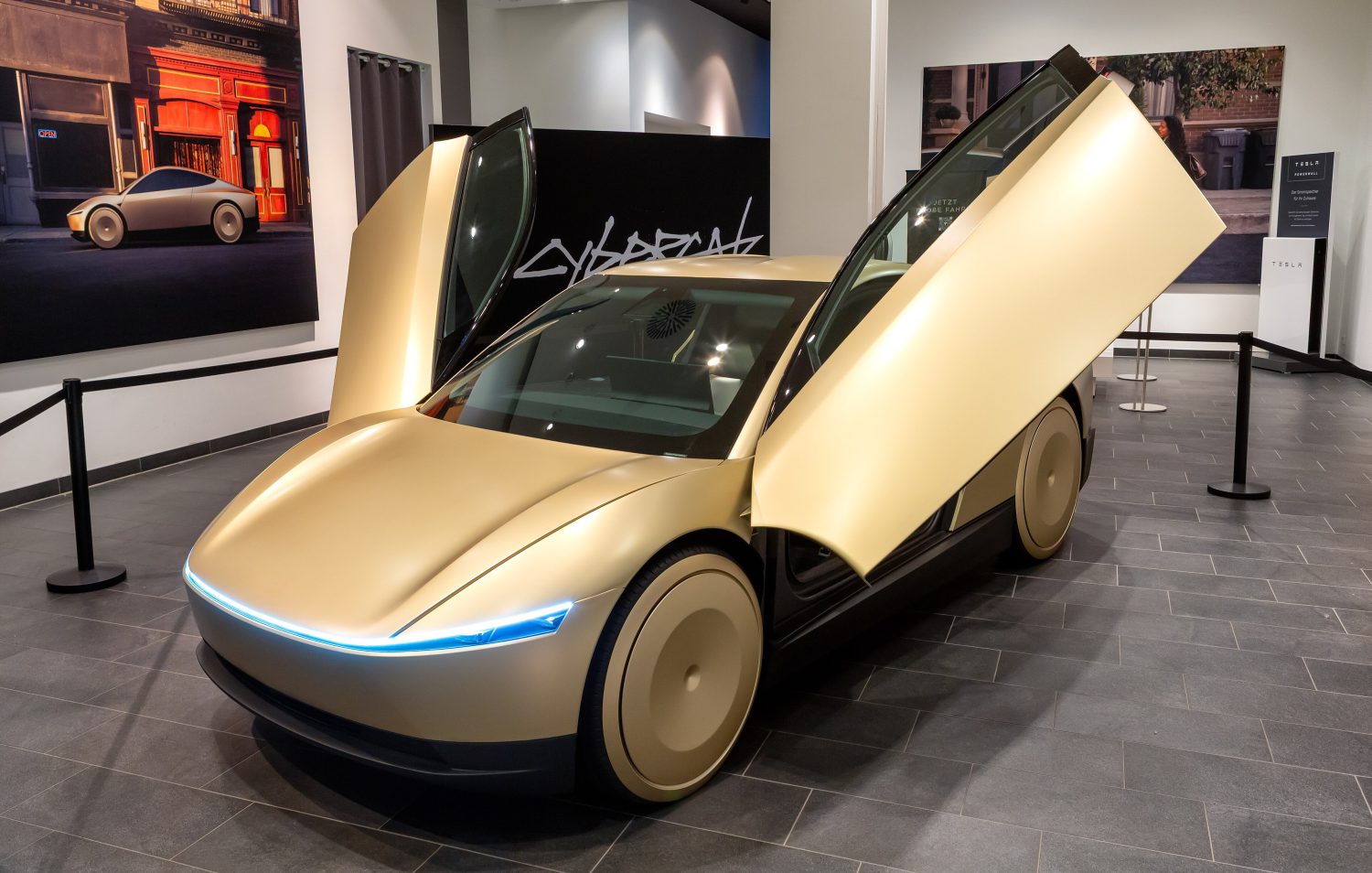
A gold driverless taxi rolls down an Austin street, a man steps directly into its path, and the car stops cold while every other vehicle navigates around it. No hack, no signal interference, no technical expertise required.
The Cybercab has no steering wheel, no manual override, and no driver to inch impatiently forward. The person with the most operational control over a Tesla robotaxi, it turns out, may be whoever is standing in front of it.
What Actually Happened
One content creator’s roadside experiment exposed how easily a driverless car can be brought to a standstill.
David Moss, a Tesla owner and content creator, documented himself repeatedly jumping into a Cybercab’s path on a public Austin road, according to reporting by Yahoo News. The vehicle braked hard each time, eventually stopping with hazard lights activated while human-driven cars routed around it.
Analysts and commentators who reviewed the footage called the stunt “incredibly stupid and dangerous,” noting it unfolded on an open road with other vehicles present. Moss’s motivation, beyond documenting the car’s response, was not reported.
A Flaw Built Into the Feature
The Cybercab did exactly what it was supposed to do, and that is precisely the problem.
The Cybercab behaved correctly. That is the uncomfortable part.
Its pedestrian-safety logic executed exactly as designed, and one person with no technical background exploited it completely. As one widely cited comment on X, quoted via Yahoo News, put it: “Robotaxis definitely face a huge issue with people intentionally stopping a car… the ability to evade someone attempting to harm the vehicle or especially the passengers is likely a design flaw.”
Scale that threat outward. If one person can freeze one car, a coordinated group can freeze a fleet. No software patch resolves a human body standing in the road.
This is a denial-of-service attack measured in footsteps, not data packets. Commentators cited by The Last Driver License Holder noted that robotaxis reportedly “magnetically attract” this kind of testing, with people treating them as challenges rather than heavy machinery operating on public streets.
The Waymo comparison is instructive. During 2025 anti-ICE protests in Los Angeles, demonstrators smashed and burned at least six Waymo vehicles, according to Fortune. The company suspended service in affected areas. Physical interference with robotaxis is not new; obstruction simply lowers the barrier to entry from a brick to a body.
It’s easy to imagine a Tesla protest with 50 people intentionally stopping 50 Cybercabs. Or protesters deliberately blocking an autonomous fleet.
What Comes Next
Regulators are already watching a fleet accumulating incidents, and the options for responding are constrained by the same logic that created the problem.
NHTSA has already opened an investigation into Tesla’s Cybercab deployment in Austin, according to Yahoo News. Early incident reports from Austin include collisions with trees, poles, buses, and trucks. Regulators are watching a fleet accumulate incidents at pace.
Tesla’s own rider documentation assumes that other road users follow traffic laws. According to Tesla’s support materials, there is no publicly documented contingency for sustained, deliberate pedestrian obstruction beyond stopping and activating hazard lights.
The mitigation options are constrained by the exact safety logic that created the vulnerability. Making the car more assertive around pedestrians risks injuring them, which produces a regulatory outcome far worse than a delayed ride. The broader cost calculus around electric and autonomous vehicles only adds complexity to those tradeoffs.
Cities and operators may need new legal frameworks specifically targeting intentional AV interference. Coordination with local police is a path Waymo began navigating after its Los Angeles vehicles were attacked.
The car stopped because stopping was right. The question regulators, operators, and city planners now have to answer is what happens when doing the right thing becomes the exploit.


















