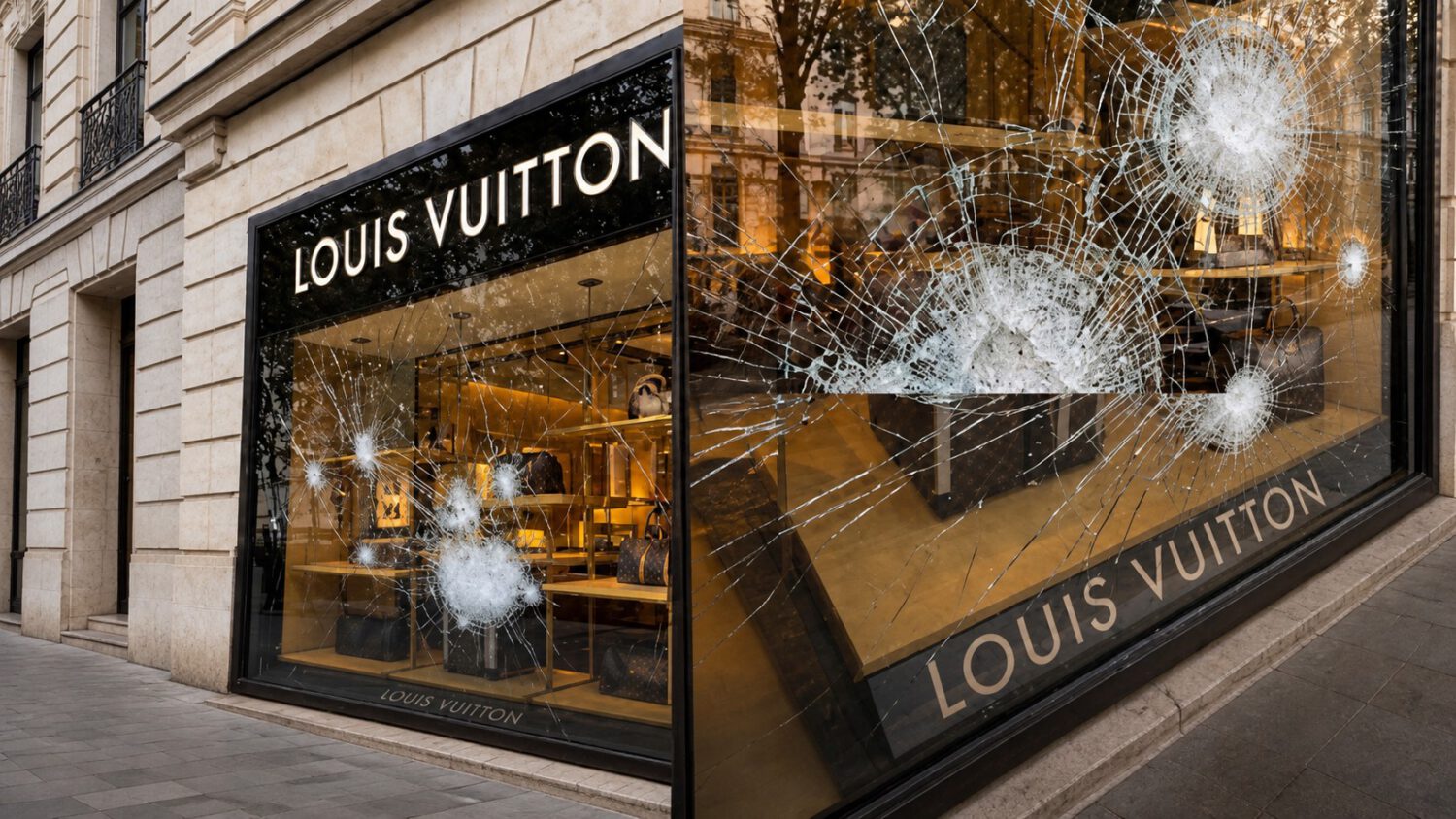
Somewhere in France, a storefront window took a beating and refused to give. Kicks, bricks, and repeated heavy blows left the pane extensively cracked but, according to widely circulated footage, it held its position and prevented entry.
A Chinese glass supplier noticed. Hengxinfeng Special-Glass Co. Ltd., based in Henan province, reportedly reposted or circulated the clip to promote what it calls “unbreakable” windows. The video spread, and so did the questions.
The Footage and What It Actually Shows
The clip is dramatic, but what it actually demonstrates is more limited than the promotional language suggests.
The footage shows a window absorbing sustained punishment. Cracks spider across the surface in striking fashion, yet the pane appears to remain intact as a barrier.
That distinction matters. Security-oriented glazing, such as laminated glass, is engineered to crack while keeping fragments bonded together. That design delays or prevents penetration; it does not prevent all visible damage.
“Held in place” and “unbreakable” are not the same thing. The footage does not confirm either description in any technically verified sense.
A pane that survives repeated strikes can still be structurally compromised. It may require assessment and possible replacement after an attack, even if it never fully yielded.
The Claims vs. The Evidence
Neither the “unbreakable” label nor the “bulletproof” characterization is supported by disclosed specifications or independently verified test results.
Hengxinfeng has not publicly disclosed the composition, thickness, or test certifications of the product it promotes. The “bulletproof” label that circulated alongside the footage remains unverified. No independently confirmed technical rating supports it.
There is also no confirmed link between Hengxinfeng and the specific window shown in the video. The company reportedly circulated the footage, but whether it manufactured or installed that particular pane has not been established. The connection between Hengxinfeng’s promoted product and the Louis Vuitton Place Vendôme window that was widely referenced in reporting is similarly unconfirmed by independent sources.
If you were evaluating this product for a retail or architectural application, a viral clip would get you interested. It would not get you to a purchase decision. Proper assessment requires controlled tests covering impact energy, penetration resistance, repeated-strike performance, and frame and anchor integrity, along with compliance with recognized security-glazing standards such as EN 356. The footage provides none of that. Learn more about protecting your home with complementary security options.
Opportunistic Marketing, Undeniable Reach
The company’s approach is a case study in how real-world footage can outperform a controlled product demonstration in reach and credibility.
Separate from whether the window is actually theirs, what Hengxinfeng reportedly pulled off is worth examining on its own terms. The company circulated real-world footage of apparent performance under genuine stress rather than commissioning a conventional product demonstration. The approach mirrors any case where unscripted footage generates more attention than a staged trade-show presentation.
The footage is visually compelling and consistent with how security glazing is designed to behave. Whether it reflects Hengxinfeng’s specific product, or any product with verified performance credentials, remains an open question.
Retailers, architects, and security professionals watching that video should treat it as a starting point. Verified test certificates, material specifications, installation requirements, and warranty terms are what convert a striking clip into a credible purchasing decision.