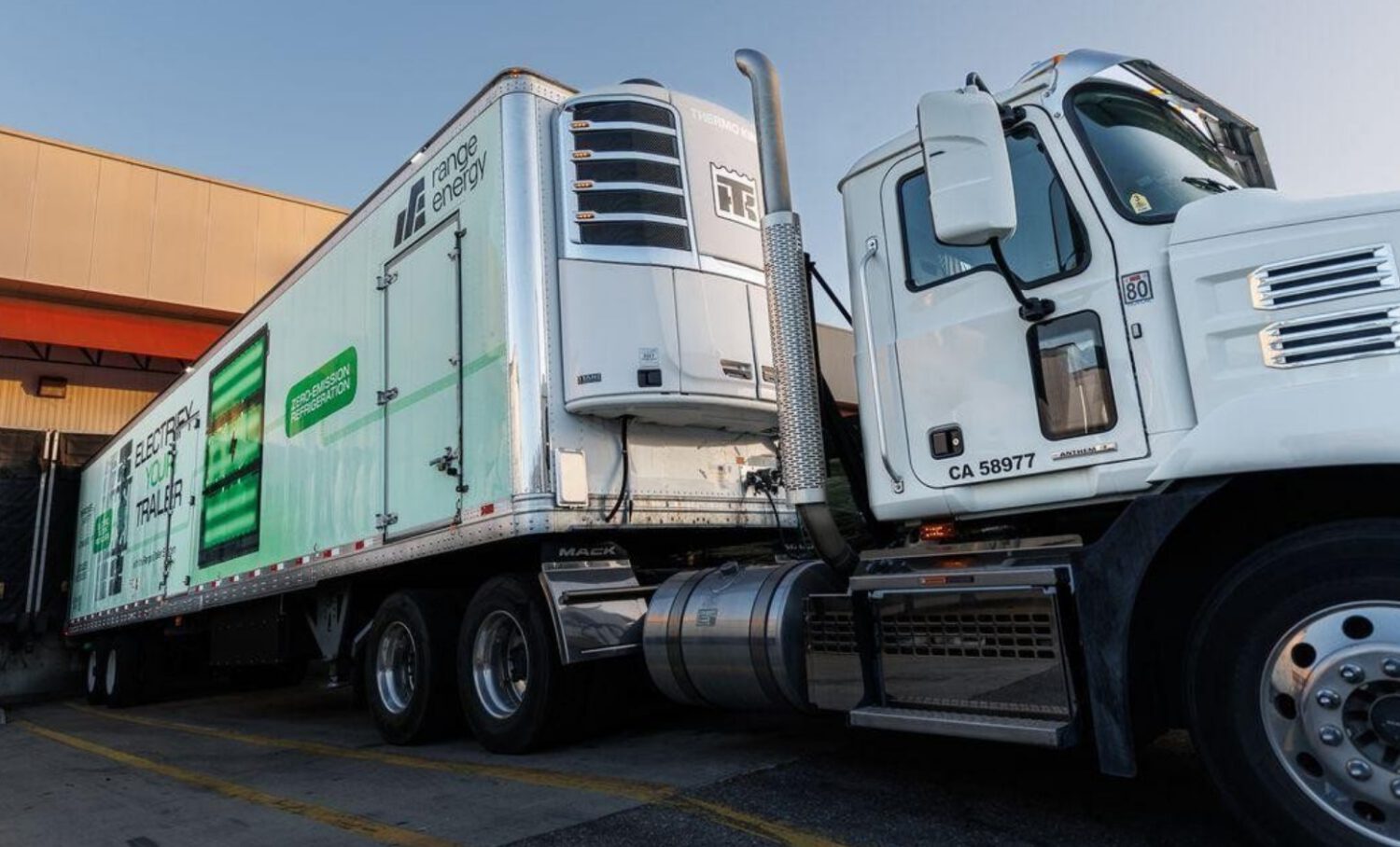
Plenty of fleet operators are sitting on diesel tractors with years of useful life remaining. Replacing them with diesel vs electric trucks means new equipment, new charging infrastructure, and a significant capital commitment before the first load moves. Range Energy’s eTrailer proposes a different path: leave the tractor alone and electrify the trailer instead. The company released a white paper on October 26 laying out its case, though production deliveries are not scheduled until late 2027.
How the eTrailer Works
Batteries and motors built into the trailer assist propulsion and can power the refrigeration unit, all without modifying the tractor.
Batteries and electric motors built into the trailer drive the trailer’s own wheels, reducing the load on the diesel engine. For refrigerated operations, the trailer battery also supplies the reefer unit, reducing or replacing the reefer’s dedicated diesel engine while sufficient charge remains. If the battery depletes mid-route, the tractor continues on diesel, with no tractor modifications required, according to Range.
The Numbers, and Their Limits
Range’s 36.5% tractor fuel reduction figure carries important conditions that fleet operators should understand before drawing conclusions.
On miles where the trailer provided assistance, tractor fuel savings dropped 36.5%, according to Range. That figure comes from selected pilot data covering 43 qualifying days across six companies; it applies only to days when the trailer delivered assistance for the full operating period, and it does not include the separate diesel savings from powering the reefer electrically. It has not been independently verified across varied commercial routes and conditions.
Range then modeled 1,000 operating scenarios, varying diesel prices, electricity costs, charger installation expenses, insurance, and resale values. In 61% of those scenarios, the eTrailer produced better financial results than a Tesla Semi paired with a depot charger. This is a company-produced simulation, not an independent fleet-cost study.
“Fleets need to see the most fuel savings for every dollar they invest, with equipment that fits how they already operate, yet the path off diesel has largely been framed as a choice between staying put and buying a new electric truck.” Kyle Foley, CEO, Range Energy.
Infrastructure Costs: Where the Gap Gets Wide
Range’s modeled installation cost for an eTrailer charging setup is roughly one-tenth that of the Tesla Semi depot-charger configuration used in its analysis.
Range estimates a typical eTrailer charging installation at approximately $5,200. The Tesla Semi depot-charger configuration in Range’s model carries an average installed cost of roughly $51,500. Range’s model also assumes existing depot power can support approximately eight eTrailers before additional utility service is needed, compared with about three Semis. Real-world infrastructure costs vary by site, and those assumptions drive the comparison significantly.
Seven-Year Returns, With Caveats
Range’s seven-year model shows a modest diesel-avoidance advantage for the eTrailer, but that edge narrows when key assumptions change.
Over seven years, Range estimates the eTrailer avoids 387 gallons of diesel per $1,000 invested, compared with 358 gallons for the Tesla Semi configuration. Both configurations reached payback in under six years under the base case. Those figures shift when charger sharing, vehicle replacement timing, and available incentives are modeled differently.
What Tesla Offers Instead
Tesla’s approach replaces the diesel tractor entirely, with charging capacity that far exceeds the eTrailer’s dock-charging setup.
Tesla’s official business charging options reach up to 1.2 MW for depot configurations. Range’s trailer retrofit preserves the existing tractor but layers electrification onto the trailer rather than eliminating the diesel powertrain. The central question for fleet operators is not purely which option burns less diesel; it is whether lower initial disruption is worth more than the long-term benefits of full tractor replacement, and that answer depends on fleet age, route profiles, and available capital.
Still Two Years From Commercial Proof
Production deliveries are not scheduled until late 2027, leaving the reported savings and financial comparisons grounded in pilot data and modeling.
Until commercial fleets run production units across varied routes, payloads, and climates, the 36.5% reduction and Range’s modeled financial comparisons remain projections built on pilot data and company assumptions. Independent fleet results will determine whether those numbers hold in the real world.