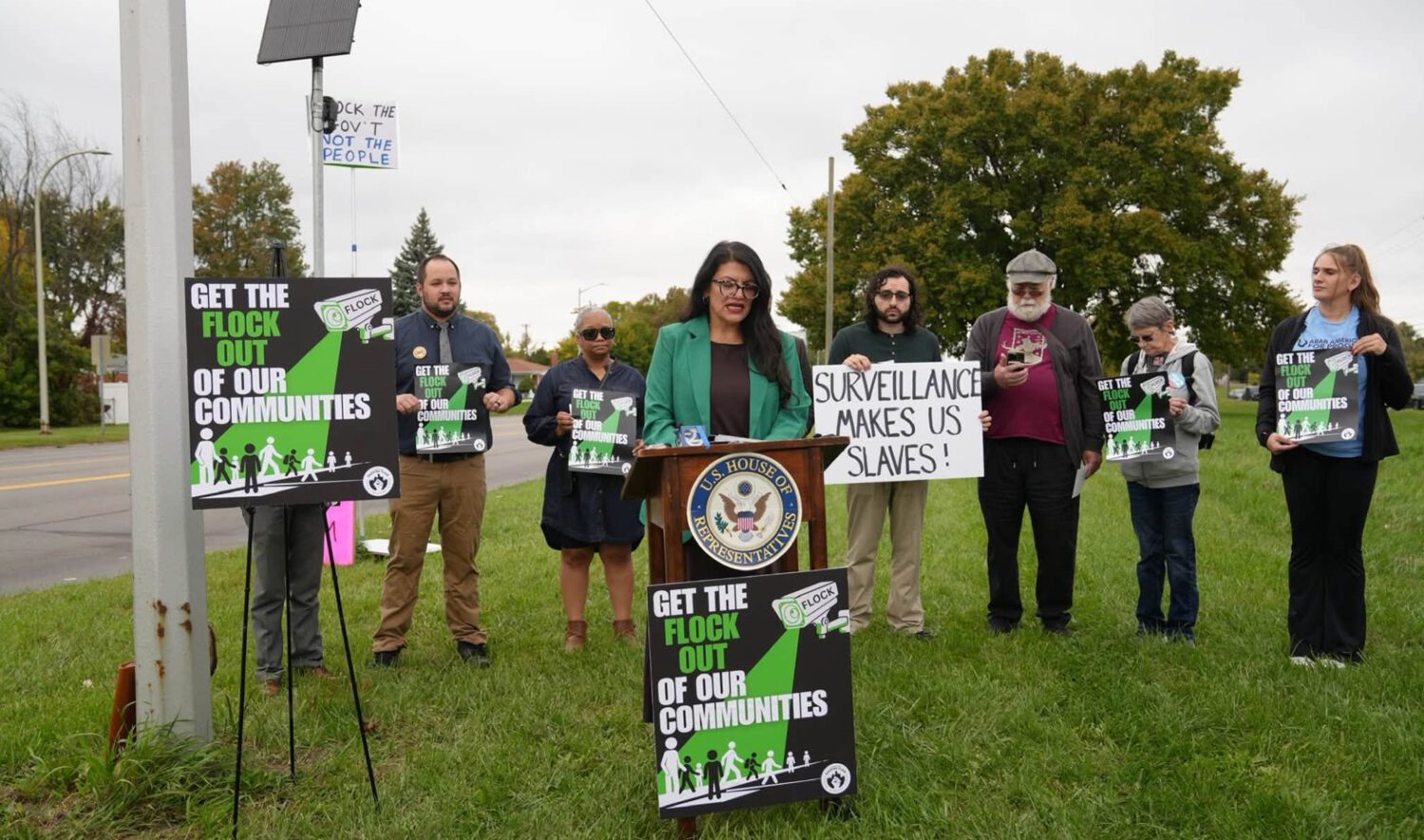
A camera sits on an unremarkable road in your town. It reads your plate, logs the time, notes your direction, and files that data into a searchable database accessible by agencies you may never have heard of. Flock Safety’s license plate reader network operates in thousands of communities across the United States, and law enforcement agencies say the system helps locate stolen vehicles, missing people, and crime suspects. Privacy advocates say it does something else entirely: it logs the movements of everyone, not just suspects.
How the System Works
Flock is not a conventional security camera; it captures and stores plate data in a searchable, shareable cloud system that can reach well beyond the agency that installed it.
Flock reads passing plates and stores the resulting data in a cloud-based system. Authorized users can search and share that data across jurisdictions. A single city’s network can be accessed by hundreds of outside agencies, sometimes without the host city’s full awareness.
Cameras record vehicle sightings at fixed locations, not continuous movement. Those sightings can be assembled retrospectively to reconstruct where a vehicle traveled over days or weeks. Pflugerville, Texas illustrated how data control can fail: a review found hundreds of outside agencies had unauthorized access to the city’s Flock data, according to the Institute for Justice, and authorities responded by shutting down and physically covering the cameras.
Documented Misuse and Harm
More than 200 reported incidents in a national database show how access to plate-reader data has been turned against private individuals.
More than 200 ALPR misuse incidents appear in the Institute for Justice database, ranging from stalking and wrongful stops to unauthorized data access and non-law-enforcement searches. The IJ database covers automated plate readers broadly, and the misconduct cataloged there has affected real people in concrete ways. A parallel pattern of abuse is visible in how a surveillance app was built to target individuals based on their associations.
In Lufkin, Texas, a local officer was indicted on 100 felony counts after allegedly conducting more than 10,000 searches targeting an ex-girlfriend and people connected to her, according to the Institute for Justice database. Verify the precise search total against the indictment before publication, as figures in secondary reporting have varied.
Immigration enforcement has also surfaced in connection with the data. Florida state police conducted more than 250 Flock-related searches between March 13 and May 5, 2026, around the period of Operation Tsunami. That operation resulted in more than 1,100 arrests, according to reporting by the Suncoast Searchlight and relayed by El País; the available reporting does not establish that Flock data directly caused those arrests.
The Political Response
Opposition to Flock cameras has cut across partisan lines, producing proposed bans, funding suspensions, and federal legislation from both parties.
In Pennsylvania, Democratic Governor Josh Shapiro and Republican candidate Stacy Garrity have both supported banning the cameras, according to reporting by PBS NewsHour. In Wisconsin, Republican Tom Tiffany has proposed suspending state funding and forming a task force to address privacy protections, misuse penalties, and data-retention rules.
Florida Governor Ron DeSantis ordered automated license plate readers removed from state highway rights-of-way. At the federal level, Senator Bernie Sanders announced plans to introduce legislation targeting Flock and AI-driven mass surveillance. Concerns about secretly tracking users have amplified calls for such oversight across the political spectrum. Flock Safety has said publicly that it supports bipartisan legislation establishing privacy, transparency, and accountability protections, while describing its goal as preserving responsible law-enforcement use.
That stated support for regulation has not resolved the core dispute. Warrants for historical searches, retention limits, cross-agency sharing rules, mandatory audits, and meaningful penalties for misuse all remain open policy questions. When a Flock camera successfully captures a vehicle, the resulting record may enter a searchable database controlled through agency and vendor policies that you have no direct access to and no ability to change.