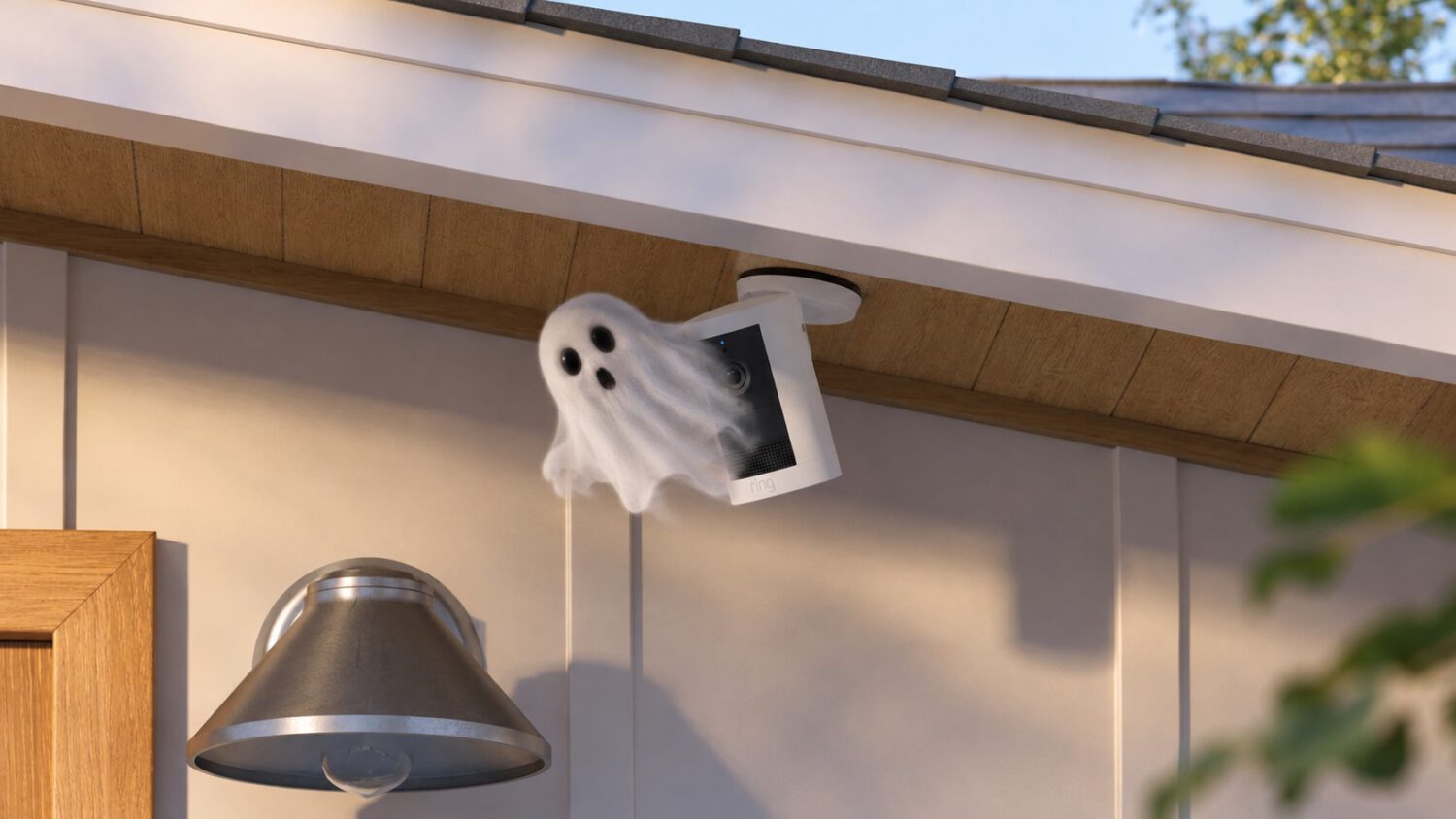
Before the first trick-or-treater reaches your porch, Fight for the Future wants you to turn off your surveillance app or cover the lens entirely. The digital-rights organization published a Halloween advisory on October 29, 2025, recommending that Ring owners take the device offline for the night.
Halloween brings children, families, and neighbors in front of residential cameras in unusually high numbers, most of whom have no meaningful say in being recorded. Fight for the Future argues, as a matter of privacy advocacy, that keeping those cameras running extends Ring’s surveillance infrastructure into one of the year’s most public neighborhood moments.
The Advisory: What Fight for the Future Recommends
Fight for the Future is urging Ring owners to disable or cover their cameras before trick-or-treaters arrive, and to take longer-term steps to limit participation in Ring’s data-sharing ecosystem.
Fight for the Future’s recommendation for Halloween night is direct: disable the camera or physically cover it before anyone arrives at your door. The organization frames this as a precaution against footage of trick-or-treaters, families, and neighbors being collected and potentially included in law-enforcement requests.
Beyond October 31, Fight for the Future recommends that Ring users activate end-to-end encryption in the Ring app as an interim measure. Users can also turn off Community Requests in the Ring app’s settings, a separate control that limits how local law enforcement can seek footage directly through the platform.
For those unwilling to accept the broader risks the organization identifies, its guidance goes further: replace Ring cameras with home security systems that operate outside Ring’s law-enforcement data-sharing ecosystem. All of these positions are Fight for the Future’s advocacy recommendations, not independently established findings.
The Canceled Partnership That Sparked the Debate
Ring and Flock Safety announced a planned integration that drew intense scrutiny before Ring canceled it in February 2026, before the system ever went live.
Ring and Flock Safety announced a planned integration connecting Ring’s Community Requests feature with Flock’s AI-powered camera network. Ring canceled the integration before it ever became operational. According to Ring, the project required more time and resources than anticipated, and no Ring customer videos were sent to Flock at any point.
Ring’s Super Bowl promotion of its “Search Party” search capabilities had already drawn significant criticism before the cancellation, according to reporting, putting the company’s Flock problem under sharper public scrutiny.
What Ring’s Existing System Actually Does
Federal access is where Ring draws its clearest line, but the company’s Community Requests feature for local law enforcement remains fully operational.
The canceled Flock integration is gone, but Ring’s Community Requests feature remains active. Local law-enforcement agencies can use Ring’s Neighbors platform to request footage connected to an active investigation, and users retain the right to decline or ignore any request they receive.
Ring says it has no partnership with ICE and does not provide ICE with Ring videos, footage feeds, or back-end system access. Ring also states that federal agencies, including Immigration and Customs Enforcement, are not permitted to submit Community Requests directly. Flock Safety similarly denies holding a direct contract with ICE or any Department of Homeland Security subagency, and states that ICE cannot directly access its systems.
Reporting has linked Flock’s broader camera network to immigration-enforcement activity through local law-enforcement relationships, even without a direct ICE contract in place. Concerns have focused on local agencies that share data with federal investigators, not on any documented direct connection between Ring or Flock and ICE.
What Remains Unresolved
Turning off a camera reduces what gets collected on Halloween night, but the broader questions about neighborhood video and bystander consent extend well past October 31.
Disabling your camera for the evening is intended to reduce what gets recorded that night. Whether the people captured in neighborhood footage have any meaningful say in how it is used remains an open policy question, one that no single Halloween advisory can fully resolve. secretly tracking users through app-level data collection raises similar questions that extend beyond any single night or platform.