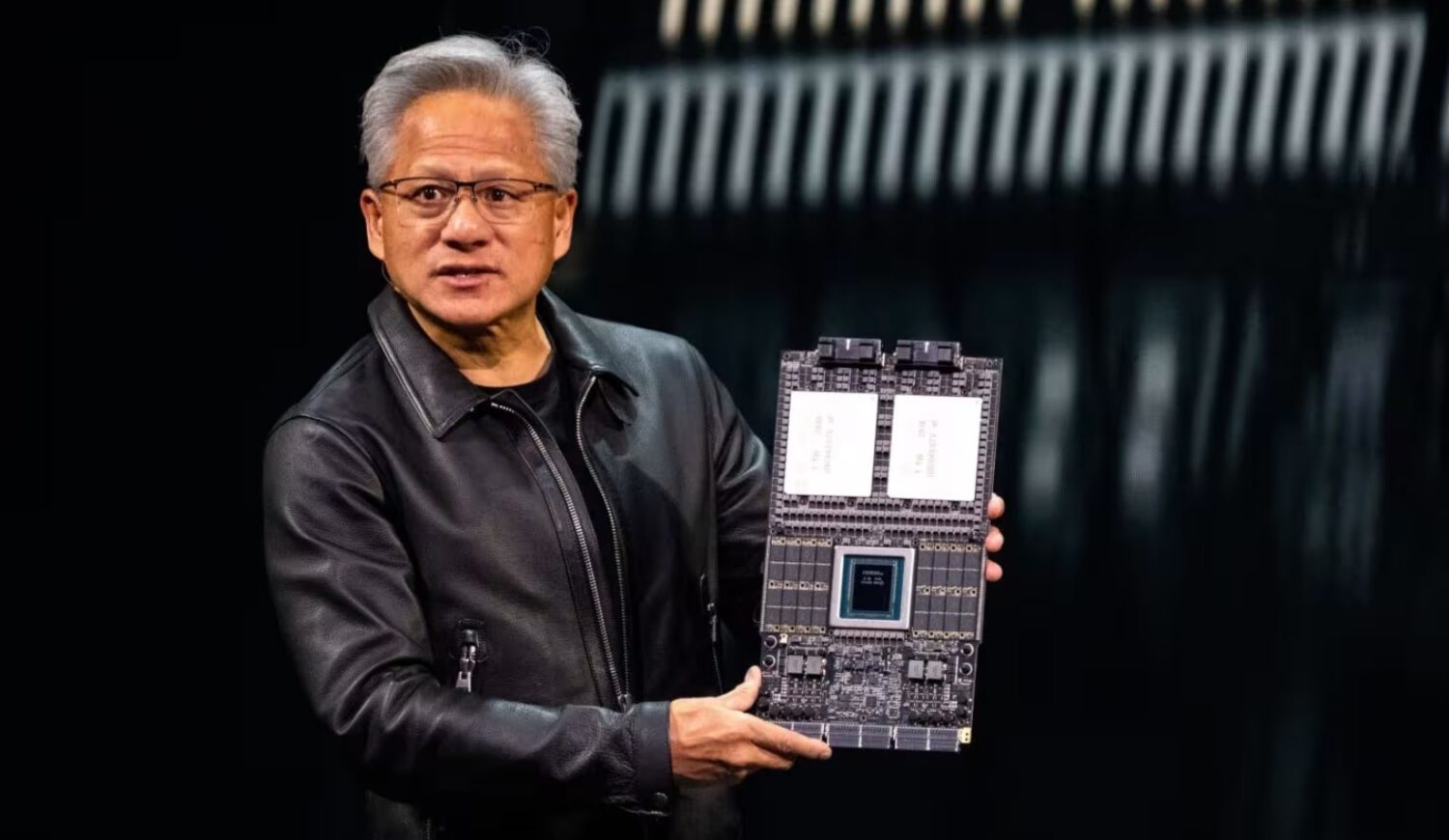
Nvidia’s GPUs cost tens of thousands of dollars per unit, depending on configuration and vendor. Now CEO Jensen Huang is floating an annual software fee on top of that hardware cost, using $2,000 per GPU per year as an example figure. Before enterprises start modeling that into their budgets, one clarification matters: Nvidia has not confirmed this as an actual price, a product announcement, or a timeline.
Treat it as an illustrative number until Nvidia says otherwise.
A Price Point Without a Price Tag
Huang raised the figure at GTC Berlin, but the terms behind it remain undefined.
Huang mentioned the $2,000-per-GPU-per-year figure at GTC Berlin on October 22, describing it as an example cost for software that operates AI agents inside what Nvidia calls “AI factories,” its term for data centers built around AI development and deployment.
Nvidia has not said when such a fee would take effect, which products it would cover, or which customers it would apply to.
Nvidia Already Has a Software Subscription. It Costs More.
The proposed figure is lower than existing AI Enterprise tiers, yet Nvidia has not explained the relationship between them.
Nvidia’s AI Enterprise subscription already lists at $4,500 per GPU for one year, including support. The five-year subscription works out to $3,600 per GPU annually, based on the listed $18,000 five-year price.
The proposed $2,000 figure sits below both existing tiers. Nvidia has not explained whether this new fee would replace AI Enterprise, run alongside it, or target a different use case entirely.
Customers already paying $4,500 per GPU per year will want that answer before any conversation about a second subscription begins.
OpenShell Is the Software Nvidia Wants to Charge For
The OpenShell Reference Architecture, announced the day before Huang’s remarks, illustrates the full-stack software layer behind this pricing discussion.
Nvidia announced the OpenShell Reference Architecture on October 21, one day before Huang’s remarks. It combines Vera Rubin infrastructure for AI workloads, Vera CPUs for agent operations, OpenShell runtime isolation software, and BlueField-4 DPUs running Nvidia Sentry.
Sentry monitors agent behavior from a hardware-isolated domain and can quarantine an agent within milliseconds when it detects a policy violation.
The architecture positions Nvidia’s software as part of the infrastructure required to deploy and govern autonomous agents. Whether the proposed $2,000 fee specifically covers OpenShell, Sentry, or the full reference stack is something Nvidia has not publicly established.
What the Numbers Mean for You
The revenue math is significant, but the fee’s scope, definitions, and final terms are still unresolved.
The arithmetic behind this model is straightforward. At $2,000 per GPU annually, one million licensed GPUs produces $2 billion in recurring revenue. Five million produces $10 billion. Nvidia has not disclosed how many GPUs it expects to license or what share of its deployed base would fall under the fee.
Nvidia also has not publicly explained how the proposed model would count GPUs, which becomes complicated with multi-die chips and integrated accelerator platforms. That ambiguity is exactly the kind of fine print that slows down enterprise contract negotiations.
Customers have real options. Nvidia itself describes OpenShell as open-source software, and a broader ecosystem of open-source agent runtimes exists. Cloud providers may bundle their own security tooling. Enterprises with negotiating leverage will push for discounts or clarification.
A clearly defined subscription, with a sharp boundary between what is and is not included, can justify a reasonable annual fee. Overlapping charges for overlapping products cannot. Until Nvidia publishes final terms, enterprises cannot evaluate whether $2,000 represents good value, a redundant cost, or something else entirely. Nvidia needs to define what the price buys, not just what the price is.