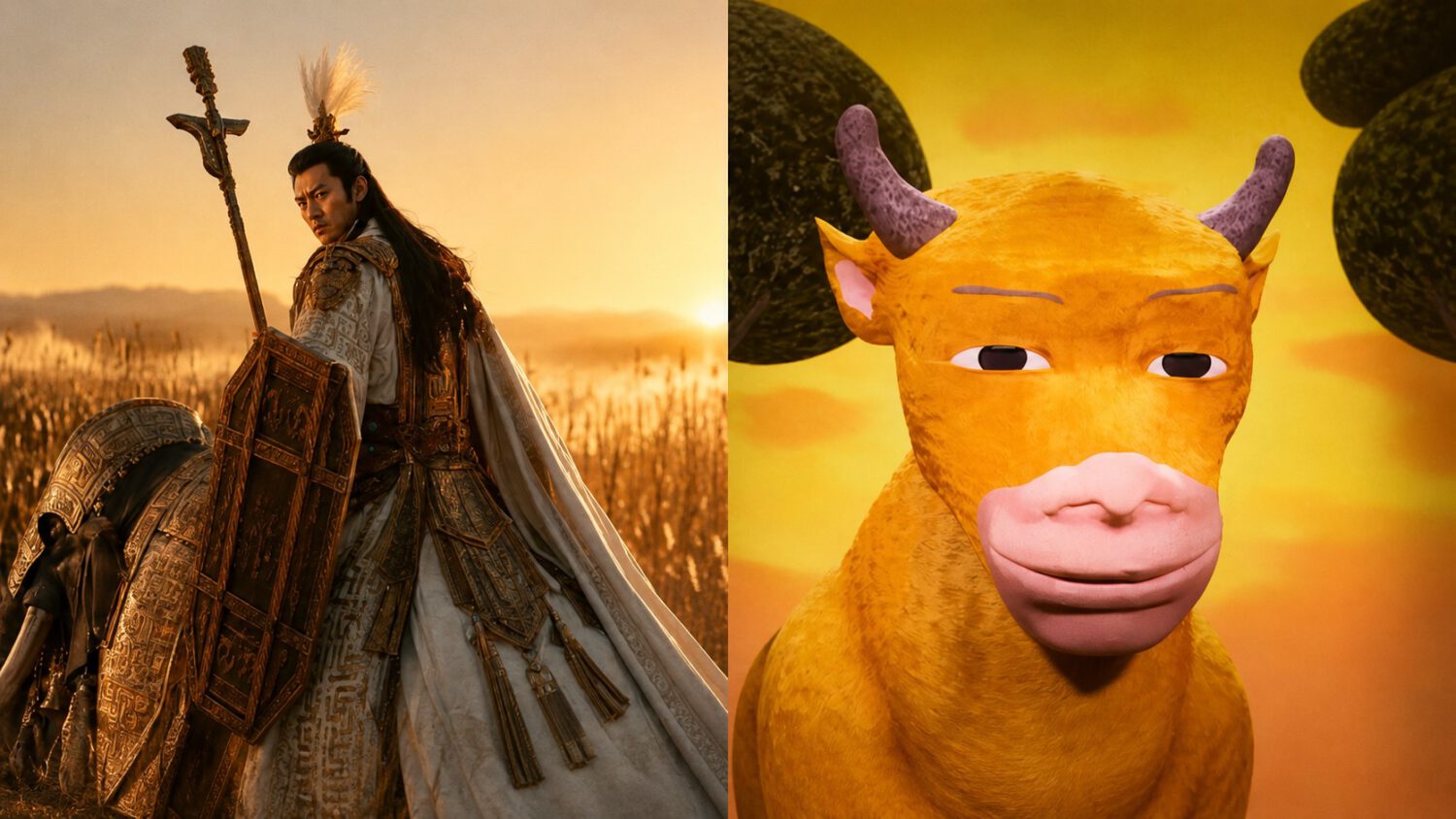
China’s first fully AI-generated theatrical film opened to more than 10,000 scheduled screenings on October 23, 2026. Presale revenue on that same day reached approximately 80,000 yuan, or roughly $11,980, according to AFP.
The film, Sanxingdui: Future Past, earned an estimated 1.21 million yuan (about $181,000) through the Monday following its release, according to figures cited by Cartoon Brew. Its reported production budget was more than 10 million yuan, approximately $1.5 million, per Bona Film Group via AFP.
That puts the reported gross at roughly 12 percent of production spend, before theaters, distributors, or marketing are counted. Those are interim box-office estimates, not final lifetime figures.
What the Film Actually Was
Sanxingdui: Future Past used AI for characters, voices, and backdrops across what AFP described as a fully AI-generated feature.
Bona Film Group’s production took more than two years to complete and involved nearly 100 people, according to AFP. The studio reported substantial use of AI across production elements, including actors, voices, and backgrounds.
The film was presented publicly as a production breakthrough. Whether it was also positioned as a story audiences had a particular reason to see is an interpretive question the available reporting does not fully settle.
The Numbers
Box-office estimates vary slightly by source and conversion rate, but the shortfall against the reported budget is not close.
Bona CEO Jiang Defu acknowledged the weak reception, according to AFP. He noted his team was the first to obtain a theatrical release permit for this category of film, per the same report.
That permit represents a regulatory milestone in China’s cinema-distribution framework. It does not offset operating costs.
The Niu Lai Contrast
A film reportedly made for less than $500 reached a reported gross of approximately 64.29 million yuan, nearly $10 million, according to Cartoon Brew.
Niu Lai, directed by Xin Yumeng and co-written with his mother, screenwriter Sun Lifang, was produced on a reported budget of $200 to $500, according to Vulture, though other coverage notes the figure was not officially confirmed. It used rudimentary 3D animation, widely characterized in reviews and reporting as stiff and roughly modeled.
The film earned approximately $1,150 in its first 10 days, according to Cartoon Brew. Clips then circulated online. Its reported gross climbed to approximately 64.29 million yuan, nearly $10 million, per Cartoon Brew’s figures as of late October 2026.
The comparison does not establish that crude animation outperforms AI-generated visuals as a production strategy. Niu Lai benefited from viral discovery, a near-zero financial break-even point, and an audience that found its roughness shareable, based on the reported trajectory.
What the Result Suggests
Audiences stayed home despite 10,000 scheduled screenings, which confirms that a technological-first label is not a sufficient draw, per Cartoon Brew’s analysis.
The result does not confirm that audiences broadly reject AI-generated imagery. One film’s interim box-office performance cannot establish a general audience attitude toward AI production.
What the evidence does support is that novelty alone did not sell tickets here. AI may reduce or restructure certain production costs, but theatrical performance still depends on story, marketing, distribution, and audience trust. That conclusion applies beyond AI filmmaking, though the Sanxingdui result gives it a concrete number to stand on.
What Comes Next
Studios weighing AI as a production cost-cutter now have one data point from the Chinese theatrical market. Revenue does not follow from cost savings if audiences stay home.
The question the available evidence cannot answer is whether a fully AI-generated film can succeed when the story leads and the production method is incidental.