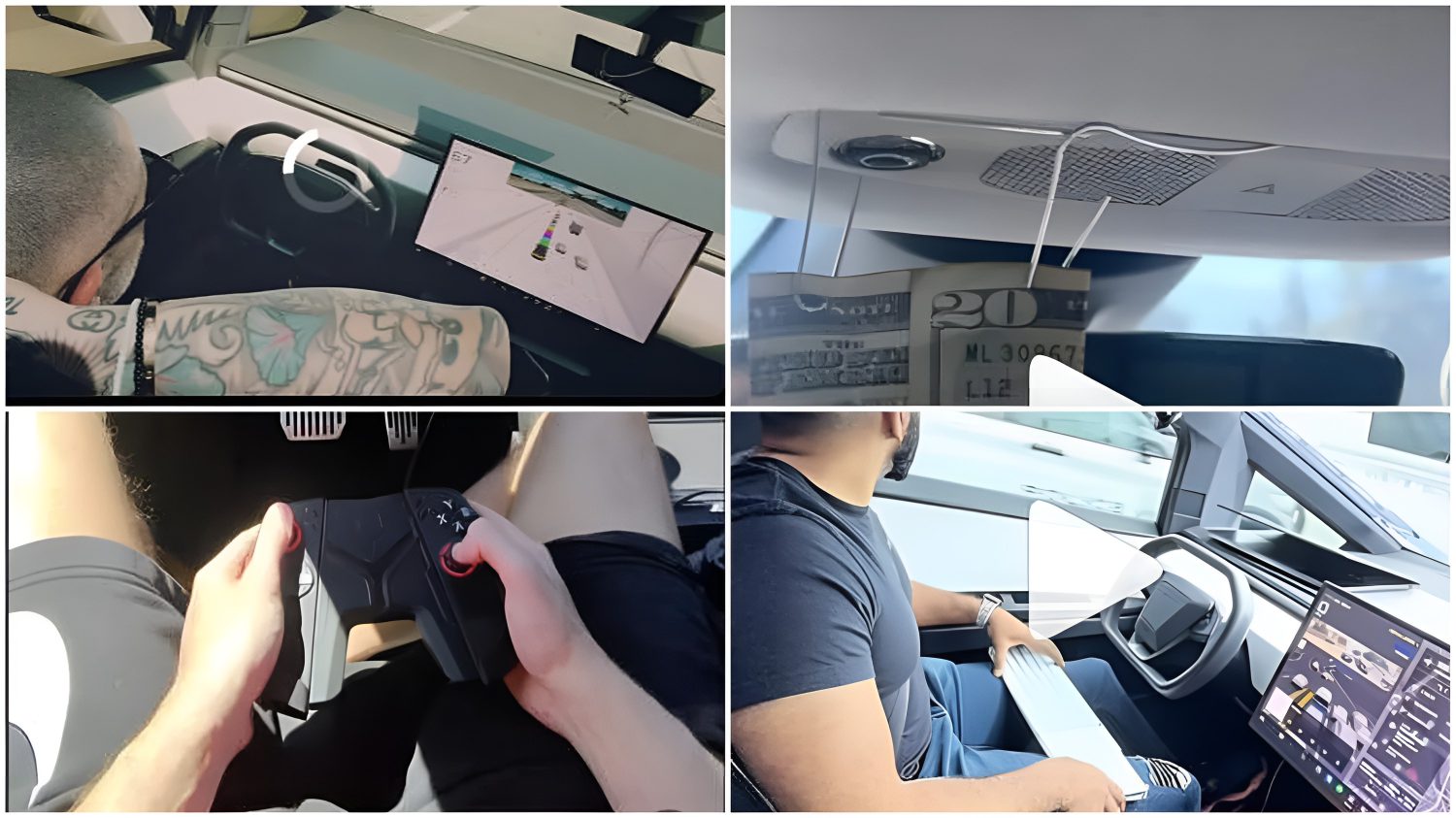
Fold a $20 bill. Cover the cabin camera. Film your driverless Tesla driving itself down the highway and post the whole thing to TikTok. This is where we are. A growing genre of social content shows Tesla owners defeating FSD‘s safety systems — weights on the steering wheel, objects over the eye-tracker, third-party dongles unlocking in-motion video — then posting the footage as proof of what their car can “really do.”
What it actually proves is something else entirely.
Tesla’s legal page is unambiguous: “You… are always responsible for the safe operation of the vehicle… and other traffic violations even when it is in use.” FSD (Supervised) is classified as Level 2 driver assistance — the same regulatory tier as adaptive cruise control. The branding says “Full Self-Driving.” The manual says you’re still driving. The content lives in that contradiction.
- FSD (Supervised) is legally classified as Level 2 driver assistance, not autonomous driving
- NHTSA escalated its FSD probe to an engineering analysis covering approximately 3.2 million vehicles (March 2026)
- Tesla recorded a record 207 crashes involving driver-assist systems in a single month (May 2026)
- After five inattention strikeouts, FSD suspends for a full week — a system that camera covers can effectively reset
- Tesla has submitted 3,763 crash reports since 2019; Tesla’s own owner manuals confirm the cabin camera and torque sensing are the primary tools standing between supervised driving and a highway nap
Tesla’s monitoring is not impenetrable. Steering-wheel torque sensors can be defeated with a weight. The cabin camera — the system’s main check on driver attentiveness — can be blocked with a folded bill. The fine print buries the stakes:
“You… are always responsible for the safe operation of the vehicle… and other traffic violations even when it is in use.” — Tesla Additional Resources
Who Actually Benefits From These Clips
Every viral FSD stunt serves Tesla’s marketing department and Tesla’s legal team at exactly the same time.
Here’s the structural irony: each clip of someone napping behind the wheel does two jobs simultaneously. For Tesla’s brand, it’s free content demonstrating FSD’s capability. For Tesla’s legal defense, it’s documented proof the driver ignored every warning. The company built the messaging gap that made this content culture possible, then benefits from both sides of it.
The regulatory consequences are no longer theoretical. NHTSA escalated its FSD investigation to an engineering analysis covering approximately 3.2 million vehicles, citing concerns the system “may fail to detect or warn drivers in poor visibility conditions,” according to Reuters. Tesla reported a record 207 crashes involving its driver-assist systems in a single month, per Electrek. That engineering analysis is a formal step that can precede a mandatory safety recall.
Tesla named the product “Full Self-Driving,” built it to allow near-hands-off operation, and marketed the convenience. Then buried the liability in the manual. These clips aren’t a bug in that system. They’re the inevitable output of a company that wrote two completely different stories about the same product — and handed both to the internet. Readers weighing broader ownership tradeoffs may also find a comparison of gas vs diesel and electric costs useful context.