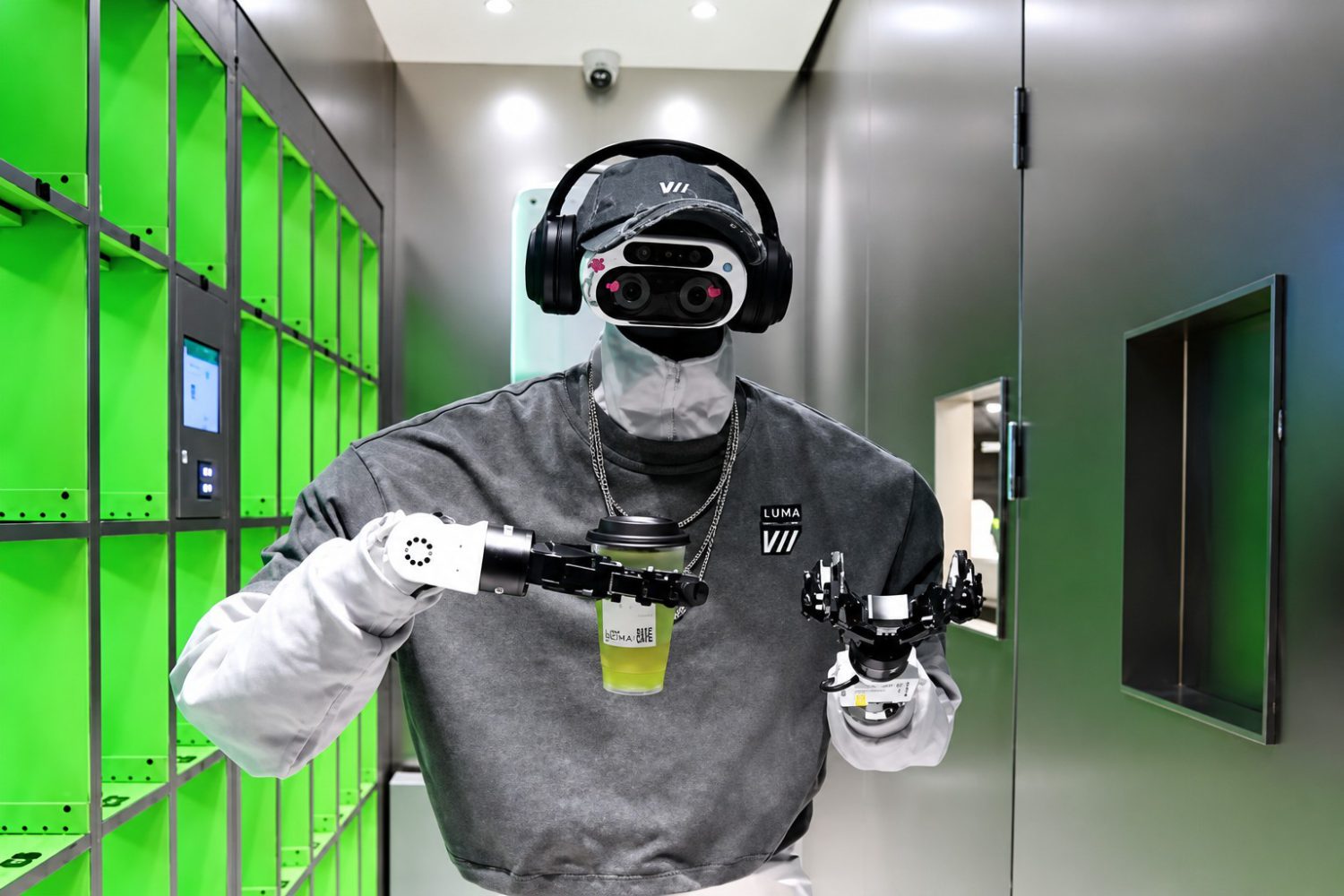
At 3 AM in Beijing’s Chaoyang District, while the rest of the city sleeps, a humanoid robot is pulling espresso shots. No small talk. No wait for the opener to show up. Just you, a self-service screen, and your customized order dropping into a pickup compartment roughly 25 seconds later.
That’s the pitch behind 7Fresh Coffee‘s new outpost at Galaxy SOHO — what its operators, backed by JD.com, are calling the world’s first 24-hour intelligent unmanned coffee shop. On opening day, August 16, 2026, the system served 202 cups in a single hour. Multiple reports, including coverage from the Global Times and South China Morning Post, say that number claimed a Guinness World Record.
That’s not a typo. Two hundred and two cups. In sixty minutes.
How the Machine Actually Works
The throughput stats are genuinely impressive — once you get past the “world’s first” press release language.
The operational numbers are worth sitting with before forming an opinion either way:
- 202 cups served in one hour on opening day — a Guinness World Record claim per operators and multiple reports
- Each drink completed in roughly 20 to 30 seconds, start to finish
- Seven to eight drinks processed simultaneously on the production line
- Customers customize sweetness levels and coffee intensity via self-service kiosk before drinks are prepared
- Finished orders land in pickup compartments — no counter, no handoff, no eye contact
That last caveat deserves its own line: at least one report noted the system may still need human assistance for situations like battery replacement or operational interruptions. “Fully autonomous” is doing some heavy lifting here, the way it always does when the press release hits before the edge cases do.
The Part Nobody Wants to Say Out Loud
Speed and consistency are real advantages — but they’re not the same thing as service.
An economist quoted in news.com.au coverage put it plainly: hospitality depends on the human connection people seek in service settings, and AI performs best on repetitive tasks rather than roles requiring empathy and judgment. A robotic knee exoskeleton offers a telling contrast — technology that augments human workers rather than replacing them entirely.
That’s the real fault line. Where human baristas once remembered your order, asked about your weekend, or quietly slipped you an extra shot because you looked wrecked — this system offers consistency and speed. Nothing more, nothing less.
The model works where throughput and 24/7 availability matter more than warmth. Think airport terminals, late-night office districts, anywhere the transaction is purely functional — the kind of errand you’d rather complete than experience.
The robot doesn’t care if you’re having a bad day. For a surprising number of people, at a surprising number of hours, that’s exactly the point.