New World screwworm larvae eat living animals from the inside out. The flies lay eggs in open wounds, and the hatched larvae burrow inward, consuming flesh while the host is still breathing. For livestock, it’s a death sentence without fast intervention. Since June 3, USDA has conducted more than 1,000 drone surveillance flights across Texas, observing more than 20,000 animals from the air. As of August 12, the USDA dashboard recorded 45 confirmed cases in domesticated animals across South Texas and New Mexico. The federal response is already enormous — and it’s still building.
Skies Full of Sensors: How the Surveillance Network Works
The hardware repurposed for this mission wasn’t designed for agriculture — it was built to watch borders.
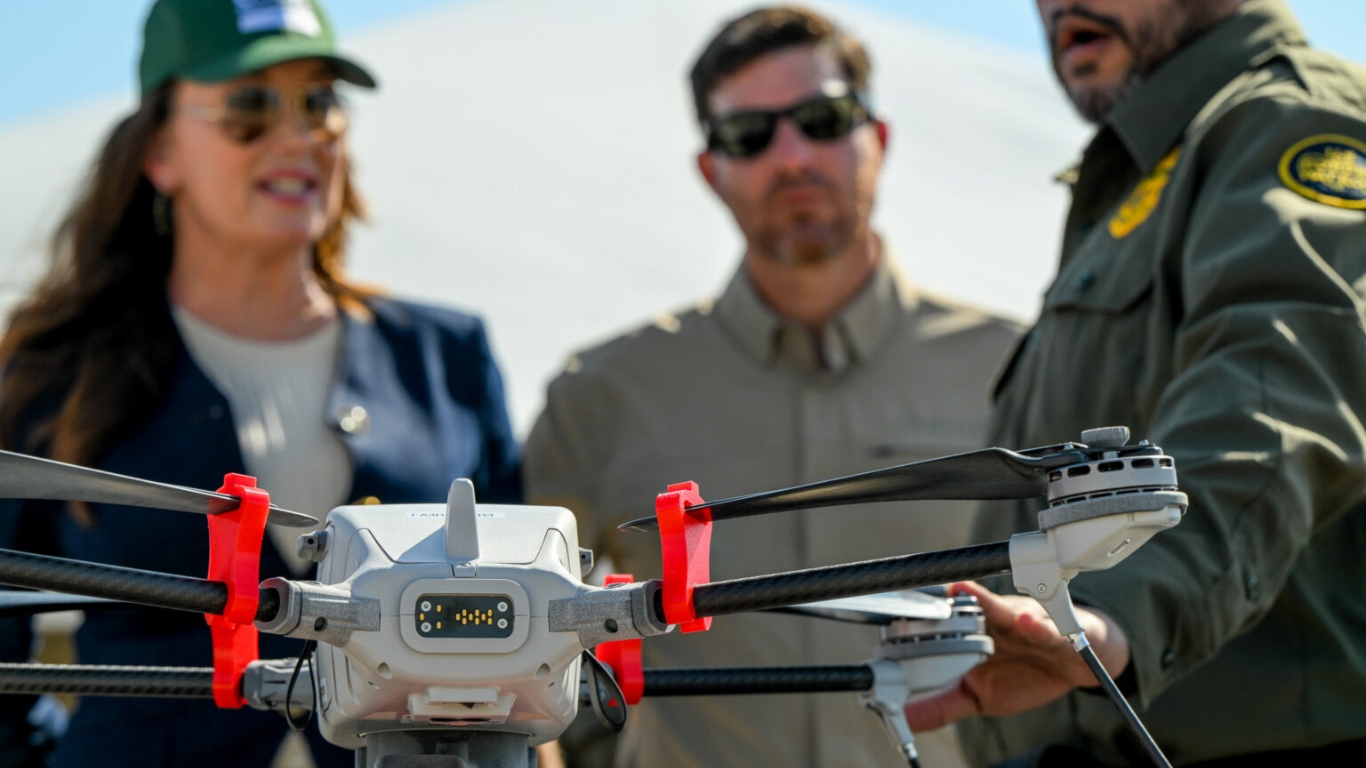
The drones doing this work aren’t agricultural equipment. According to Ars Technica, at least 200 DHS-owned drones — including CBP assets previously used for border surveillance — are now part of the operation. The primary platform is the Skydio X10, running thermal imaging and high-resolution color cameras to flag elevated body temperature, open wounds, and abnormal movement in animals below.
The operational picture, by the numbers:
- Skydio X10 drones detect thermal anomalies and visible sores from altitude
- More than 22,000 animals observed from the air, per Ars Technica
- 130+ trail cameras and 8,000+ fly traps also deployed — with zero fly-trap detections reported despite confirmed animal cases
- USDA is exploring AI tools to analyze drone imagery for wound detection and animal identification — under development, not yet operational
- 45 confirmed cases in domesticated cattle, sheep, dogs, and one goat recorded in the USDA dashboard as of August 12
USDA described the drone fleet as an “important force multiplier” — a signal that aerial coverage is supplementing ground inspection, not replacing it. The scale of deployment reflects the difficulty of monitoring vast, rugged ranchland where signs of infestation can go undetected until intervention is no longer viable.
Drones Find the Problem. Sterile Flies Have to Solve It.
The real eradication weapon is a 70-year-old biological strategy — and the U.S. is racing to scale it up.
Surveillance spots infestations. It doesn’t stop them. The primary eradication tool is the Sterile Insect Technique — sterile male flies released in massive numbers to collapse breeding populations over time. It’s nature’s own self-destruct mechanism, quietly running in the background while the drones handle reconnaissance.
USDA and Panama jointly operate sterile fly production facilities, and releases have also begun in Mexico following a facility renovation. Domestically, USDA is building new capacity at Moore Air Base in South Texas, with another facility planned for Douglas, Arizona. Notably, the Texas Animal Health Commission has not yet formally confirmed New World screwworm in Texas livestock — a gap between state confirmation language and federal reporting that observers are watching closely.
For ranchers across South Texas, the surveillance buildup offers coverage but not certainty. Drones can reach terrain that ground inspectors simply cannot — much like Snake Robots navigating spaces human responders cannot access. Sterile flies, proven as they are, require time to suppress a population that has already crossed the border. With 45 confirmed cases logged and eradication infrastructure still coming online, the situation remains very much in motion — and the numbers bear close watching in the weeks ahead.