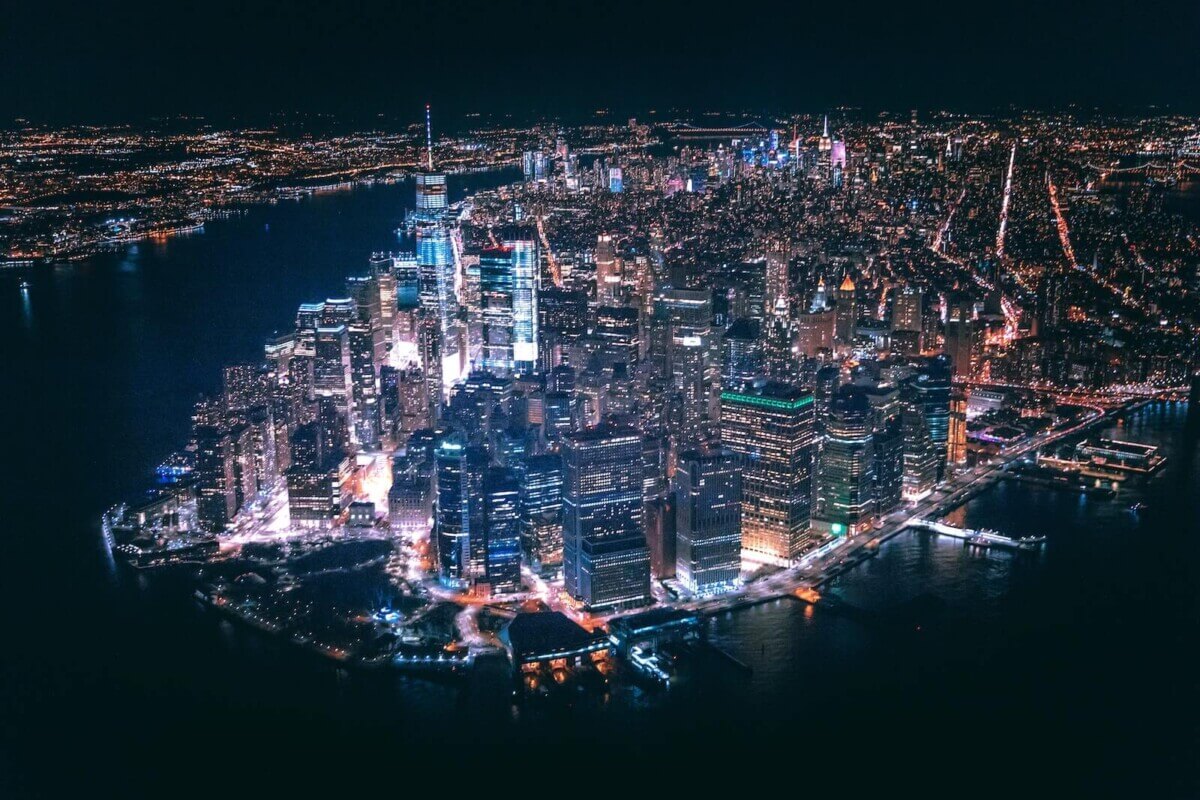
Anyone who has walked past a city tree leafing out suspiciously early in February—or still holding green well into November—might chalk it up to climate weirdness. The streetlight bathing that tree in blue-white light all night? That may be part of the story. A new study published in PNAS Nexus via Study Finds compared four northeastern U.S. cities and found something worth paying attention to: where nighttime light dropped, plant seasonal timing shifted measurably. Where light increased, it didn’t.
What the Study Actually Found
Satellite data reveals it’s not just brightness that matters—it’s the color of the light cities emit.
Researchers used SDGSAT-1 satellite imagery to measure nighttime light across New York City, Washington D.C., Newark, and Philadelphia—not in a single brightness channel, but in separate red, green, and blue bands. NYC and D.C., both cities with active light-reduction policies, saw nighttime light decline from 2022 to 2023. Newark and Philadelphia saw levels rise. The biggest drops showed up in blue light, especially in D.C., where warmer LED streetlights replaced older fixtures. The same blue-light logic behind screen-time warnings before bed applies here—cities may have been giving their trees the same kind of sleepless disruption for years.
Using NASA vegetation-phenology data, the team found that spring green-up and autumn dormancy timing shifted in the policy cities—suggesting less artificial light may reduce the tendency for urban plants to wake earlier and stay active later.
Researchers described the plant-season timing findings as “exploratory,” cautioning that the analysis rests on one post-policy year and two city pairs.
Several variables complicate the picture:
- Light color matters, not just brightness—blue wavelengths appear particularly relevant to plant responses, though research on which wavelengths are most ecologically disruptive remains ongoing
- Confounding factors include temperature, precipitation, species mix, and satellite-measurement uncertainty
- Prior research already established that artificial light at night advances spring leaf-out and delays autumn dormancy—this study tests whether policy can begin to reverse those effects
- Potential tools flagged by researchers: warmer-spectrum LEDs, shielding, dimming schedules, and lighting curfews
Why This Goes Beyond Stargazing
The stakes extend well beyond stargazers and telescope hobbyists—urban plant timing has measurable consequences for residents and city planners alike.
Light pollution has long been framed as an astronomy concern. This study reframes it as something hiding in plain ecological sight. A shifted growing season driven by artificial light could affect when pollen fills the air, when shade trees cool city streets, and when autumn canopies change color. For allergy sufferers and urban planners, those are concrete stakes—not abstractions. Still, the researchers are careful: these findings are suggestive, not proven. Broader studies across more cities and more years are needed before firm conclusions hold.
If confirmed, the spec sheet for a city’s next LED streetlight retrofit may need an ecological column right alongside lumens and wattage. Cities spent years optimizing light for human eyes. It may be time to ask what the trees think.