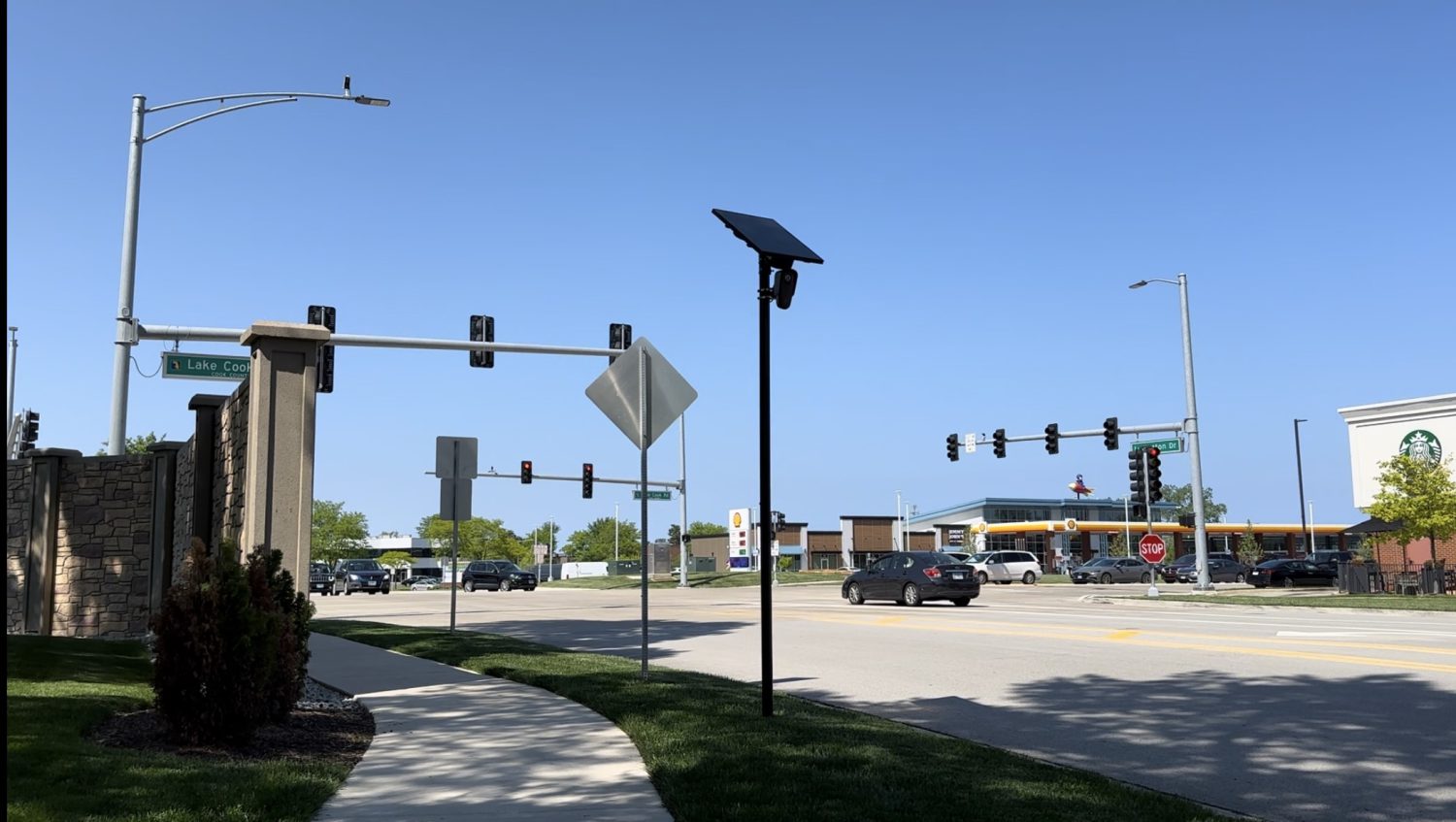
A volunteer-built tool on panopti.ca is making visible the AI camera network quietly logging your driving history across Canadian cities. You drive past a pole-mounted camera you’ve never noticed before. Boxy. Angled toward traffic. Not quite a traffic light, not quite a security camera. You wonder who put it there. Then the light changes and you forget about it. That camera, however, does not forget about you — much like the surveillance app built to track Canadians without their knowledge.
Automatic licence plate readers — ALPRs — photograph and log every passing vehicle’s plate, location, and timestamp, according to panopti.ca, which describes them as recording “whether or not the driver is suspected of anything.” Think of it like your Spotify Wrapped reconstructing your entire year from passive listening — except this is your driving history, and you never opted in.
What the Map Actually Shows
Community volunteers have documented roughly 560 ALPRs across Canada, with about 360 concentrated in the Toronto area alone.
That data lives on OpenStreetMap — public, verifiable, free for anyone to inspect or correct — and panopti.ca pulls it into an interactive, navigable interface. The map covers cameras from multiple vendors: Flock Safety, Genetec CloudRunner, municipal deployments, toll-road systems. Not Flock exclusively.
The maintainer is clear: “nothing shows as ‘Flock’ unless it actually is,” and unconfirmed Flock nodes carry explicit warnings. Who operates these cameras? Police services, municipalities, private vendors, and toll authorities — often with overlapping jurisdictions and inconsistent data-retention rules.
The map documents roughly 560 community-reported cameras, heavily concentrated in Toronto and Vancouver, operated by police services, municipalities, and private vendors under varying retention rules. Operators range from cruiser-mounted police systems to fixed municipal infrastructure. Camera locations are added by OpenStreetMap contributors — anyone can tag, correct, or reuse the data. BC’s privacy commissioner forced the RCMP to delete non-hit plate data in 2012; Quebec’s Law 25 now ranks among North America’s strictest privacy frameworks, with real penalties for breaches and strong consent requirements.
Real Tool, Real Limits – And What You Can Do
Crowd-sourced data is powerful but imperfect; the maintainer is actively building verification tools to improve accuracy.
Some mapped cameras may be misidentified — regular security cameras tagged as ALPRs. The panopti.ca maintainer acknowledges this openly, adding disclaimers, moving non-ALPR cameras to a hidden layer, and developing trust labels to distinguish verified from unverified entries.
As ALPR Maps notes, Canada remains “the rare jurisdiction where a privacy commissioner has actually forced a police service to delete plate data.” That oversight, though, only works if people know what infrastructure exists in the first place.
- Visit panopti.ca
- Spot cameras in your area
- Add verified ones to OpenStreetMap
- File FOIP requests about local retention policies
The surveillance infrastructure already exists. The only question is whether it stays invisible.