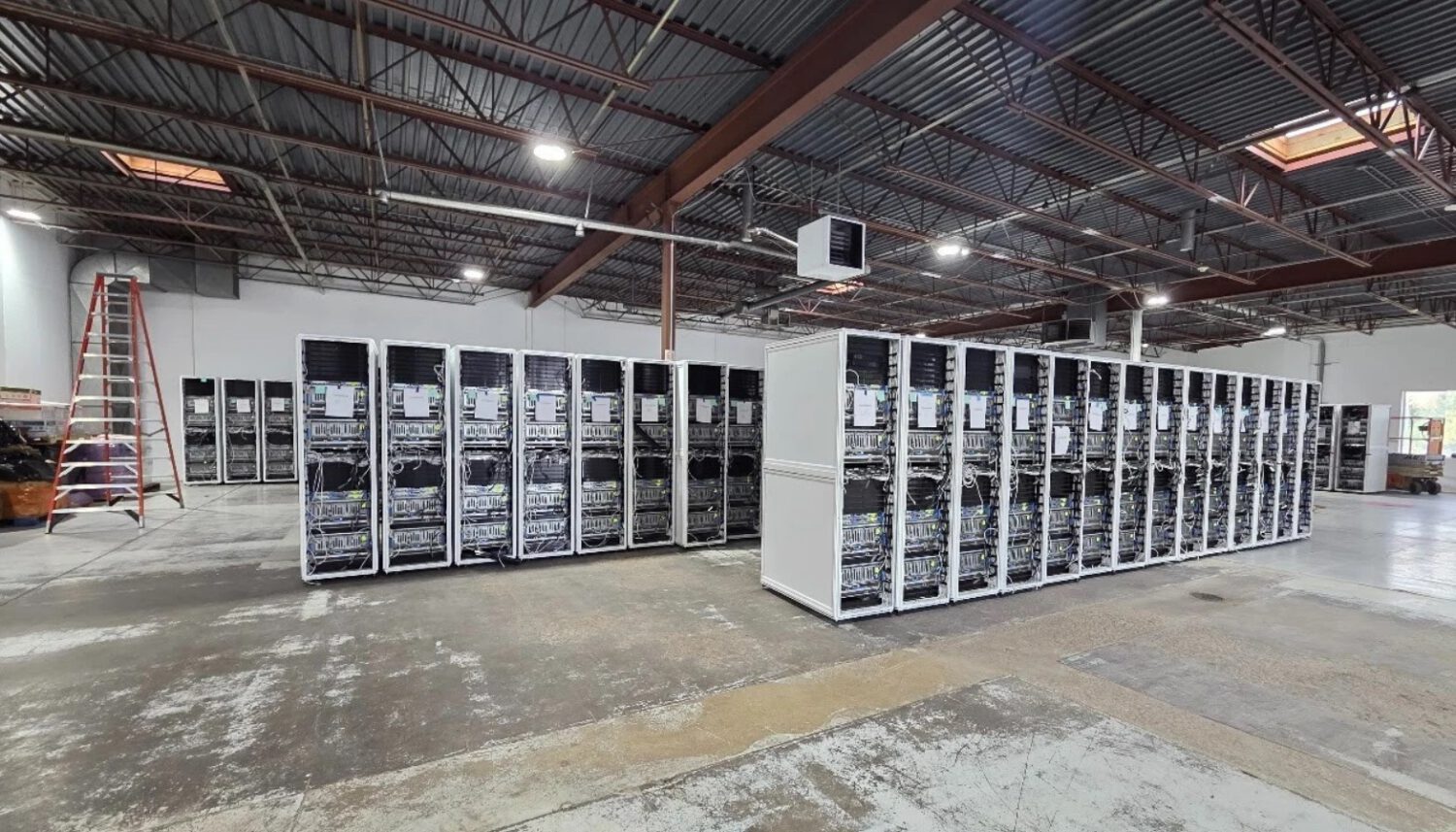
eBay is where you buy vintage cameras, secondhand sneakers, and apparently, industrial-scale AI infrastructure. Core 4 Solutions, a Minnesota-based IT hardware reseller, has listed a decommissioned 300-rack GPU cluster for $59.7 million, or best offer, with shipping options that reportedly include $50 overnight delivery.
The listing reflects a secondary market for hyperscale AI hardware as data-center operators retire older accelerator fleets and move to newer generations.
What the Listing Says
The advertised specifications come from the listing itself and have not been independently audited.
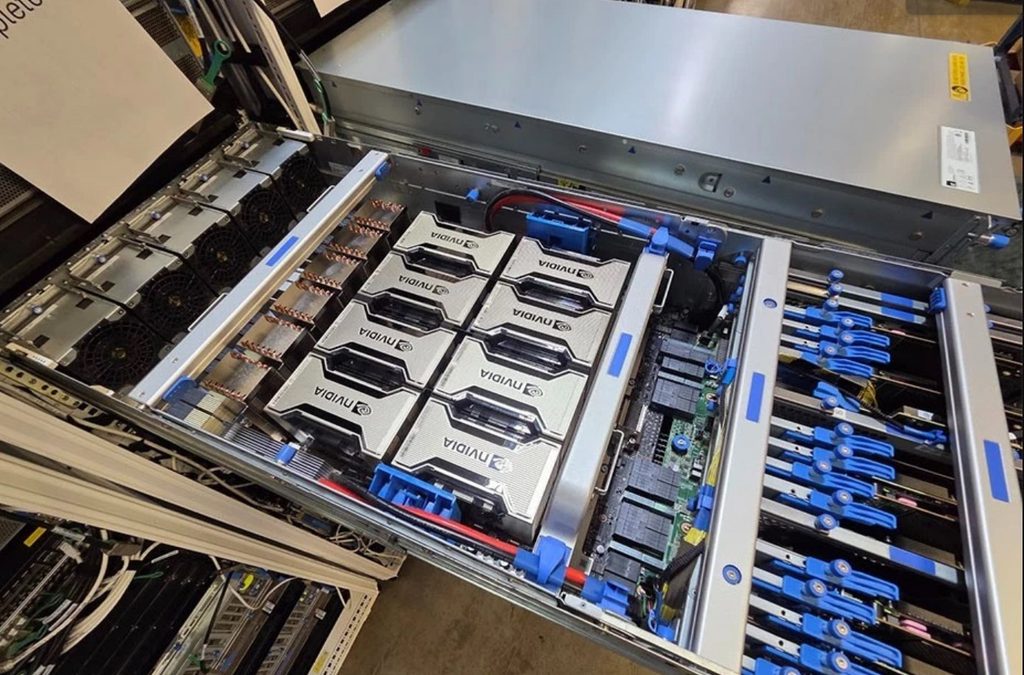
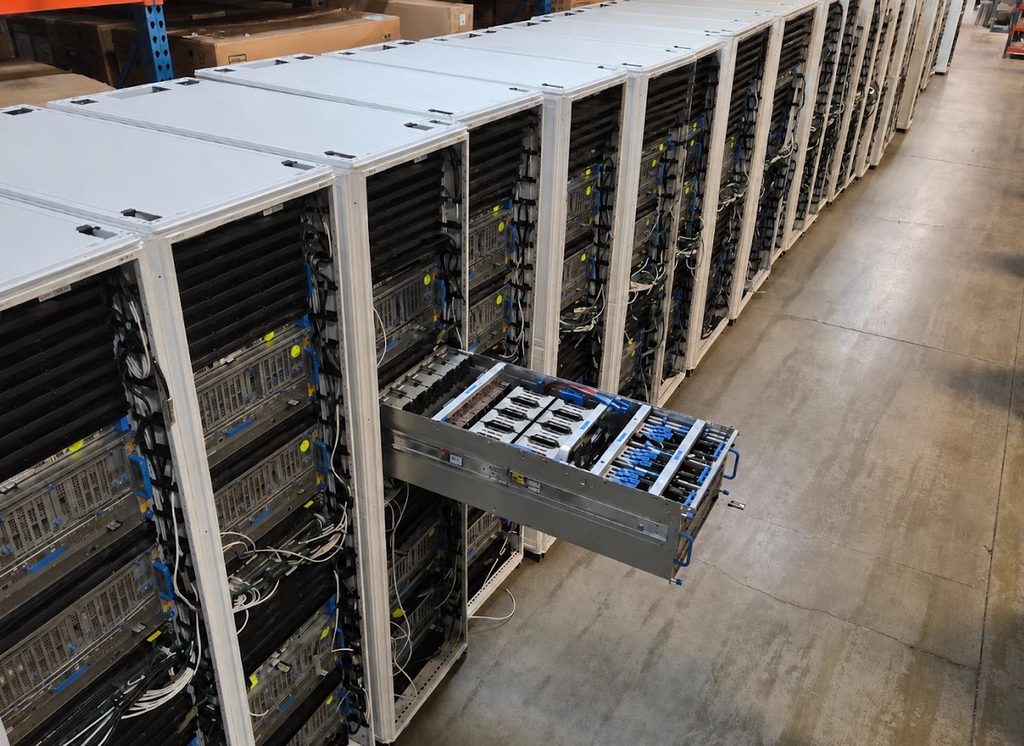
According to reported listing details, the cluster comprises 300 racks, each containing four compute nodes and three management nodes. Each compute node is advertised with eight Nvidia A100 40GB SXM4 GPUs. Each also includes two 64-core AMD EPYC Rome processors and 1TB of DDR4-2933 memory.
The advertised totals reach up to 9,600 A100 accelerators, 4,200 EPYC Rome CPUs, roughly 268,800 CPU cores, and approximately 1.4 petabytes of system memory. These figures have not been independently audited, and the listing’s “up to” language means actual totals may vary.
Core 4 Solutions reportedly holds 99.9% positive feedback on eBay, with inventory stored at a Minnesota warehouse. At $59.7 million across 300 racks, the math works out to roughly $199,000 per rack before a single cable is run or a cooling unit is switched on.
Why Anyone Would Want This, and What It Actually Takes
The A100 remains commercially relevant despite not being Nvidia’s newest data-center accelerator, but acquiring 300 racks of it involves far more than a purchase price.
Its mature software ecosystem, strong tensor-computing performance, and availability on the used market make it attractive to organizations that cannot access or afford the latest hardware. The advertised rack configuration, eight A100 GPUs paired with two AMD EPYC Rome processors per compute node, is also technically consistent with known A100-era data-center builds. Nvidia’s own DGX A100 documentation describes exactly that pairing, which supports the listing’s design on paper.
What the listing cannot tell you is whether every GPU is present, operational, or in comparable condition. Buyers would need to verify serial numbers, GPU counts, memory configurations, firmware, and networking hardware before any commitment.
The practical requirements go well beyond the acquisition price. A 300-rack deployment needs industrial power distribution, specialized cooling, physical floor space, and high-speed networking. It also requires fire suppression systems, qualified operators, and a steady supply of spare parts.
The $59.7 million covers none of those operational requirements.
A Market Growing Up Fast
The secondary market for enterprise AI hardware is becoming a more visible part of how older accelerator capacity changes hands.
Hyperscalers periodically retire large fleets even while older accelerators remain useful for AI inference, model development, and scientific computing. Listings at this scale illustrate that decommissioned enterprise hardware can move through online marketplaces alongside the rest of the used-equipment market.
If your organization is genuinely in the market for large-scale compute at a discount, the acquisition price is the smallest item on a very long checklist.