Every wave that slams into a seawall is mechanical energy going absolutely nowhere. Researchers at City University of Hong Kong just figured out how to put it to work. A team led by Professor Sai Kishore Ravi at CityUHK’s School of Energy and Environment has demonstrated “piezosynthesis” — a process where piezoelectric materials deform under vibration, generating electrical charges that split water into hydrogen fuel and hydrogen peroxide. No grid connection. No added chemicals. No external power source. Green hydrogen currently demands expensive electrolyzers fed by dedicated renewable electricity. This approach needs none of that.
How Vibration Becomes Fuel
Engineered crystals convert mechanical shaking into chemical reactions, boosting hydrogen output sixteenfold.
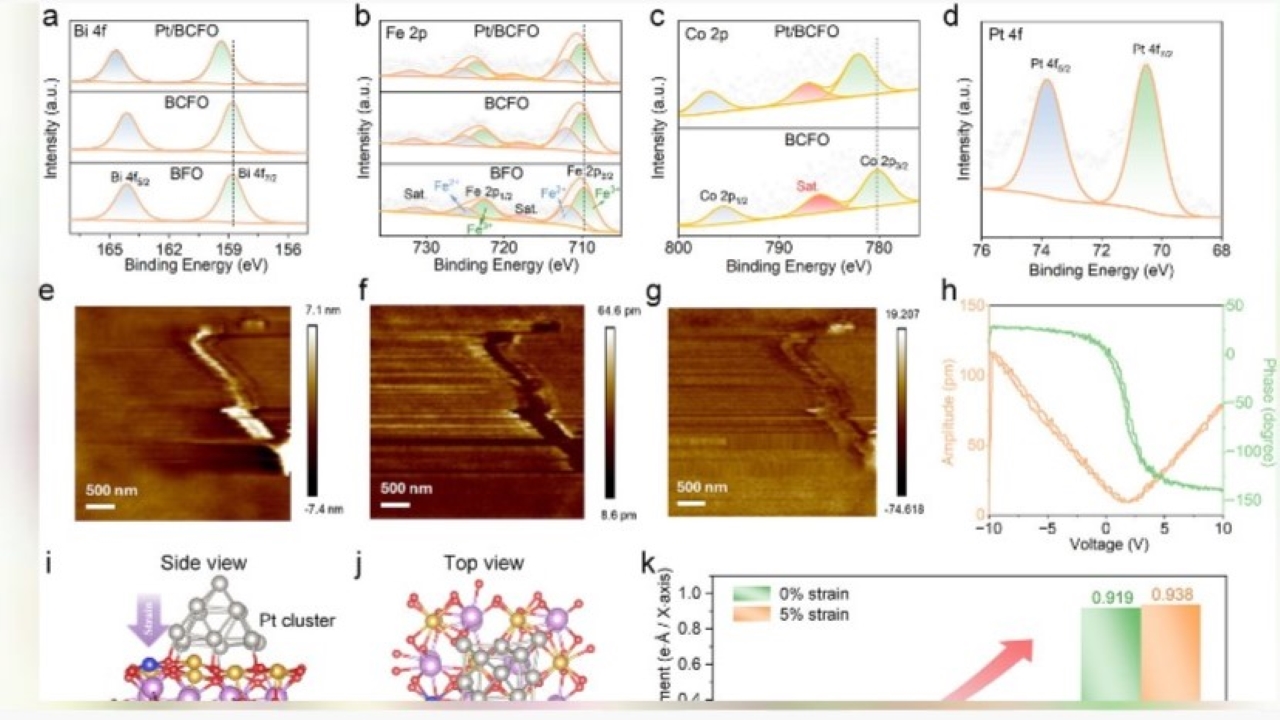
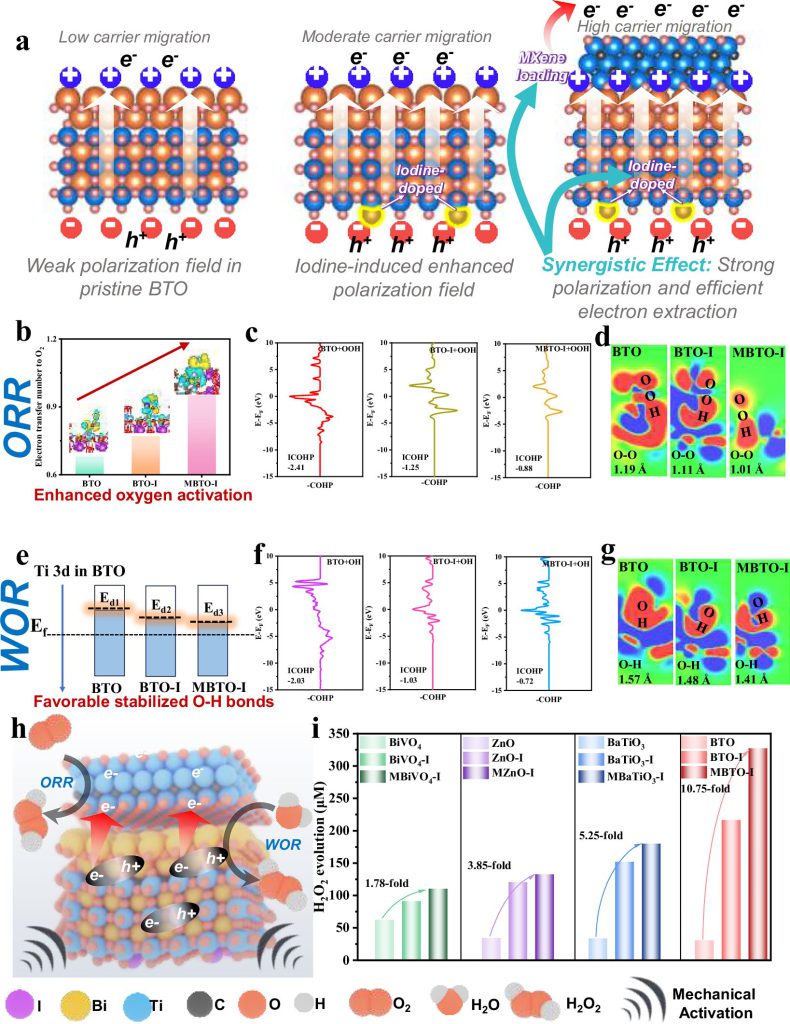
The mechanics are elegantly simple. Vibration deforms a crystal. That deformation generates charges. Those charges hit the water interface and drive chemical reactions. The engineering problem is less elegant: generated charges tend to recombine before reaching the reaction surface — essentially short-circuiting themselves. Ravi’s team solved this with controlled doping and cocatalyst loading in their bismuth ferrite system, like adjusting a funnel so the current flows to exactly the right spot rather than spilling over the sides.
The results span two peer-reviewed studies reportedly published in Nature Communications and Advanced Energy Materials, according to local Hong Kong coverage. The optimized bismuth ferrite system lifted hydrogen yield sixteenfold over the undoped baseline, while a separate layered bismuth titanate system produced hydrogen peroxide at 5,890 μmol g⁻¹ h⁻¹ under ambient conditions — no sacrificial chemicals, with measurable pollutant-degradation and antibacterial effects confirmed experimentally. That means the hydrogen peroxide doubles as a water treatment tool, not just a fuel byproduct.
From Lab Reactor to Open Ocean
Floating catalytic platforms could one day harvest wave energy for coastal cities, but the jump from ultrasonic bath to real surf remains unproven.
Honest caveat: current experiments run on controlled ultrasonic vibrations inside lab reactors, not actual ocean waves. The gap between a precisely calibrated ultrasonic bath and the chaotic churn of the South China Sea is significant. Still, the team is already designing floating catalytic platforms that would sit at sea, harvesting wave-induced vibrations to run piezosynthesis reactions without any grid connection — essentially a Crockpot for clean chemistry, slow-cooking fuel from ambient motion with no outside input needed.
For coastal cities like Hong Kong, the implications are tantalizing: distributed, off-grid hydrogen production and on-site water disinfection without a pipeline in sight.
“Both studies rely on the same principle of controlling how vibration-generated charges are directed toward specific reactions,” Ravi explained, according to CityUHK’s official release. That unified framework suggests piezosynthesis could eventually extend well beyond hydrogen and peroxide to other chemical synthesis targets entirely.
Scaling from lab bench to municipal volumes remains the central challenge the team openly names. The underlying science is peer-reviewed, and the metrics are concrete — so the next time you watch a wave hit a seawall, you might be looking at tomorrow’s fuel supply going to waste.