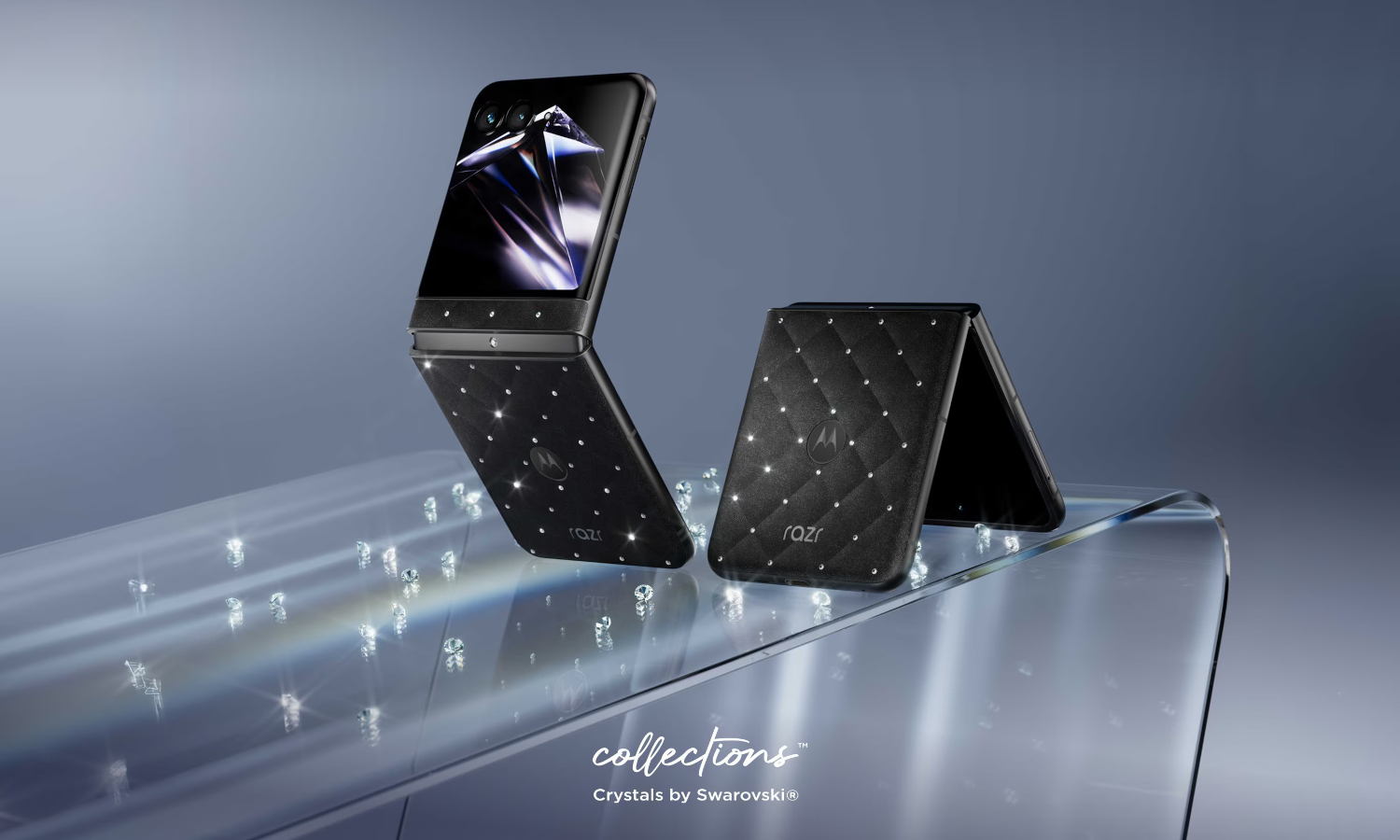
Pantone Meteorite. 35 hand-positioned crystals. A hinge jewel with 32 facets that catches light every time the phone flips open. The intended moment is cinematic: a Razr snapping shut mid-conversation at a café, heads turning across the room. That’s the product. Not the MediaTek chip inside. Not the camera system. The moment itself.
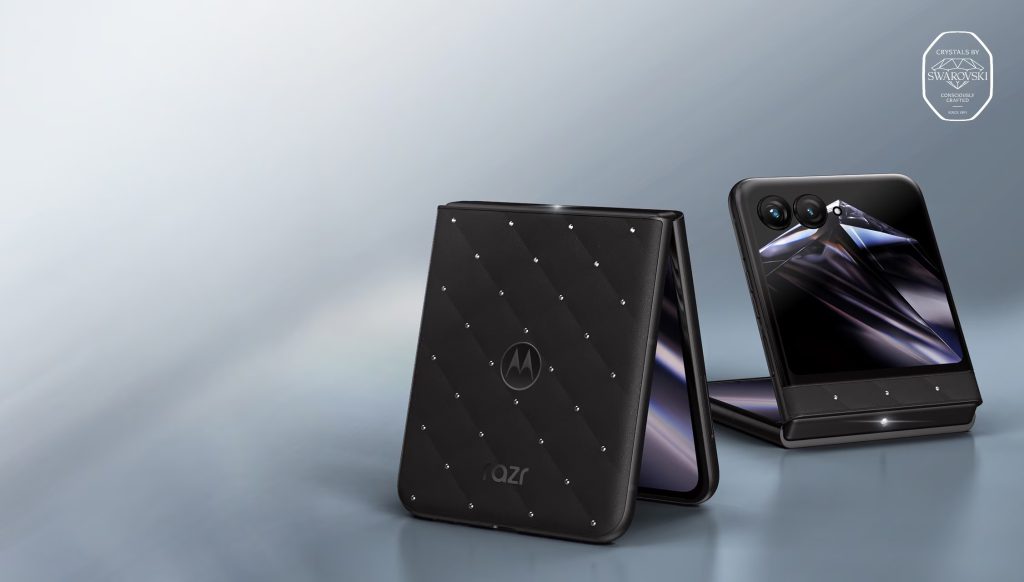
Motorola’s Razr 2026 with Crystals by Swarovski ($899.99 US, available September 10) is the second entry in its Brilliant Collection — last year was Pantone Ice Melt white, this year is deep Meteorite black. The hardware didn’t change. The outfit did.
What You’re Actually Buying
The specs underneath all that sparkle are solidly midrange — here’s what matters.
The Razr 2026 foundation:
- MediaTek Dimensity-class chip, 8GB RAM, 256GB storage
- 6.9-inch inner AMOLED plus a 3.6-inch outer display for quick glances
- 50MP main camera
- Up to 36 hours of battery life
- A clear protective case ships in the box — Motorola’s polite acknowledgment that crystals and pockets don’t have a great track record together
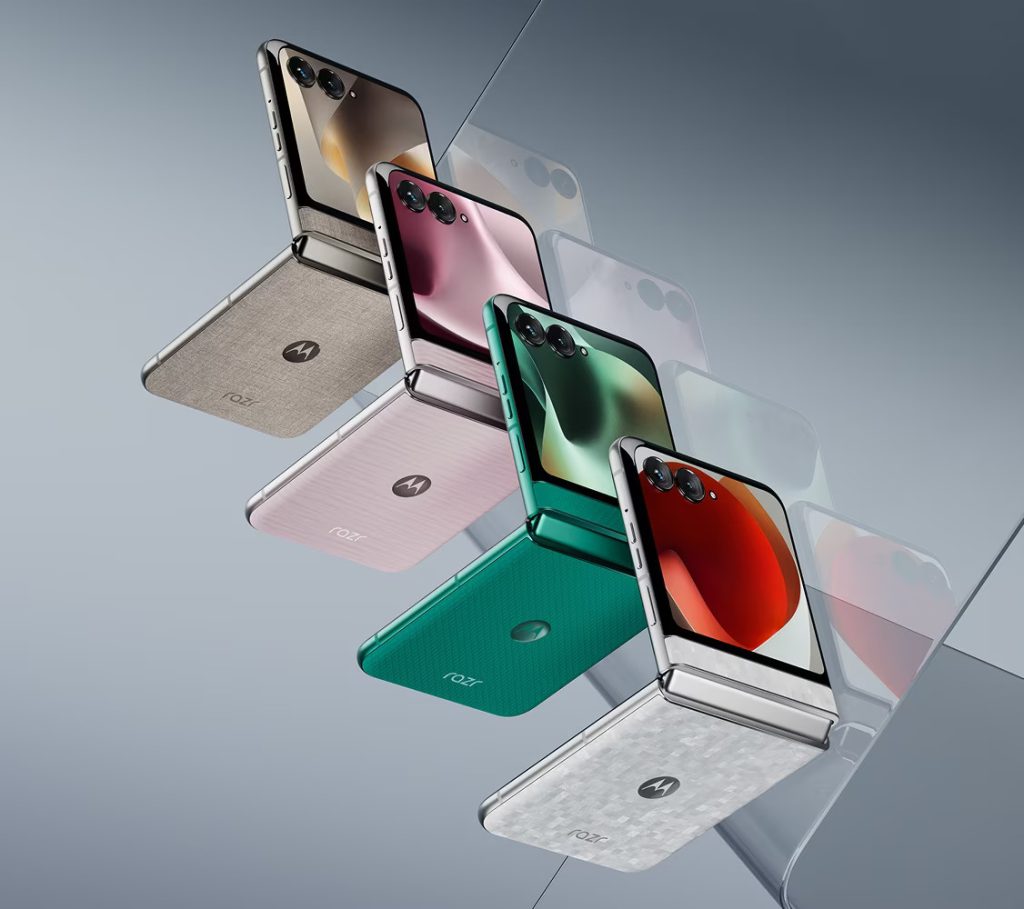
The crystals cover a quilted, leather-inspired back panel. The hinge stone, 32 facets deep, is the phone’s most theatrical feature. It’s not computational. It’s architectural — designed to perform every time the phone flips open.
The early-buyer bundle sweetens the math: $900 gets you the Razr plus Swarovski-finished Moto Buds 2 Plus and a base Moto Watch. Worth noting — that’s the base watch, not the newly announced Moto Watch Ultra, which launches separately at $349.99 with Wear OS, LTE, dual-band GPS, and a Snapdragon W5+ Gen 1 chipset. UK buyers pay £899.99, with availability starting September 15.
The Part That Actually Deserves Scrutiny
Embedded crystals look stunning until they meet concrete, keys, or a bad day.
Nobody knows yet how these crystals hold up to daily carry. Chips, scratches, snagging on jacket linings — these are real questions without real answers yet. That clear case in the box signals Motorola is aware of the trade-off. Samsung’s Galaxy Z Flip offers comparable pricing with comparable or stronger silicon for buyers prioritizing performance. The $100 premium over the base Razr buys aesthetics, not processor speed — a classic case of paying too much for style over substance.
This phone is essentially a luxury accessory that also runs Google Maps.
If you’ve already decided your phone is a fashion statement — and plenty of people reasonably have — the Meteorite colorway is more practical than last year’s white, hiding everyday wear more gracefully. If you’re optimizing for performance per dollar, the regular Razr exists and costs less. The crystals won’t make your calls faster. They’ll just make sure people notice when you make them.