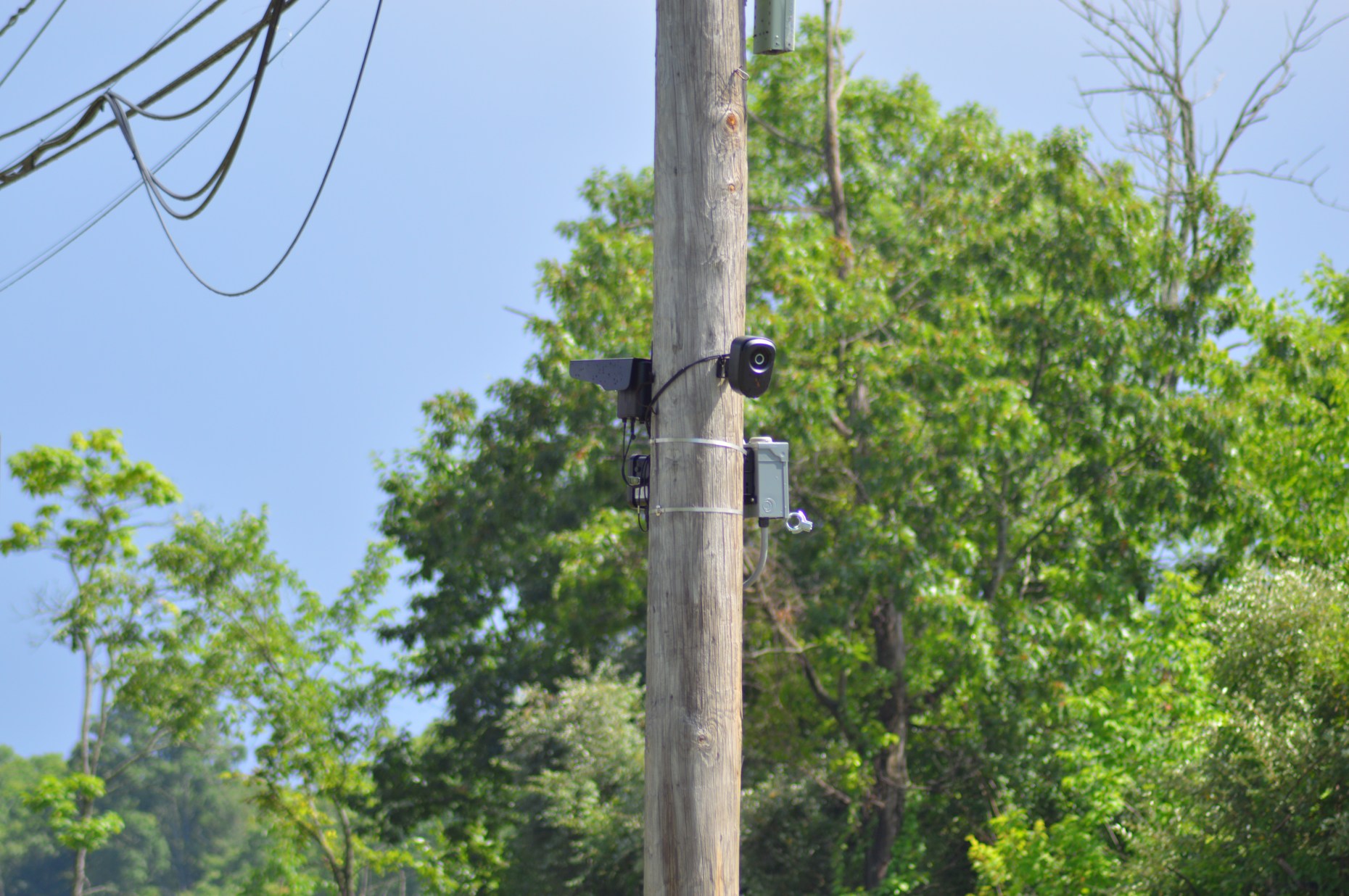
Your town votes to shut off surveillance cameras. The electric company cuts power. Town Meeting defunds the entire program. Months pass. Then on July 31, Select Board Chair Gary Wilson asks police to check the camera status — and discovers five of the six are quietly running again. Nobody told the town. Flock Safety, the vendor behind the automatic license plate reader (ALPR) cameras, reportedly reactivated them under its standard operating procedure. This story sounds local. It isn’t.
What Actually Happened in Littleton
A communication gap between Littleton officials and their surveillance vendor left five cameras running for months — without anyone in town realizing it.
Littleton’s Select Board deactivated all six Flock ALPR cameras on May 12, 2026, with the Littleton Electric Light Department (LELD) physically cutting power. Town Meeting subsequently defunded the program following resident pushback over Fourth Amendment and privacy concerns. The cameras were widely assumed to be offline.
According to the Boston Globe, Littleton police told Flock the board had “voted to de-energize the cameras” and that they were “holding off on using the system” — but never explicitly said: keep them off permanently. Flock’s technicians arrived, saw a power issue, and followed standard operating procedure. Like a streaming subscription you thought you cancelled, the vendor defaulted to “on” because nobody spoke their specific cancellation language.
Power was restored “based on Flock’s standard operating procedure, since they were unaware we did not intend to turn the cameras back on.” — Police Chief Douglas Landry
Police Chief Douglas Landry also acknowledged that the department never independently verified the cameras remained off after Flock’s service visit — a lapse that contributed to months of unauthorized operation. To their credit, the town confirmed no data from Littleton’s cameras was shared with other jurisdictions, and the Littleton Police Department did not access any data gathered while the cameras were powered, according to the town’s official statement.
Once the discovery hit on July 31, the response was swift:
- Wilson ordered LELD to cut the breakers again that same Thursday afternoon.
- Town Counsel was directed to initiate contract cancellation.
- The Department of Public Works was tasked with physically removing all six cameras from public ways.
- Flock reportedly had a work order to pull the units “as soon as possible,” according to the Boston Globe.
Decisive — but the uncomfortable question of what data accumulated during those intervening months remains unanswered.
This Isn’t Just a Littleton Problem
Littleton’s experience fits a documented national pattern of friction between vendor operations and local democratic decisions over surveillance infrastructure.
Littleton is a case study, not an outlier. In Evanston, Illinois, officials covered their Flock cameras and issued a cease-and-desist after the company reinstalled units on its own. The LAPD’s Inspector General recommended pausing new ALPR installations and halting new contracts pending public review and surveillance vendor re-evaluation, according to the Independent. Activist groups like Mass 50501 are actively coaching residents across Massachusetts to push municipal leaders toward contract cancellations, citing transparency, data ownership, and cybersecurity concerns.
Here’s the structural problem: when the “off switch” for public surveillance lives in a vendor’s cloud, your local breaker isn’t necessarily the last word. Neighboring towns with Flock contracts — Billerica, Lowell, Tewksbury — are now watching closely. Your town’s democratic vote to shut cameras off is only as strong as the contract language backing it up. Flock did not respond to a request for comment.