Hundreds of dots blanketing the country. Dense clusters in every major metro. And this isn’t a map of all surveillance cameras in America. It’s just Home Depot and Lowe’s — and only the ones investigators have identified so far. That caveat should stop you cold.
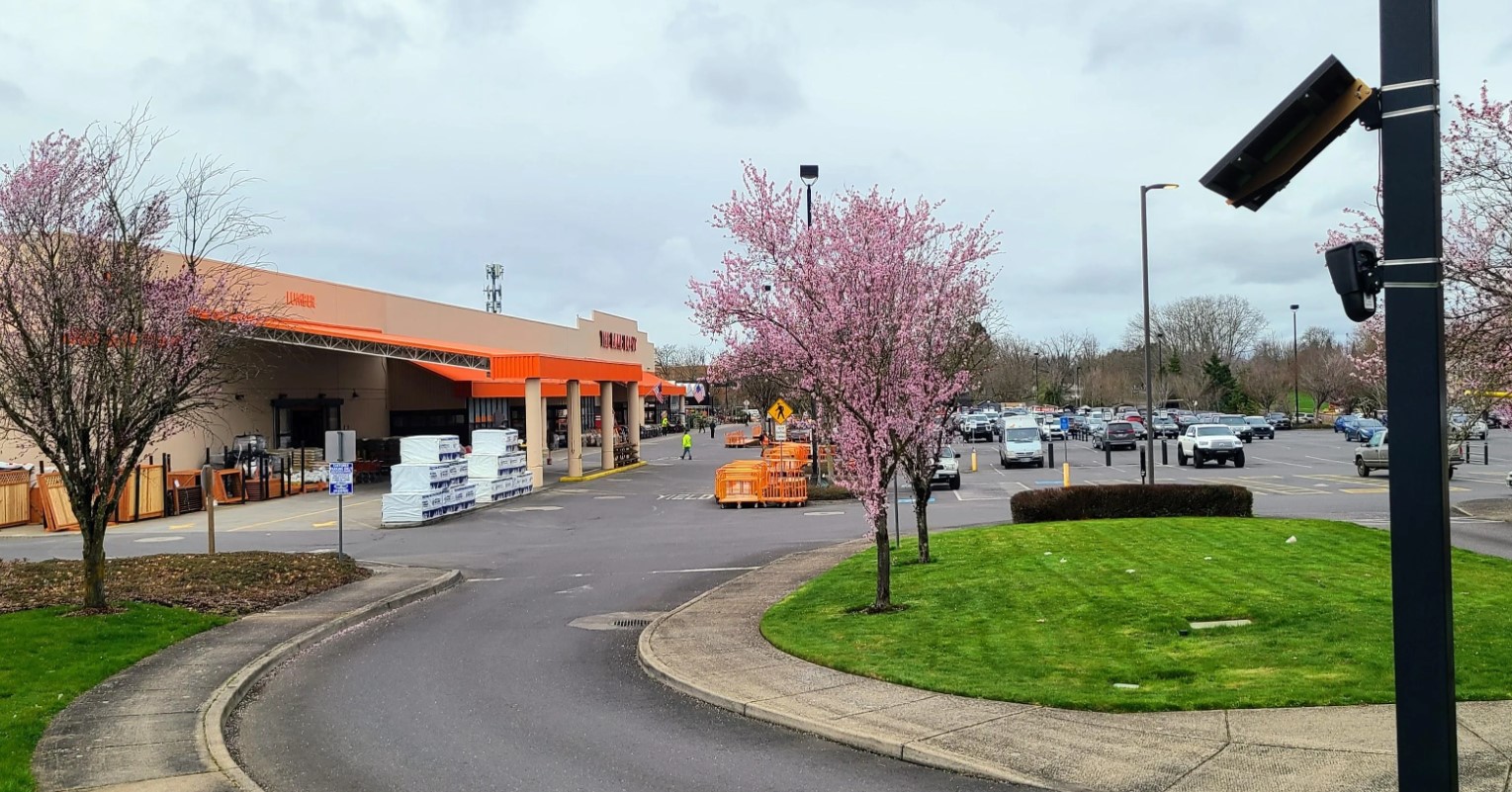
Both retailers have deployed Flock Safety automated license plate reader cameras (ALPRs) across their parking lots, according to an investigation by 404 Media. These solar-powered units photograph your plate, log the time and location, and record your vehicle’s make, model, and color. That data feeds directly into law-enforcement-accessible networks. No one hands you a disclosure form between the garden center and your trunk.
What the Numbers Actually Show
The scope of retailer-funded surveillance is already staggering — and still growing.
The scale here isn’t theoretical. Consider what public records have already surfaced:
- The Electronic Frontier Foundation identified a single sheriff’s office with access to Flock cameras at 173 different Lowe’s locations nationwide, according to reporting by wtpnews.org
- North Carolina’s State Bureau of Investigation gained access in 2023 to camera networks at “all Lowe’s stores in NC, SC and VA,” per the News & Observer
- Flock Safety operates in over 5,000 communities — these two retailers represent a fraction of the total network
- A federal district judge in Norfolk, Virginia ruled that mass ALPR data collection constitutes a Fourth Amendment search requiring a warrant
- Default Flock data retention is 30 days, though Lowe’s own privacy statement says it keeps ALPR data up to 90 days
Privacy advocates argue that “every purchase funds the infrastructure of your own surveillance,” according to wtpnews.org reporting.
Why the Map Matters More Than the Cameras
A partial snapshot of two hardware chains already resembles comprehensive national tracking infrastructure.
Think of it like seeing only the Starbucks locations on a map of corporate America — and realizing the full picture is exponentially denser. Lowe’s says it doesn’t sell ALPR data but shares it with “select service providers” and the National Center for Missing and Exploited Children. Home Depot directs privacy questions to a dedicated email address. Neither retailer requires law enforcement to notify you before accessing your vehicle data.
The Norfolk ruling challenges warrantless mass collection but doesn’t ban it. The legal ground is shifting beneath a system already running at full speed.
Your parking lot run for deck screws now generates a searchable record. Both retailers publish privacy-contact channels — Lowe’s at 1-800-309-5732, Home Depot at [email protected] — and you can ask store management directly about data retention and law-enforcement access. The more pressing question is whether the legal and legislative frameworks governing this data will ever move as fast as the cameras collecting it.