3 AM cravings used to mean waiting until morning for a convenience run. Hong Kong’s new 24-hour capsule store on the Hung Hom waterfront eliminates that problem—with a twist that feels ripped from a sci-fi movie.
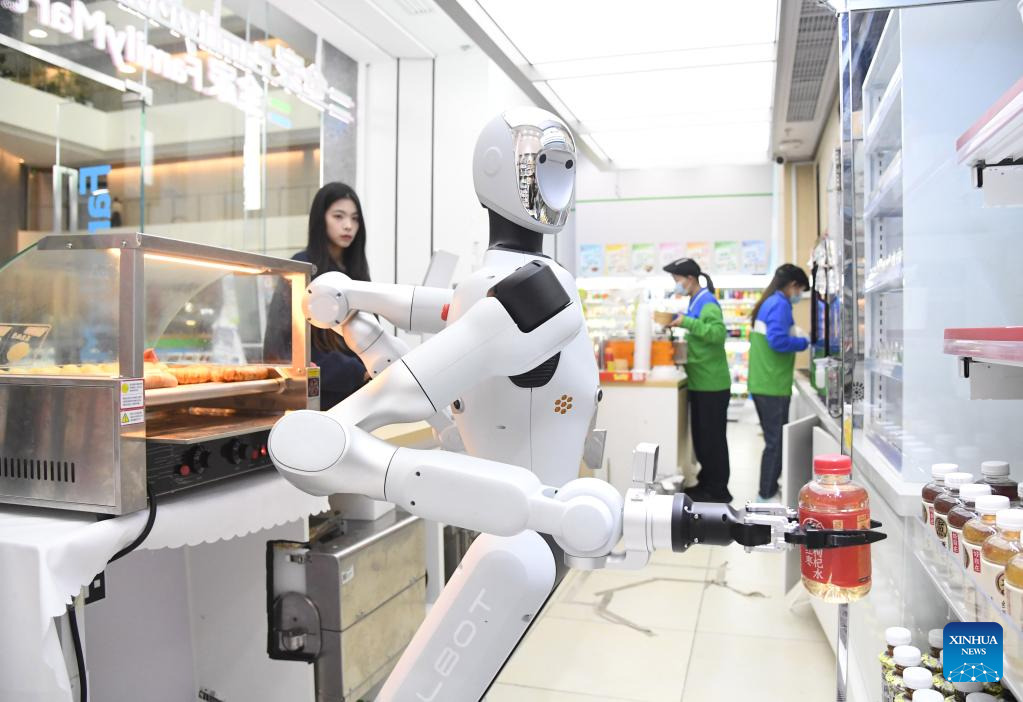
“Xiao Gai,” a humanoid robot developed by a mainland Chinese embodied-AI firm, now works the graveyard shift. The robot sells snacks, creative merchandise, and over-the-counter medicines from a nine-square-meter booth that operates continuously without human supervision.
The robot can chat with customers in multiple languages, guide browsing decisions, and process purchases without human backup. Think of it as the lovechild of a Redbox kiosk and C-3PO, minus the anxiety disorders.
Beyond the Novelty Factor
Early metrics from Beijing suggest this isn’t just a publicity stunt masquerading as innovation.
Before you dismiss this as another tech gimmick, consider the numbers from the company’s Beijing prototype. That location has reportedly served 1,000 customers daily since August—impressive throughput for a space smaller than most studio apartments.
Local businesses around these capsules claim foot traffic jumps 30-40%, according to company data, though independent verification of these figures remains unavailable.
Financial Secretary Paul Chan positioned the Hong Kong deployment as more than retail experimentation. It’s part of a broader push to showcase practical AI applications that residents can actually touch and use, rather than invisible backend systems. His office recently announced a high-level AI development committee, signaling Hong Kong’s intention to become Asia’s embodied-intelligence playground.
The Automation Reality Check
Smart retail evolves, but don’t expect human cashiers to disappear overnight.
Xiao Gai represents embodied AI—systems that combine computer vision, speech recognition, and physical interaction in real-world environments. Unlike Amazon’s grab-and-go stores or mobile payment apps, this approach emphasizes human-like engagement rather than invisibility.
The company plans 100 similar capsules across 10 cities, but scaling challenges remain unclear. Maintenance costs, weather durability, and complex social interactions will determine whether friendly robots become commonplace or remain expensive curiosities.
Your neighborhood 7-Eleven isn’t worried yet, but this deployment offers a glimpse of retail’s automated future—one conversation at a time.