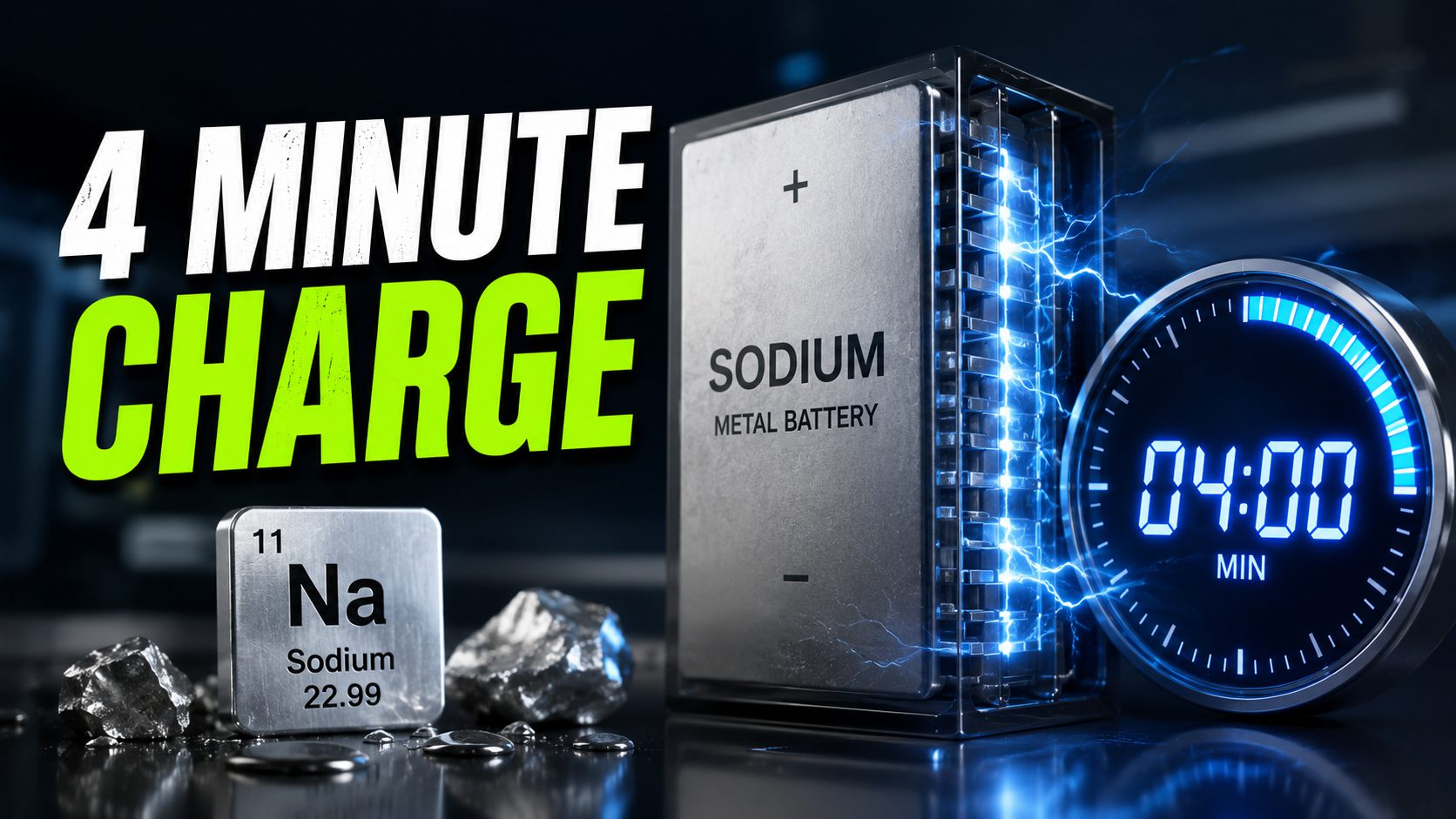
Charging a sodium metal battery has always been a bit like autocorrect gone catastrophically wrong — one small error compounds into disaster. During charging, sodium ions plate unevenly onto the metal anode, growing needle-like structures called dendrites. These spikes pierce the battery’s internal separator, short-circuit the cell, and can trigger fires. A thin protective film on the anode — the solid-electrolyte interphase — keeps cracking under stress, creating bumps that attract more sodium and accelerating the problem. That’s kept sodium metal batteries trapped in research labs despite sodium being dirt cheap and far less fire-prone than lithium, unlike the cost dynamics of choosing electric over traditional fuels.
Now Chinese researchers, publishing May 21 in Nano-Micro Letters, report a potential fix: a quasi-solid gel electrolyte called Sn-FB QSE. Functioning as both traffic cop and bodyguard for ions, this gel speeds sodium-ion transport while physically blocking dendrite growth. Tin-based compounds at the anode encourage smooth, even sodium deposition. At the cathode, a separate protective film slows degradation during fast cycling. According to Interesting Engineering, the material acts as a “dual mediator” stabilizing both electrode interfaces simultaneously.
The lab numbers deserve attention:
- 4-minute full charge (15C rate): delivers about 80 mAh per gram — roughly half typical lithium-ion capacity per gram, but at a speed no current Li-ion EV pack can touch
- 20-minute full charge (3C rate): retains ~90% capacity after 2,000 full cycles — potentially hundreds of thousands of EV kilometers, if scale-up works
- Symmetric cell endurance: sodium cells ran over 6,000 hours (about 250 days) without dendrite-induced failure
Don’t Book Your 4-Minute Charging Slot Yet
Cold weather, temperature swings, and the enormous gap between coin cells and car batteries stand between this lab result and your garage.
Healthy skepticism is warranted here — solid-state batteries were supposed to be just around the corner too, and that corner keeps moving. Prior sodium metal research shows cells failing within tens of hours at minus 20 degrees Celsius. Gel electrolytes can degrade through the temperature swings your phone endures daily. Digital Trends states plainly: don’t expect this in an EV yet. Meanwhile, sodium-ion batteries using conventional carbon anodes are already rolling in Chinese EVs with roughly 248-mile range, according to Live Science. That’s the closer near-term reality.
Yet researchers told Live Science that if dendrite suppression, cold-weather performance, and manufacturing scale all converge — a substantial if — sodium metal batteries could reshape battery economics within a decade. This is still coin-cell lab research, not an automotive pack. But as proof-of-concept goes, it’s the most credible one the sodium metal field has produced. The lithium monopoly just met its most serious challenger.