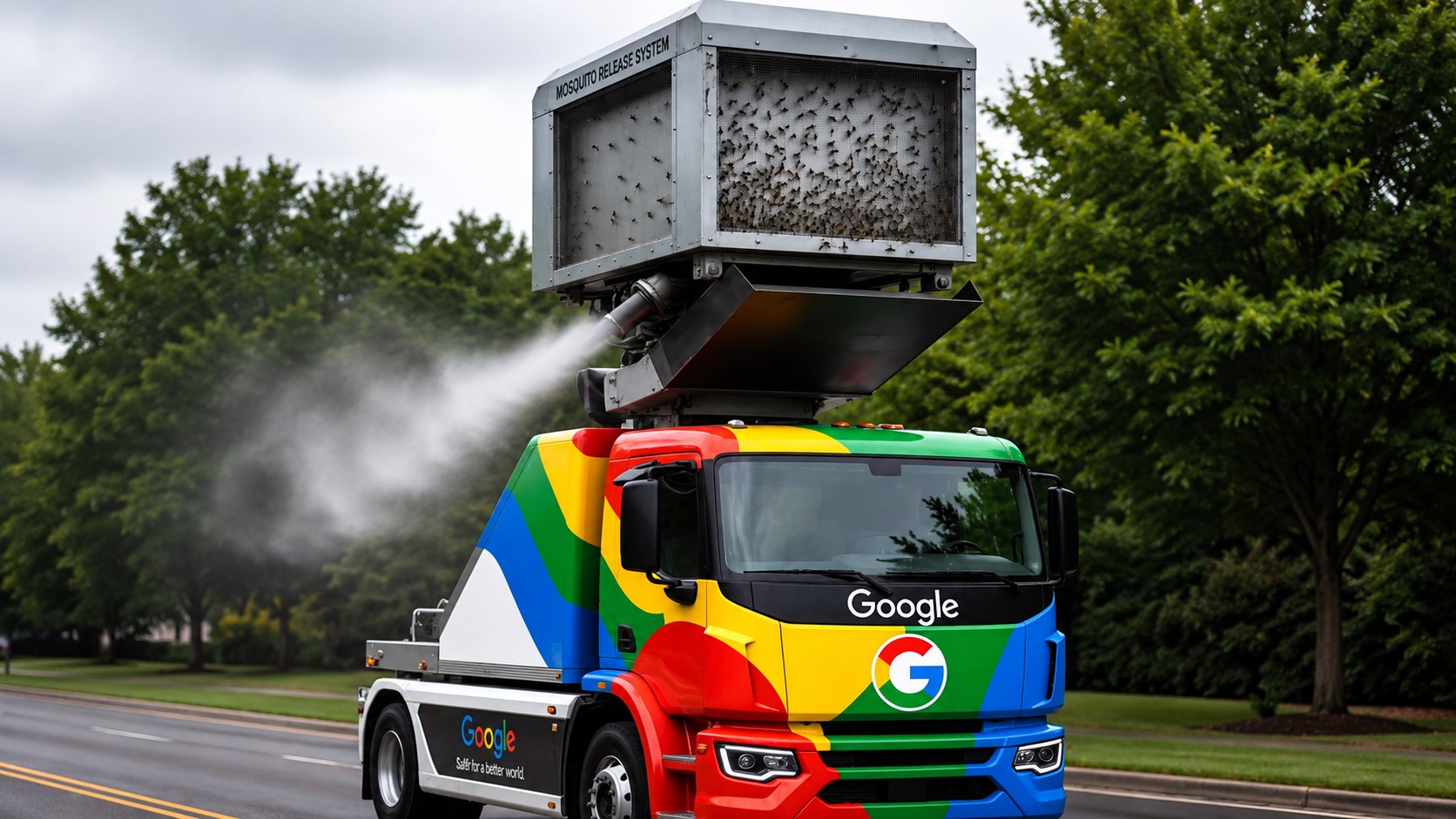
Sixty-four million mosquitoes. That’s the number Google‘s Debug program wants permission to release across Florida and California over two years. The company filed for an EPA experimental use permit to deploy Wolbachia-treated male Culex quinquefasciatus mosquitoes — up to 16 million per state, per year. The EPA has not approved the request. The public comment window closes June 5, 2026. And almost nobody is talking about it.
What Google Is Actually Proposing
The biology sounds elegant on paper — the scale is something else entirely.
Here’s the pitch: male mosquitoes don’t bite. Wolbachia is a naturally occurring bacterium. When treated males mate with wild females, the offspring don’t survive. Population shrinks. Disease transmission drops. Clean, targeted, no pesticides required. The EPA’s own Federal Register notice acknowledged the request “may be of regional and national significance.”
The agency has not yet approved the permit.
The Unknowns Should Bother You
Running a software patch on an ecosystem comes with no rollback option.
Wolbachia-based mosquito trials have happened before, at considerably smaller scales. This proposal stands out for its sheer size and for who’s driving it. The experimental-use permit process exists precisely because open-air biological interventions carry real unknowns: ecosystem interactions, long-term population dynamics, and effects on species that rely on mosquitoes as a food source. Details on independent expert assessment of this specific application remain unclear from available sources.
Supporters see a promising, targeted tool against disease-carrying mosquito populations. Critics point to the reality that releasing 64 million organisms into the wild constitutes an open-air biological experiment with no guaranteed containment. Neither position is entirely wrong. Both deserve a hearing before the deadline passes.
Here’s what the record currently shows:
- Up to 64 million mosquitoes total across both states over two years
- Male only — they do not bite humans
- EPA public comment period closed June 5, 2026
- No approval has been granted; the agency may approve, deny, or add conditions
Your Voice Has a Deadline. It Was Missed.
The window to weigh in is open right now — but not for long.
Think of public comment periods like leaving a review before a product ships — except the product is an ecological experiment spanning two states. The EPA’s decision here could set precedent for how the U.S. regulates large-scale biotech vector control for years to come. If that matters to you, June 5 was the cutoff. It has passed.