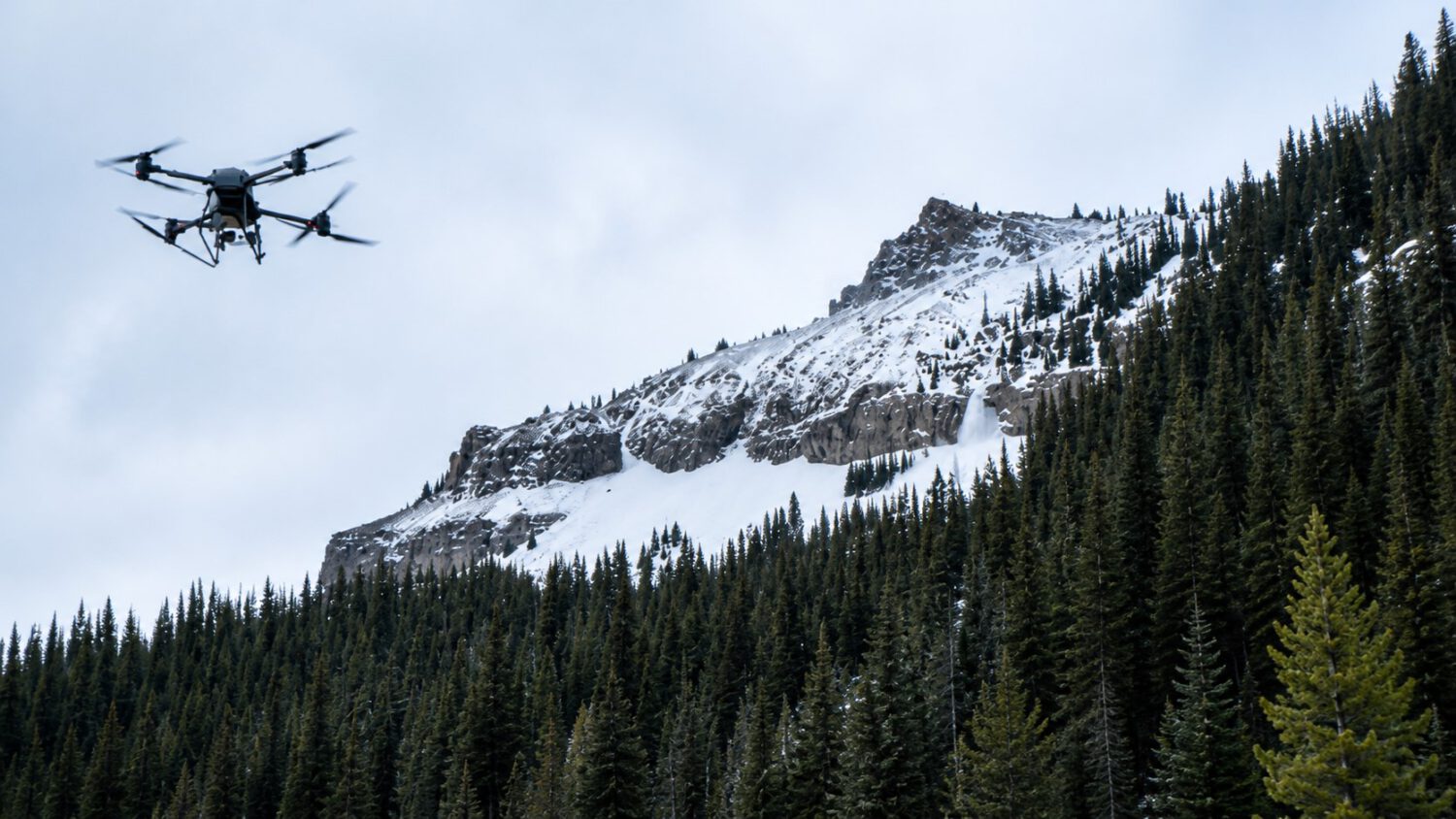
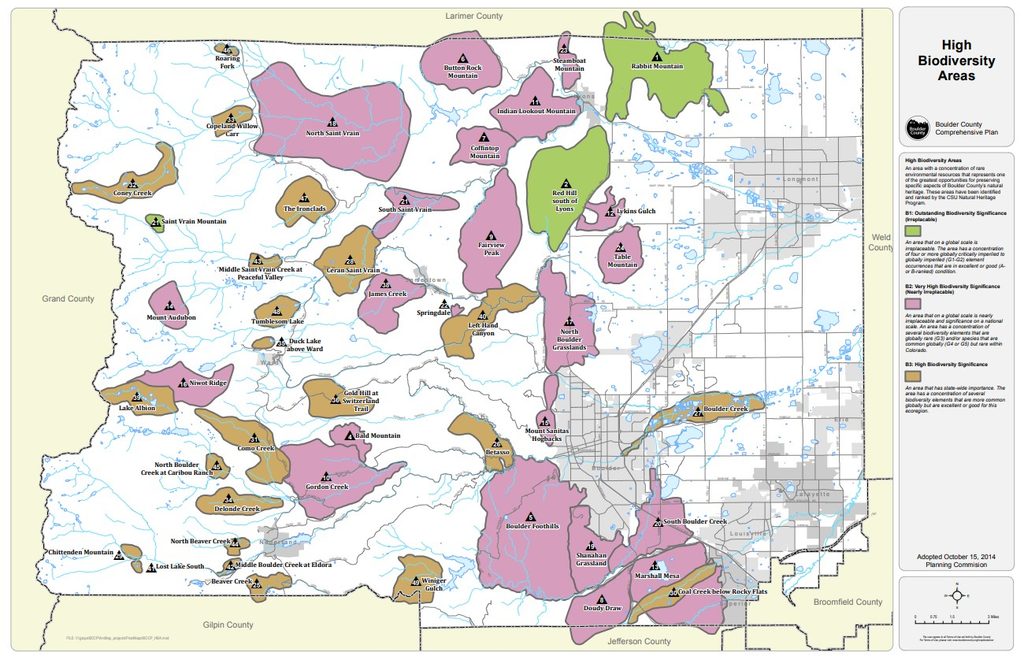
Organic crops sit at the base of Red Hill. Elk and bighorn sheep range across the slopes above. Boulder County officials want to send drones in to apply Rejuvra, a pre-emergent herbicide, across terrain they say conventional equipment cannot reach. Officials call it wildfire prevention. Farmers, conservationists, and at least one county commissioner call it a preventable risk to the watershed, the native seed bank, and downstream agricultural operations.
The County’s Case Is Not Unreasonable
Cheatgrass is a real problem. The question is whether this solution creates worse ones.
County officials are not inventing the threat. Cheatgrass is genuinely invasive: it crowds out native plants and creates continuous fine-fuel loads that increase fire risk. Officials say the terrain at Red Hill and surrounding open-space areas, including Rabbit Mountain, Hall Ranch, and Heil Valley Ranch, is too rugged for conventional spraying equipment, making drone application the county’s stated practical choice. Indaziflam, the active ingredient in Rejuvra, targets plant biology, and county officials say its mammalian toxicity is limited.
What the Independent Data Actually Shows
A city review and a peer-reviewed paper raise concerns the county has not fully answered.
Boulder’s own city analysis, drawing on EPA registration data, found that indaziflam is classified as extremely toxic to fish, aquatic plants, and aquatic invertebrates. A 2023 study cited in that analysis found genotoxic effects at increasing concentrations. That is a laboratory result, not proof of harm at field-application levels, but it warrants a public answer. A 2026 peer-reviewed analysis reported that indaziflam can persist in soil for years. A breakdown product called FDAT can migrate into surface water and groundwater, according to the same paper.
Independent testing of commercial Rejuvra samples, cited in that analysis, detected several PFAS compounds, including PFOS. Those are laboratory findings from commercial product samples, not a confirmed outcome from the proposed Boulder County application. Even so, the gap between the county’s assurances and what independent researchers are finding demands a straight answer before application begins.
A separate ecological concern cuts to the heart of the project’s stated goal. Indaziflam works by preventing seeds from germinating. Critics argue it may not distinguish between cheatgrass seeds and the native seed bank that land managers would need intact for post-fire recovery.
A Conflict-of-Interest Question the County Has Not Resolved
Community members raised it publicly, and the county has not addressed it clearly.
Community members have raised questions about the relationship between Boulder County weed ecologist James Sebastian and his son Derek Sebastian, who worked for Bayer, Rejuvra’s original developer, and now works for Envu, its current marketer. Derek Sebastian denied a conflict of interest and said the scientific literature supports indaziflam’s role in fire prevention and biodiversity protection. Two University of Colorado researchers published a paper arguing that the ecological risks deserve greater scrutiny. They also contended that claims about the scale of the cheatgrass problem may be overstated, and questioned whether some supporting studies adequately disclosed author ties to Bayer. That is an allegation about scientific disclosure, not proof the underlying science is wrong. A public agency should answer that question proactively, before any application begins.
Azuraye Wycoff of Yellow Barn Farm, whose operation sits at the base of Red Hill, said the community is “really livid.” Boulder County Commissioner Ashley Stolzmann opposed the project publicly, saying the community did not support the decision to proceed.
The Legal Fight Is Not Over
One court ruled for the county. A second challenge is now taking shape.
A district court granted Boulder County summary judgment on plaintiffs’ claims for declaratory relief and mandamus in a 2024 challenge to the weed-management plan. Two conservation groups have filed a notice of intent to bring a separate suit under the Endangered Species Act, centering on potential effects on protected species and habitat. A notice of intent is not a court finding of violation. It does signal that litigation over this program is not finished.
What Boulder County Should Do Before the Drones Fly
Transparency, independent testing, and baseline monitoring are reasonable prerequisites, not obstacles.
The county should commission independent chemical testing of the specific Rejuvra formulation it intends to use. It should establish baseline monitoring of waterways and native seed banks before any application occurs. It should require clear, public conflict-of-interest disclosures from all staff and consultants involved in the decision. More than 800 residents submitted opposition emails during earlier deliberations. Treating that volume of concern as information rather than noise is the minimum a public land agency owes the communities it serves.