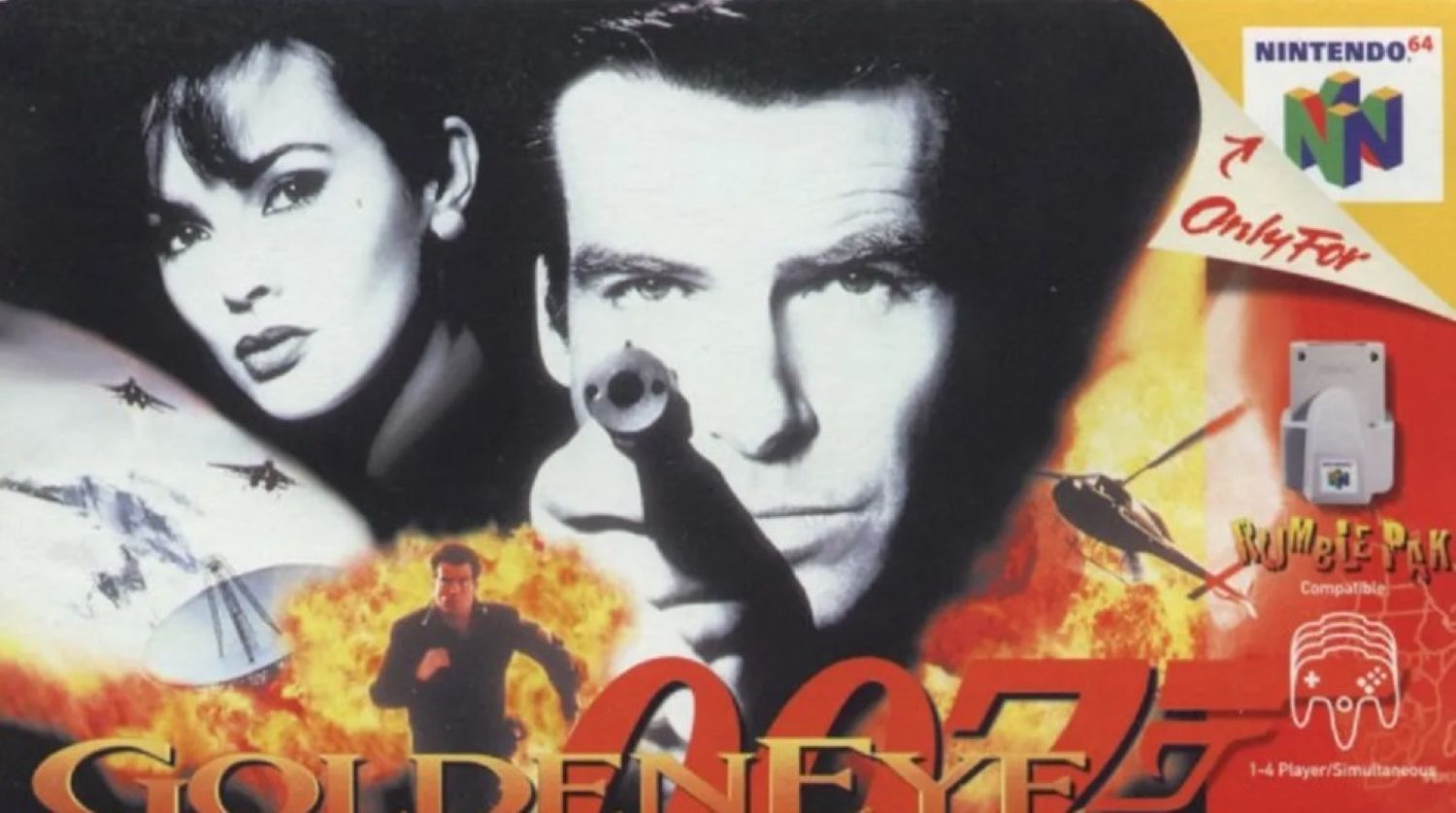
After roughly five years of painstaking work, the n64decomp project led by KholdFuzion hit a milestone worth paying attention to: GoldenEye 007’s entire N64 codebase is now 100% decompiled into human-readable C source. Not emulated. Not patched. Actually reconstructed from the original binary into code a developer can read, edit, and rebuild.
The distinction isn’t academic. Emulation runs the old ROM inside a virtual N64 — you’re still working within 1997’s constraints. Decompilation hands you the original manuscript instead of a photocopy. That’s the difference between playing GoldenEye at 20fps in a letterbox window and running it natively at whatever resolution your monitor demands, with modern input and frame-rate headroom to match.
Here’s what that unlocks:
- Complex mods — new missions, weapons, AI overhauls, UI redesigns — that ROM patching could never practically deliver
- A native PC port already in development, no emulator required
- A browser-playable WebAssembly demo that proved the concept even at 75% completion
- Builds for US, JP, and EU ROM variants, all requiring a user-supplied baserom for assets
- Separately, developer SunJaycy released GoldenEye Recomp v1.0 — a native PC port of the cancelled Xbox 360/XBLA version, built via static recompilation using the ReXGlue SDK
Tom’s Hardware described the achievement as a “true milestone” for reverse engineering, and that framing reads as accurate rather than hype. No public, community-accessible full decompilation of the N64 version existed before this.
One caveat worth repeating: don’t expect a finished port dropping next week. Coverage specifically warns that human-tuned builds are required for timing and physics accuracy — automated conversions can introduce bugs that break the feel of the game entirely. The code exists. Quality ports take careful engineering.
The legal architecture follows common preservation practice. The repository ships zero Nintendo or Rare assets. You supply your own ROM. That’s deliberate risk mitigation, not a legal guarantee — distributing derivative licensed IP remains genuinely complicated territory.
Why This Game, Why Now
GoldenEye’s cultural weight is precisely what made a five-year volunteer reconstruction effort worth attempting.
GoldenEye sold over eight million cartridges and ranked as N64’s third best-selling title, behind Super Mario 64 and Mario Kart 64. It introduced console shooters to stealth mechanics, security cameras, and silenced weapons at a time when the genre was still figuring itself out. Its split-screen multiplayer defined couch gaming for an entire generation — the kind of four-player chaos that Fortnite squads eventually replaced but never quite replicated.
That legacy explains why volunteers spent five years reconstructing a 1997 game from binary. This is cultural stewardship treated with the same archival seriousness as a film restoration — the belief that software this significant deserves to survive beyond the hardware it shipped on.
Rights holders — Nintendo, Rare, EON Productions, MGM — have not publicly commented, based on available reporting. They don’t have to. The global devs already have the source code.