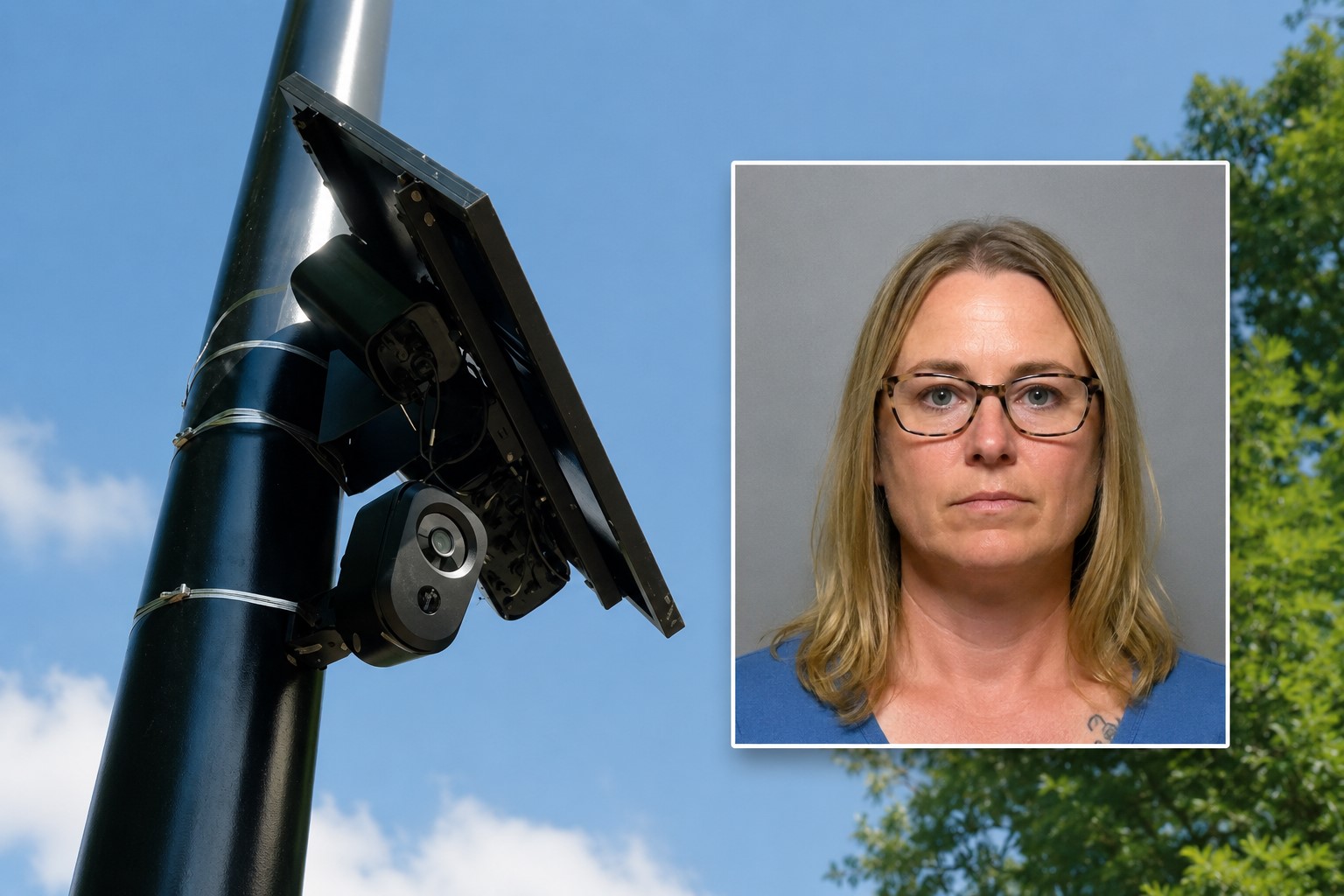
Surveillance tools built to catch criminals were allegedly turned into a personal tracking system. A Sumter County Sheriff’s Office detective reportedly used three separate law-enforcement databases — not to solve cases, but to monitor her husband’s ex-wife. The fallout: criminal charges, a termination, and every Flock license plate reader camera in the county going dark.
What the Audit Uncovered
An internal review on July 23 revealed database queries with no connection to any active investigation.
- Detective Brandy Almany was arrested and terminated after a July 23, 2026 internal audit flagged irregular activity across multiple systems.
- She allegedly accessed Flock ALPR cameras (automated license plate readers), CCIS (Comprehensive Case Information System), and DAVID (Driver and Vehicle Information Database) to monitor one individual for personal reasons, a pattern reminiscent of apps secretly tracking users without consent.
- Investigators say she attached fake case numbers and false justifications to disguise the personal searches.
- Charges include official misconduct under F.S. § 838.022(1)(a) and computer crimes under F.S. § 815.06.
- Sheriff Patrick Breeden suspended all Flock camera use countywide and ordered a full database audit; additional charges remain possible.
The cover-up attempt is what sharpens the insider-threat angle here. Almany allegedly didn’t just run unauthorized searches — she built a paper trail of lies to make them look legitimate, according to the sheriff’s office statement. The audit trail caught what access controls missed. Breeden stated publicly that he would “not tolerate conduct” falling short of agency standards regarding sensitive data, according to his recorded message — framing the swift response as a matter of accountability and transparency.
This isn’t isolated to one Florida county. In Fort Bend County, Texas, a sheriff’s lieutenant admitted to running plates dozens of times without law-enforcement justification. University of Houston law professor David Kwok told ABC13 that accessing restricted information “typically would be an administrative or ethical violation,” but circumstances can push it into criminal territory. The greater danger, it turns out, was internal access — not an external breach. Sumter County’s prosecutors clearly agree.
The Split on What Comes Next
Residents and neighboring sheriffs are drawing opposite conclusions from the same scandal.
Sumter County residents are divided, according to local reporting — some welcome the pause over privacy concerns, others fear losing a crime-solving tool. Nearby Volusia County Sheriff Mike Chitwood has defended Flock cameras, citing 30-day data retention limits and strict sharing rules. Flock Safety states its data is encrypted and agency-controlled. Those assurances carry a different weight when the threat originates from inside the department.
The ongoing audit could reinstate cameras with tighter controls or accelerate statewide pressure for mandatory access-logging requirements. The uncomfortable truth remains: the same database access that helps solve hit-and-runs is exactly what allegedly enabled a personal surveillance campaign — badge and all.