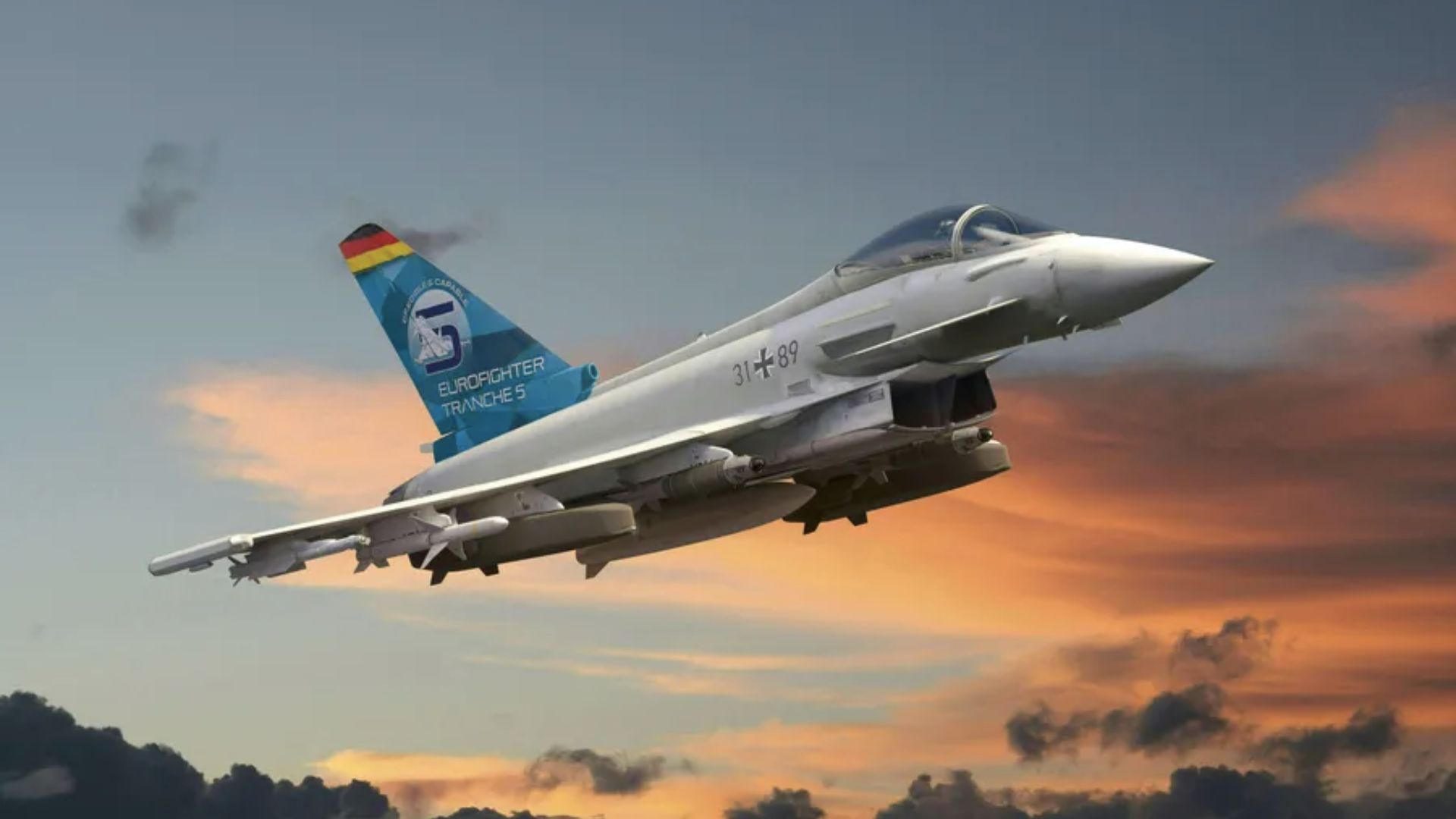
Dead air forces in contested airspace are dangerous, but Germany’s new Tranche 4 Eurofighter aims to eliminate that vulnerability. Airbus showcased the first physical aircraft from Project Quadriga at its Bavaria Defense Summit, transforming a 2020 contract into tangible hardware. This isn’t just another military procurement milestone—it’s Europe betting heavily on upgraded fourth-generation fighters while next-generation systems remain years away, complementing other advanced weapons like hypersonic missiles.
AESA Radar Finally Arrives
The HENSOLDT ECRS Mk 1 system brings multi-target tracking and electronic warfare to the Typhoon platform.
The centerpiece upgrade revolves around HENSOLDT’s ECRS Mk 1 active electronically scanned array radar. Unlike mechanically scanned predecessors, AESA systems can track multiple targets simultaneously while conducting electronic warfare—think smartphone multitasking versus old flip phones. Airbus has been flight-testing the radar integration using an A320 with a grafted Typhoon nose, proving the technology works beyond PowerPoint presentations.
Specialist sources suggest the Captor-E Mk 1 can detect targets beyond 370 kilometers while tracking 40 airborne contacts, though these figures come from unofficial technical analyses rather than manufacturer documentation.
Production Timeline Meets Strategic Reality
Deliveries between 2025-2030 position these fighters as capability bridges during next-gen development delays.
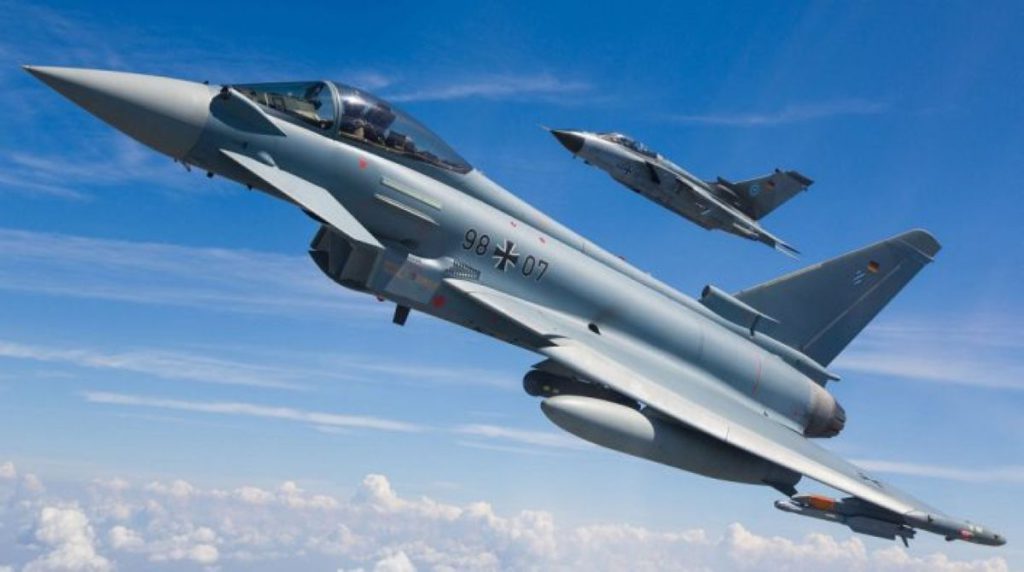
Germany ordered 38 Tranche 4 aircraft for delivery between 2025 and 2030, with Spain adding 20 more under its parallel Halcón program. These upgraded Typhoons serve as capability bridges while the Franco-German-Spanish Future Combat Air System faces extended development timelines. Meanwhile, the UK is investing £2.35 billion into an even more advanced ECRS Mk 2 radar variant, creating a family of increasingly sophisticated sensors across the Eurofighter fleet.
Electronic Warfare Hub in the Sky
Advanced radar transforms Typhoons from pure interceptors into networked sensor platforms.
The radar upgrade transforms Typhoons from pure interceptors into networked sensor platforms capable of jamming enemy systems while sharing targeting data across formations. Your smartphone’s ability to run multiple apps simultaneously mirrors how these fighters can now detect, track, and disrupt threats concurrently, similar to advances in supersonic technology. This positions the upgraded Typhoon competitively against rivals like the Rafale or F-16V in export competitions where electronic warfare capabilities increasingly determine winners.
Flight testing of Germany’s first Tranche 4 aircraft should begin soon, with operational capability expected by the second half of this decade. For Europe’s defense industrial base, these upgrades represent more than capability preservation—they’re proving grounds for technologies that will eventually migrate to sixth-generation systems. The question isn’t whether upgraded Typhoons can compete; it’s whether Europe can sustain this technological momentum long enough to matter.