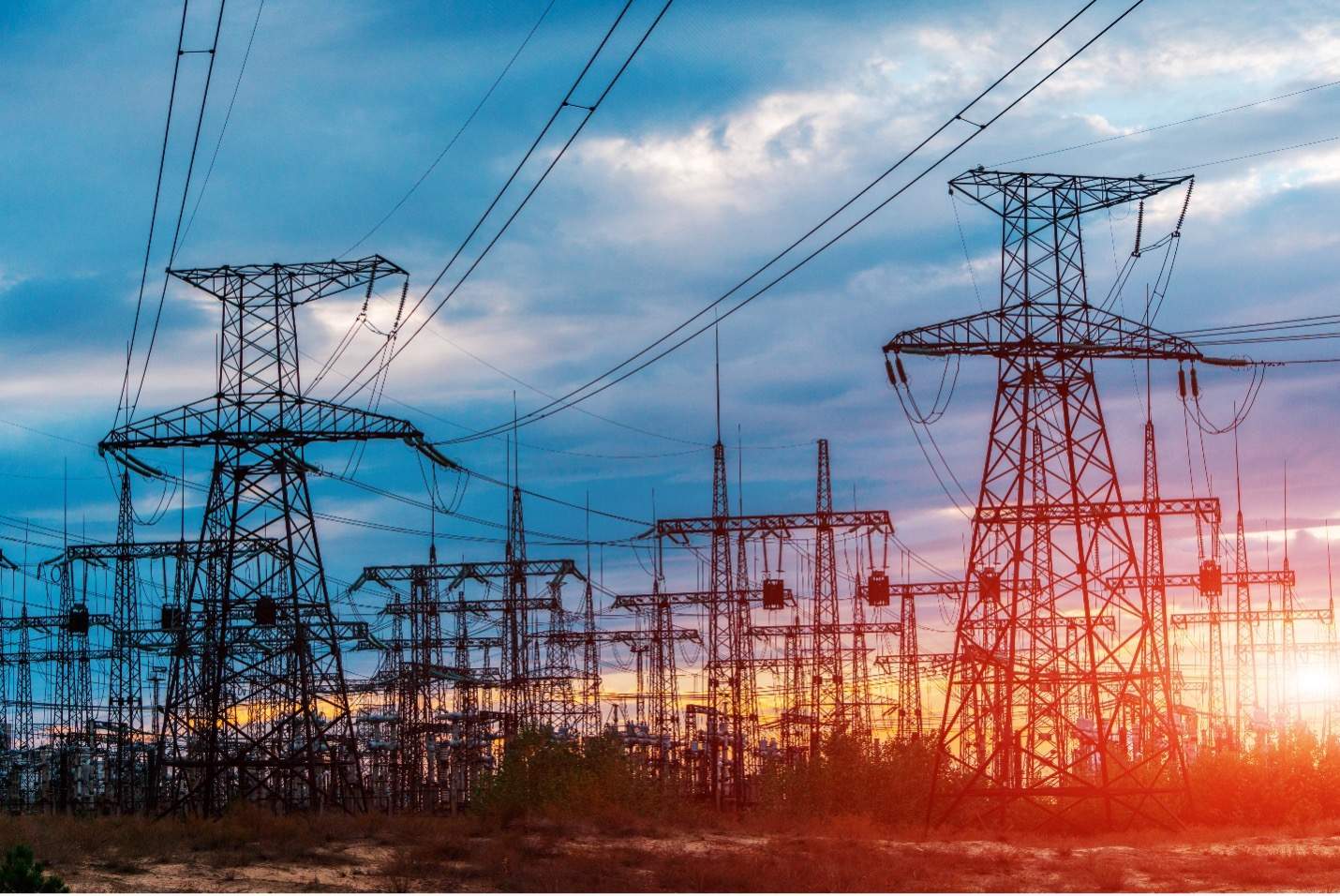
Wholesale power prices across America’s largest grid jumped 75.5% year-over-year — from $77.78 to $136.53 per megawatt-hour — driven primarily by data center load growth, alongside broader supply-demand pressures. PJM Interconnection, the grid operator covering 13 states and Washington D.C., has filed new rules with federal regulators delivering a blunt ultimatum to new large data centers: bring your own generation, or be first in line when the lights have to go out somewhere.
The Numbers That Forced This Decision
The capacity shortfall, soaring costs, and retiring generation that pushed PJM to act.
Seven nuclear reactors. That’s roughly the equivalent of the 6.8 GW PJM’s most recent capacity auction came up short — even after hitting its price cap. Data center demand alone added an estimated $6.3 billion to capacity market costs, pushing total charges to $16.4 billion. Meanwhile, 15 GW of generation has retired since 2022, and PJM projects 70 GW of new large load — mostly data centers — arriving by 2038. The math is unforgiving.
Here’s what the proposed Interim Resource Adequacy Service (IRAS) actually does:
- 50 MW threshold: New loads at a single site or within a one-mile radius must bring qualifying generation or face curtailment before residential customers
- Large Load Registry: Tracks each qualifying site’s location, ramp schedule, backup generation type, and fuel supply — so utilities know exactly who to cut and how fast
- Curtailment order: Data centers go first during grid emergencies, ahead of household shutoffs, per Reuters reporting on the PJM filing
- Compensation with an opt-out: Affected operators receive payments tied to PJM’s demand-response penalty framework, but can waive them entirely
- Grandfathering: Existing facilities are largely protected; IRAS targets incremental capacity added after June 1, 2027
“Large data center load additions have already had a significant and irreversible impact” on PJM costs, Monitoring Analytics, the grid’s independent market monitor, warned in its assessment.
What This Means for Your AI Infrastructure
Operators who planned to simply plug into the grid are about to find that option closing.
On-site gas generation, bilateral power contracts with independent producers, and automated workload migration tied to real-time grid conditions are shifting from optional contingencies toward baseline requirements for new builds in PJM territory. Virginia — home to the world’s largest data center cluster — already requires operators to fund all dedicated upstream grid infrastructure themselves. Other PJM states are watching those rules closely.
There’s a meaningful catch: PJM cannot flip the switch directly. It depends on state utilities and regulators to execute curtailments using registry data as guidance — a real gap between policy intent and enforcement. From 2029/2030 onward, data centers without their own supply get excluded from PJM capacity auction demand calculations entirely. That affects project bankability well before the grid ever goes dark.
The industry will argue, not unreasonably, that AI infrastructure is strategic national investment and that punitive curtailment rules could push projects to other grids. That argument carries less weight when reserves drop below 5,800 MW on a July afternoon, as they did during the 2026 heat emergency that prompted a DOE emergency order.
If regulators approve this framework, every other major U.S. grid operator is likely to study it as a template. The physical world just sent the cloud an invoice — and the new rule is simple: bring your own power, or be the first thing switched off.