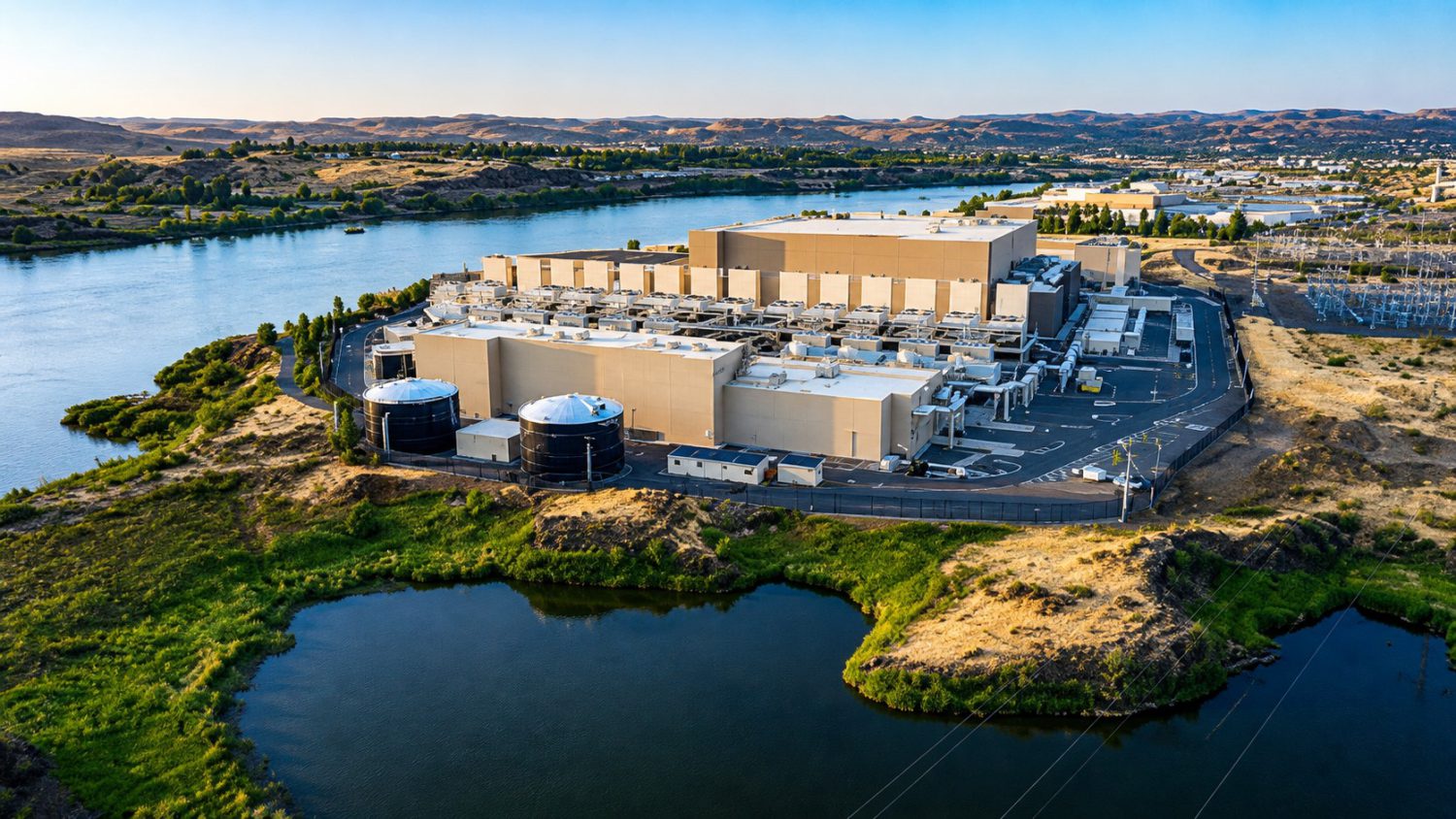
Every ChatGPT prompt, every Netflix binge, every Slack thread runs through physical infrastructure quietly drinking from rivers and reservoirs you’ve probably never thought about. Not just to cool servers — but to power them. A new Ceres report, “Water Behind the Watts,” released August 25, 2026, puts a number on it: electric power generation for AI data centers in seven U.S. states withdraws 3.4 trillion gallons of freshwater annually. That’s 10.4 million acre-feet — more than California’s entire urban water demand of 8 million acre-feet, and roughly 12 times the combined annual water use of Los Angeles, Phoenix, and Washington, DC. Calling the cloud “immaterial” is like calling a coal plant a warmth service. The branding is clean. The infrastructure isn’t.
Where the Water Goes – And Where It’s Already Scarce
Two-thirds of the power plants supplying data centers already sit in water-stressed territory.
Virginia, Texas, California, Illinois, Georgia, Ohio, and Arizona together host roughly half of all U.S. data centers. Seventy-eight percent of electricity in these states flows from water-dependent power plants. More troubling: 66% of those plants sit in areas already facing medium-high to extreme water stress or drought.
“Demand for water is high compared to what is actually available,” said Kristen James, Ceres’ senior program director for water, in Bloomberg Law coverage of the report. Key figures from 2024:
- California’s data-center power generators withdrew about 1.4 trillion gallons
- Virginia’s data-center corridor added another 753 billion gallons
- In the Phoenix region, Ceres projects electricity-related water use could increase 400%, with cooling-related use rising 870%
The AI buildout isn’t stabilizing these numbers. It’s accelerating them.
The Number Is Big. How Alarmed Should You Actually Be?
The methodology debate is real — and it doesn’t make the underlying risk disappear.
When a Phoenix utility planner reviews a hyperscaler’s interconnection request, the first question is increasingly about water, not megawatts. That’s because two competing metrics tell very different stories:
- Withdrawals capture total water dependency, including water eventually returned to the source
- Consumptive use tracks only water permanently removed — mostly through evaporation — and never returned locally
Sarah Porter, director of the Kyle Center for Water Policy at Arizona State University, argues consumptive use is the more meaningful figure. Counting water flowing through hydropower turbines as data-center “use,” she told Bloomberg Law, produces “unrealistically high” estimates that won’t “yield useful information” for policymakers. Her team, drawing on 2024 Lawrence Berkeley National Laboratory data, puts indirect consumptive water use by U.S. data centers at roughly 650,000 acre-feet nationally — about 16 times smaller than Ceres’ withdrawal figure.
Ceres counters that withdrawals still expose real dependency risk, particularly when power plants draw from over-allocated rivers or stressed aquifers. The debate clarifies where to look. It doesn’t make the exposure disappear.
The Reckoning Arriving Downstream
Investors and regulators are starting to ask questions that carbon reporting never forced about water.
Phoenix and Las Vegas are already implementing measures to scrutinize data-center water demand, including requirements around reclaimed water use. California is exploring disclosure requirements. ESG analysts are beginning to treat water risk the way they treat carbon — as a liability that eventually shows up in valuations. Regulators are starting to ask questions that carbon reporting never forced about water. The AI infrastructure appetite looks like a music festival that leaves the venue trashed: the user experience is seamless, the environmental tab lands somewhere else. Those watersheds are running a tab. It’s coming due.