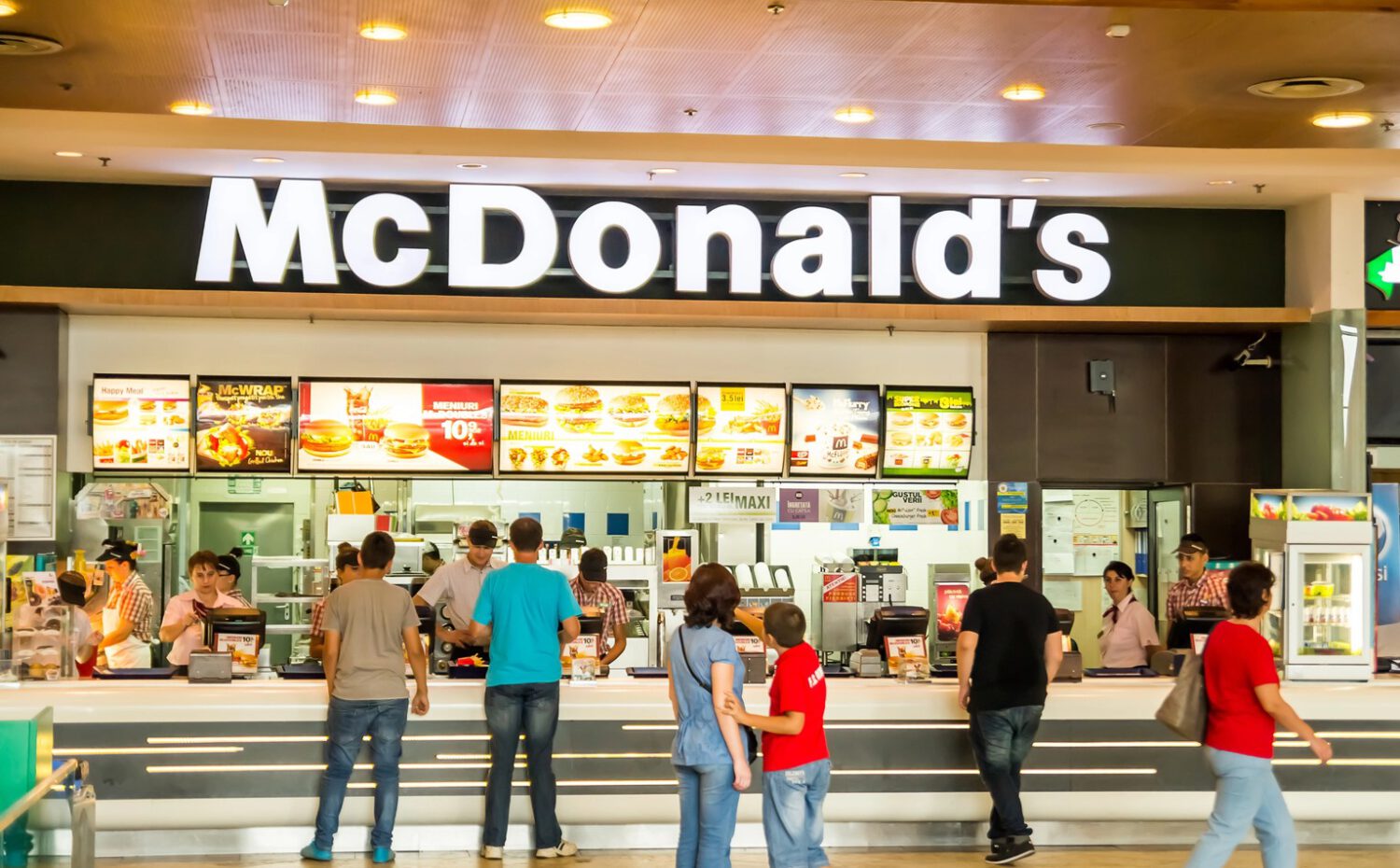
Two McDonald’s restaurants, two miles apart, same city, same Big Mac. One charges $5.69. The other charges $6.89. If you’ve ever wondered whether you’re paying too much at one location versus another, this lawsuit suggests the answer may lie in the algorithm.
Filed in Chicago by an Illinois resident seeking to represent potentially millions of customers, the proposed class action alleges McDonald’s conspired with its franchisees to fix menu prices using an AI-powered pricing system, according to Reuters. The case joins a broader wave of U.S. class actions targeting algorithmic pricing coordination across hotels, apartments, and other consumer sectors.
The central legal question: can sharing a common algorithm trained on nonpublic data constitute price-fixing, even without an explicit agreement between the parties involved?
How the Pricing Engine Reportedly Works
McDonald’s system analyzes millions of daily transactions to generate location-specific price recommendations, but who makes the final call is precisely what this lawsuit disputes.
Reuters reported on September 29, 2026, that McDonald’s pricing engine uses machine learning to analyze data from millions of daily transactions across nearly 14,000 restaurants. The system generates what the company calls an “optimal price” for each menu item at each location, from Big Macs to discounted coffee.
Reuters documented the $5.69-versus-$6.89 Big Mac gap at two company-operated restaurants in Fresno, California, based on interviews with three franchisees and a review of prices in McDonald’s mobile app. The outlet noted it could not confirm the pricing engine caused that specific difference.
Franchisees reportedly retain authority to accept or reject the system’s recommendations.
What the Complaint Alleges and What McDonald’s Says
The plaintiff argues that franchisees relying on a centrally supplied algorithm and shared nonpublic data are not truly setting prices independently; McDonald’s calls those claims speculative.
Language in the complaint states directly: “Independent businesses must set their prices independently.” The plaintiff’s theory holds that franchisees relying on a centrally supplied algorithm trained on shared, nonpublic data are not truly acting independently, and that the arrangement violates U.S. antitrust law.
These allegations are unproven. The case remains at an early stage, with no ruling on class certification or liability.
McDonald’s pushed back sharply. The company called the allegations “speculative and uninformed” and stated: “AI does not set the price of a Big Mac or any other menu item,” according to Reuters. McDonald’s describes the pricing portal as an optional analytics tool and notes that recommendation software is common practice across industries.
A Legal Line the Algorithm Era Has Yet to Define
The outcome could reshape compliance expectations for any business that uses centralized pricing tools, not just fast-food chains.
A successful claim could increase compliance pressure on restaurant chains, retailers, and any business using AI-powered pricing tools. Companies would face pressure to document human discretion, data inputs, and decision logic with considerably more care.
This case asks whether a shared algorithm, fed with nonpublic data and pointed at thousands of nominally independent businesses, can coordinate pricing behavior without anyone ever picking up the phone. Where that line falls may be one of the more consequential antitrust questions the algorithm era produces , with implications that extend well beyond fast food, touching industries from AI data centers to retail.