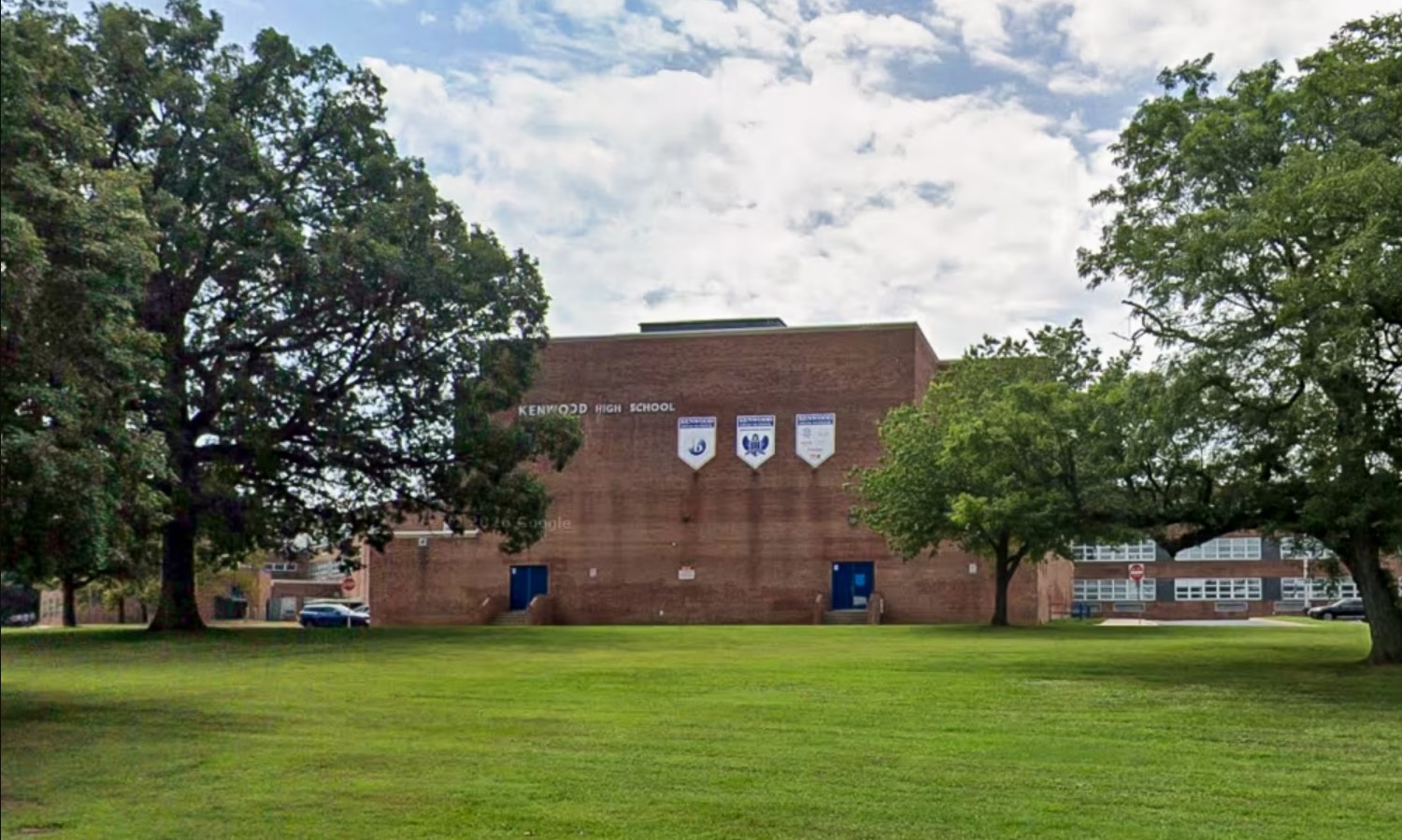
Outside Kenwood High School at 6:30 p.m. on October 20, 2025, four Black teenagers were waiting for a ride after football practice. The complaint says one student had Cool Ranch Doritos given to him by his coach.
Then at least six Baltimore County police officers arrived, some with weapons drawn.
According to the lawsuit, officers forced the students to their knees, handcuffed them, and searched them. No weapon was found.
What the System Actually Flagged
Omnilert scans security-camera footage for possible firearms, but the inspector general found it did not flag the chip bag itself.
The November 2025 investigation by Maryland’s Office of the Inspector General for Education found that the system did not identify the blue chip bag as a weapon. It interpreted the student’s hand movement as a potential threat. Specifically, it interpreted the position and angle of the hand and an unidentified object near the hip or pocket area as cause for an alert.
The lawsuit alleges the system generated that alert at 90% confidence. That figure comes from the complaint, not from independently verified performance data.
False positives are a documented operational risk of automated detection systems. What happened next was neither managed nor acceptable.
The Cancellation Nobody Confirmed
The lawsuit’s most consequential allegation is not about the AI; it is about what people failed to communicate after the alert was withdrawn.
The lawsuit alleges that school and police officials canceled the alert within minutes of it being generated, after determining that no gun was visible in the footage. What allegedly did not happen is the part that matters. The principal did not clearly communicate that cancellation; a screenshot went to a school resource officer, who forwarded it to police.
Officers were deployed anyway.
These are allegations in a civil complaint, not proven facts. The complaint alleges that a surveillance app screenshot moved through the chain after the alert had been canceled, contributing to the armed response.
What the Investigation Found and What It Left Open
The inspector general’s no-bias finding is narrow, and the larger accountability questions remain unresolved.
Maryland’s inspector general found no evidence of racial bias in how the alert was generated at Kenwood. That finding addresses one specific question about this incident.
It does not resolve whether the later detention was lawful, whether verification procedures before police notification were adequate, or whether the institutional response after cancellation met any reasonable standard. Those questions belong to the ongoing litigation.
Legal Claims and Responses
The students are seeking both damages and policy reforms from multiple defendants.
The students are suing Omnilert, Baltimore County, the county school system, the principal, school-safety officials, and officers. Their claims include unreasonable search and seizure, false imprisonment, negligence, and civil-rights violations.
They are seeking damages and changes to alert-verification and communication procedures. Omnilert and the Baltimore County Police Department declined to comment, citing pending litigation. The school district and principal had not responded to comment requests as of available reporting.
The Procedural Gaps That Need Closing
The lawsuit’s demands identify specific failures that any institution using AI threat-detection should address.
The complaint alleges that existing verification and notification procedures failed to prevent the police response. The case raises questions about whether the cancellation protocol required documented acknowledgment from every recipient, including dispatchers and officers in the field.
The litigation may also test how established constitutional standards apply when an AI-generated alert is the principal basis for detaining and searching a minor.
AI weapons-detection tools can produce false positives. The systems sold to schools are only as reliable as the human procedures built around them. The complaint alleges that a canceled alert was followed by an armed response involving at least six officers, who detained four teenagers outside the school after football practice.
That outcome may be reducible through clearer safeguards. The question is whether the institutions involved will treat this case as a reason to build them.