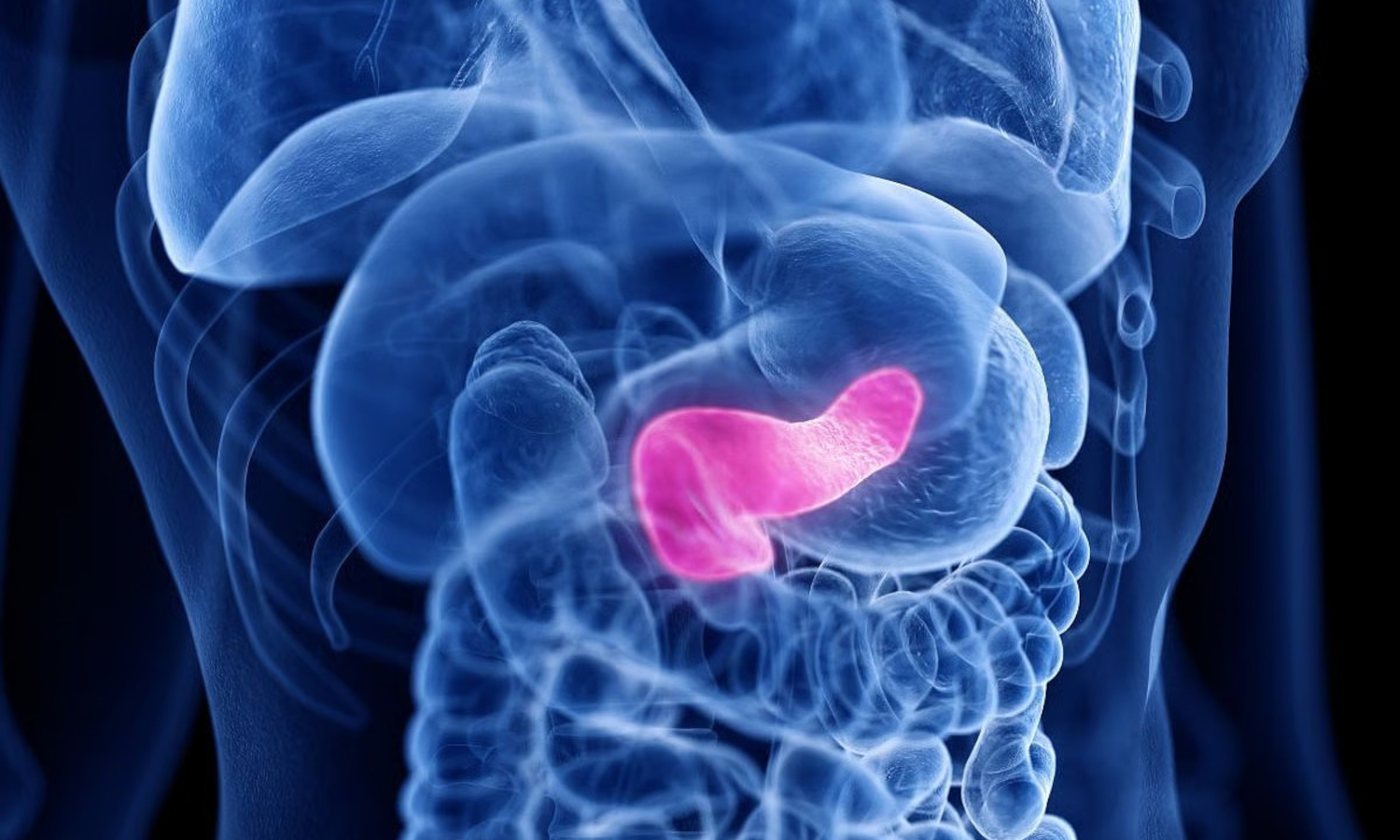
Pancreatic cancer is ruthless precisely because it hides. By the time most patients get a diagnosis, roughly 90% of cases have already advanced to stages where the five-year survival rate sits at approximately 14%, according to published data.
A study published in Nature Medicine on September 16, 2026 reports that an investigational blood test called PANXEON correctly identified approximately 87% of stage I and II pancreatic cancer cases across nearly 1,800 participants from the United States, Italy, Japan, and South Korea.
Three Signals, One Score
A single blood draw powers an AI-driven composite that outperforms any of its three components used alone.
PANXEON is a liquid biopsy, meaning it analyzes what tumors shed into the bloodstream rather than requiring tissue from the tumor itself. From one blood draw, the test reads three distinct biological signals: circulating microRNAs, exosomal microRNAs (molecular signals carried inside tiny particles that cells release into the blood), and CA19-9, a protein long used as a pancreatic cancer marker but historically unreliable on its own.
An AI model combines those three signals into a single risk score. That composite approach separates PANXEON from prior single-marker tests, which tended to miss early-stage disease or generate too many false alarms.
What the Numbers Show
The test achieved strong diagnostic accuracy across both early cancer and a precancerous condition, though false-positive rates in high-risk patients remain a consideration.
The Nature Medicine study reports an area under the receiver operating characteristic curve (AUROC, a standard measure of diagnostic accuracy) of 91.7% for detecting pancreatic ductal adenocarcinoma and high-grade dysplasia combined. That figure reflects how well the test separates true cases from non-cases across different scoring thresholds. For stage I and II cancer specifically, sensitivity reached approximately 87%.
False-positive rates, meaning cases where the test flags cancer in people who do not have it, were approximately 3% in low-risk individuals. In high-risk patients, those with familial or inherited pancreatic cancer risk, pancreatic cysts, or chronic pancreatitis, that rate climbed to approximately 16%. That figure is not trivial, and the authors acknowledge that further validation in surveillance settings is required before the test could guide clinical decisions for those groups.
Catching It Before It Becomes Cancer
PANXEON’s ability to flag a precancerous “stage 0” condition may be the study’s most consequential finding.
High-grade dysplasia is an advanced precancerous lesion of the pancreas that clinicians sometimes call “stage 0” pancreatic cancer. PANXEON detected it in approximately 64% of evaluated cases, according to the Nature Medicine study. No blood-based test has previously demonstrated reliable sensitivity for this condition.
“Pancreatic cancer remains so deadly largely because we find it after the window for cure has begun to close,” said Ajay Goel, Ph.D., AGAF, chair of the Department of Molecular Diagnostics and Experimental Therapeutics at City of Hope and senior author of the study. He added, via HealthDay coverage of the study, “A stage shift is not just a statistic. The earlier we find pancreatic cancer, the greater the chance that meaningful intervention is still possible.”
Who Stands to Benefit
PANXEON is built for people already navigating elevated risk, not as a general population screening tool.
The intended population is people who already carry elevated risk: those with a family history of pancreatic cancer, diagnosed pancreatic cysts, or chronic pancreatitis. These patients currently navigate expensive, often invasive imaging cycles that remain imperfect at detecting truly early disease. A reliable blood test could focus that imaging on the people who need it most.
PANXEON is designed as a front-line triage tool, not a replacement for MRI, CT scans, or endoscopic ultrasound.
Conflicts, Funding, and Caveats
The study carries notable commercial disclosures alongside substantial public funding.
Goel is a paid consultant to Biocartis, a diagnostics company that holds an option to acquire rights to PANXEON. The study received funding from NIH and National Cancer Institute grants and from the Italian Association for Cancer Research. City of Hope’s Stephenson Global Pancreatic Cancer Research Institute, established with a $150 million philanthropic gift, led the research effort, and those financial relationships should be weighed when evaluating the findings.
PANXEON is investigational and is not approved for routine clinical use. The current dataset draws from samples collected around the time of clinical diagnosis or intervention, meaning the test has not yet demonstrated that it can detect cancer before imaging or symptoms emerge in asymptomatic individuals. Larger prospective surveillance studies are the necessary next step before any guideline body could consider adoption.
If you have a family history of pancreatic cancer, carry known genetic risk, or have been diagnosed with pancreatic cysts, the research team’s stated goal is to make a test like this available for surveillance programs. That outcome depends on what the next round of trials shows.