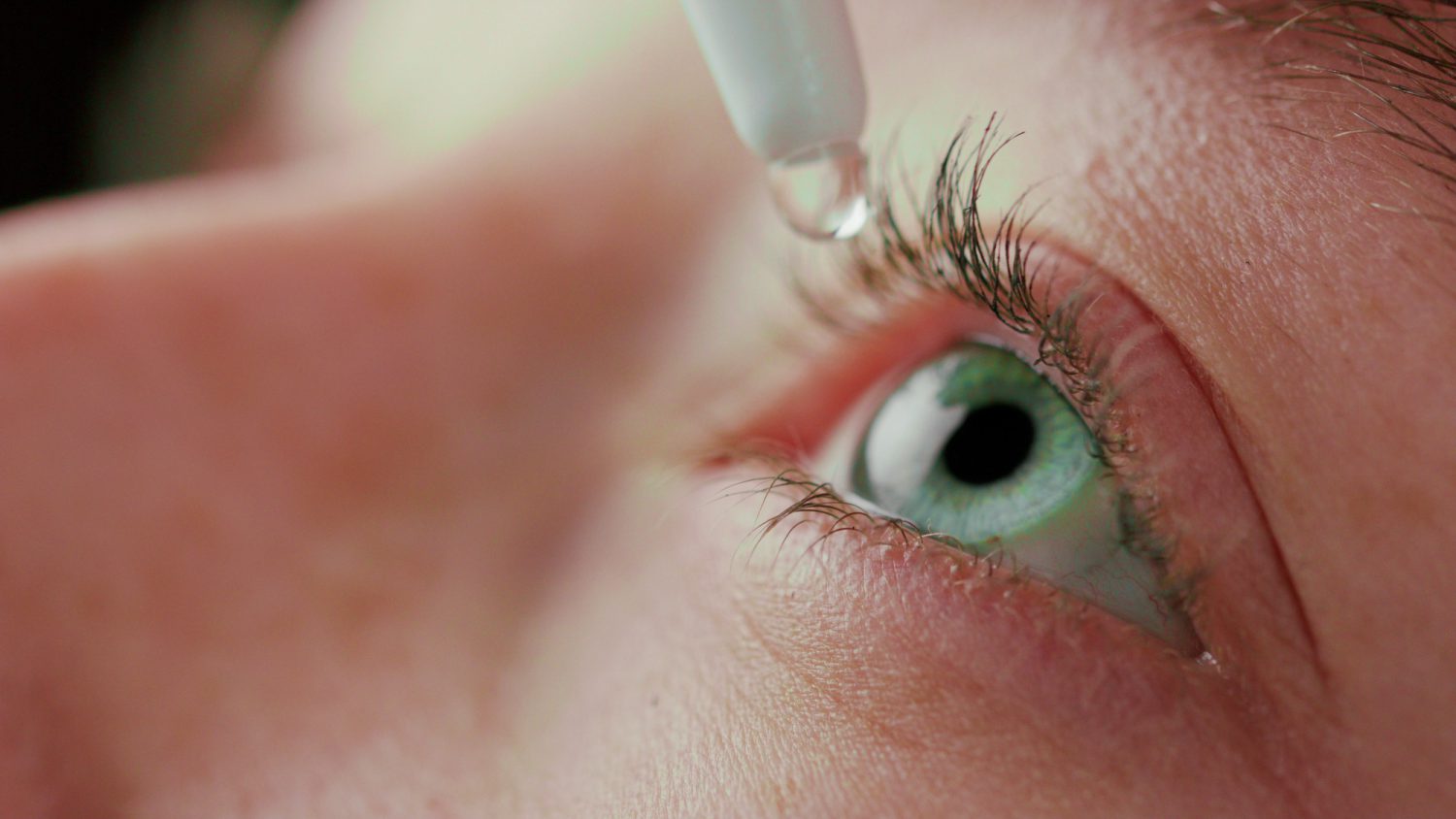
If you had LASIK and now dread every nighttime highway stretch because oncoming headlights explode into halos and starbursts, you are not imagining things. That is a recognized post-surgical condition, and until now, there has been no approved pharmacological fix for it in this specific indication. Opus Genetics may be changing that: its experimental phentolamine ophthalmic solution 0.75% has cleared two Phase 3 trials targeting chronic night driving impairment, and the FDA has granted the treatment Fast Track designation, potentially accelerating its path to approval.
How the Drops Work, and What the Trials Found
A once-daily drop moderately constricts the pupil for at least 20 hours, filtering out the peripheral light distortions that make post-LASIK night driving so disorienting.
Phentolamine acts on a muscle in the iris, producing sustained pupil constriction that reduces aberrant peripheral light entering the eye while preserving retinal contrast sensitivity. The goal is sharper, lower-distortion vision in dim conditions, not a dramatic alteration to how your eye functions overall.
The LYNX-1 Phase 3 trial enrolled 145 participants reporting impaired dim-light visual acuity, glare, halos, and starbursts. Many had undergone corneal reshaping procedures such as LASIK. Participants used either phentolamine 0.75% or placebo daily for 8 or 15 days. The primary endpoint was a gain of at least three lines, or 15 letters, on a mesopic low-contrast visual acuity chart.
By day 15, 21% of treated patients hit that threshold, compared with 3% on placebo, meeting the trial’s primary endpoint as reported in the American Journal of Ophthalmology, according to Reuters. Patient-reported outcomes strengthened the case further. On a 1-to-7 severity scale, the phentolamine group’s night vision problem score fell from 4.3 to 3.3 by day 15, while the placebo group moved only from 4.6 to 4.3, a statistically significant gap, per Reuters.
According to Reuters, citing an Opus Genetics statement, chief medical adviser Dr. Jay Pepose noted: “we also saw functional improvements in difficulty of seeing the road because of oncoming headlights; and difficulty seeing due to glare when driving at dawn or dusk, as reported by patients in the trial.” That quote reflects outcomes from the second Phase 3 study, LYNX-2, which enrolled approximately 200 adults who underwent keratorefractive surgery and subsequently reported decreased low-light acuity and night driving impairment.
What’s Still Unproven, and What Comes Next
Two completed trials and a third underway still leave the most consequential question unanswered: do the drops actually make driving safer?
Opus Genetics reported that LYNX-2 met its primary endpoint and that patient-reported outcomes showed functional improvements in night-driving vision, according to Eyes on Eyecare. A third trial, LYNX-3, has now enrolled its first patient under an FDA Special Protocol Assessment, with study completion projected around March 2026.
The limitation worth keeping in mind is significant: none of these trials directly measured crash risk or objective driving performance, according to Medical Daily. Improved eye-chart scores and reduced self-reported glare are meaningful signals, but they are not the same as demonstrated road safety gains. What also remains unknown is how the drops affect your vision beyond two weeks, or whether they alter daytime sight.
The drops are not FDA-approved or commercially available. If you had LASIK and struggle after dark, phentolamine is not something you can ask your ophthalmologist to prescribe today. The LYNX data gives regulators a credible evidentiary foundation, and Fast Track status gives Opus Genetics a faster path to build on it. The next meaningful milestone is LYNX-3 data, expected in early 2026.