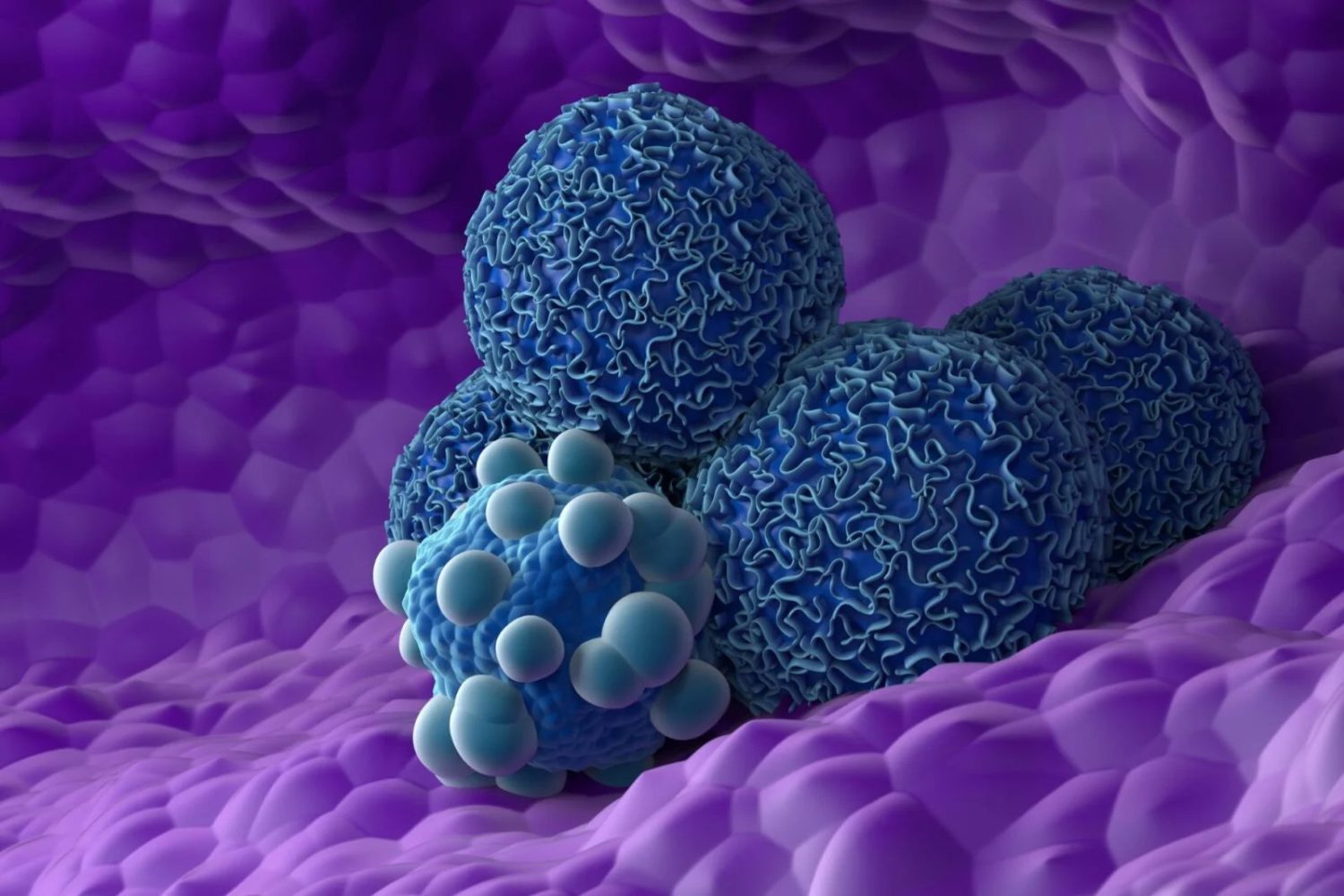
Pancreatic cancer carries a five-year survival rate of roughly 13%. That number has barely shifted in decades. Second-line treatment — what doctors reach for after the first round of chemotherapy fails — has historically meant trading one brutal regimen for another, buying weeks, sometimes a few months. On August 26, 2026, the FDA approved daraxonrasib (RASONQUE), an oral pill from Revolution Medicines that doubled median survival in a phase 3 trial. The numbers speak for themselves.
Cracking the Code Oncologists Gave Up On
RAS proteins have been the white whale of cancer biology for roughly forty years — obvious as a target, nearly impossible to hit.
About 90% of pancreatic tumors carry RAS pathway mutations, making RAS the most conspicuous driver in the room and, for decades, the one nobody could reliably touch. Earlier drugs couldn’t bind to it. The protein lacked the deep molecular pockets that most inhibitors need to latch on — catching smoke with your hands, as the structural biology frustration goes.
Daraxonrasib works differently. It’s a RAS(ON) multi-selective inhibitor — plain English: an oral, once-daily 300 mg tablet designed to block multiple active forms of the RAS protein simultaneously, rather than chasing a single mutation.
Here’s what the phase 3 RASolute 302 trial showed across 500 patients, with results published in the New England Journal of Medicine:
- Median overall survival: 13.2 months on daraxonrasib vs. 6.6–6.7 months on chemotherapy — a 60% lower risk of death (hazard ratio 0.40, p<0.001)
- Median progression-free survival: 7.2 months vs. 3.6 months on chemotherapy
- No companion diagnostic required — patients don’t need a confirmed RAS mutation on file to qualify
- Safety: no unexpected signals; patients reported better quality of life compared with IV chemotherapy
Trial investigators and Revolution Medicines called these results “unprecedented” in any phase 3 trial for previously treated metastatic pancreatic cancer. In a disease where second-line chemotherapy has historically moved the needle by weeks, that word earns its place.
Available Now – With Caveats Worth Knowing
RASONQUE is commercially available in the U.S. today, but its approved role is specific — and the limitations matter as much as the breakthrough.
If you or someone you know has metastatic pancreatic adenocarcinoma and has completed at least one round of systemic therapy — or isn’t a candidate for multi-agent chemotherapy — RASONQUE is accessible right now. No genetic test required, which simplifies access considerably for both patients and clinicians.
What daraxonrasib is not: a first-line treatment, and not a cure. The FDA label covers second-line-or-later use only, and long-term resistance patterns remain unstudied. The Pancreatic Cancer Action Network describes it as the new standard of care for previously treated metastatic pancreatic cancer — accurate, and still sobering.
The approval moved quickly for substantive reasons. Daraxonrasib holds both Breakthrough Therapy and Orphan Drug designations. The FDA reviewed it under its National Priority Voucher pilot program, accepting the application in July 2026 and granting full approval roughly six weeks later — a pace that reflects institutional prioritization of high-impact therapies in high-mortality diseases.
The broader implication extends well beyond pancreatic cancer. RAS mutations drive lung, colorectal, and other solid tumors. Future trials will determine whether daraxonrasib earns a place in those settings too.
This doesn’t end pancreatic cancer. But for patients who’ve run out of road, it just extended the map — and that, backed by a hazard ratio of 0.40, is no small thing. In related frontier biomedical research, scientists have also recently made strides with frozen brain tissue, underscoring how rapidly the boundaries of medical science are shifting.