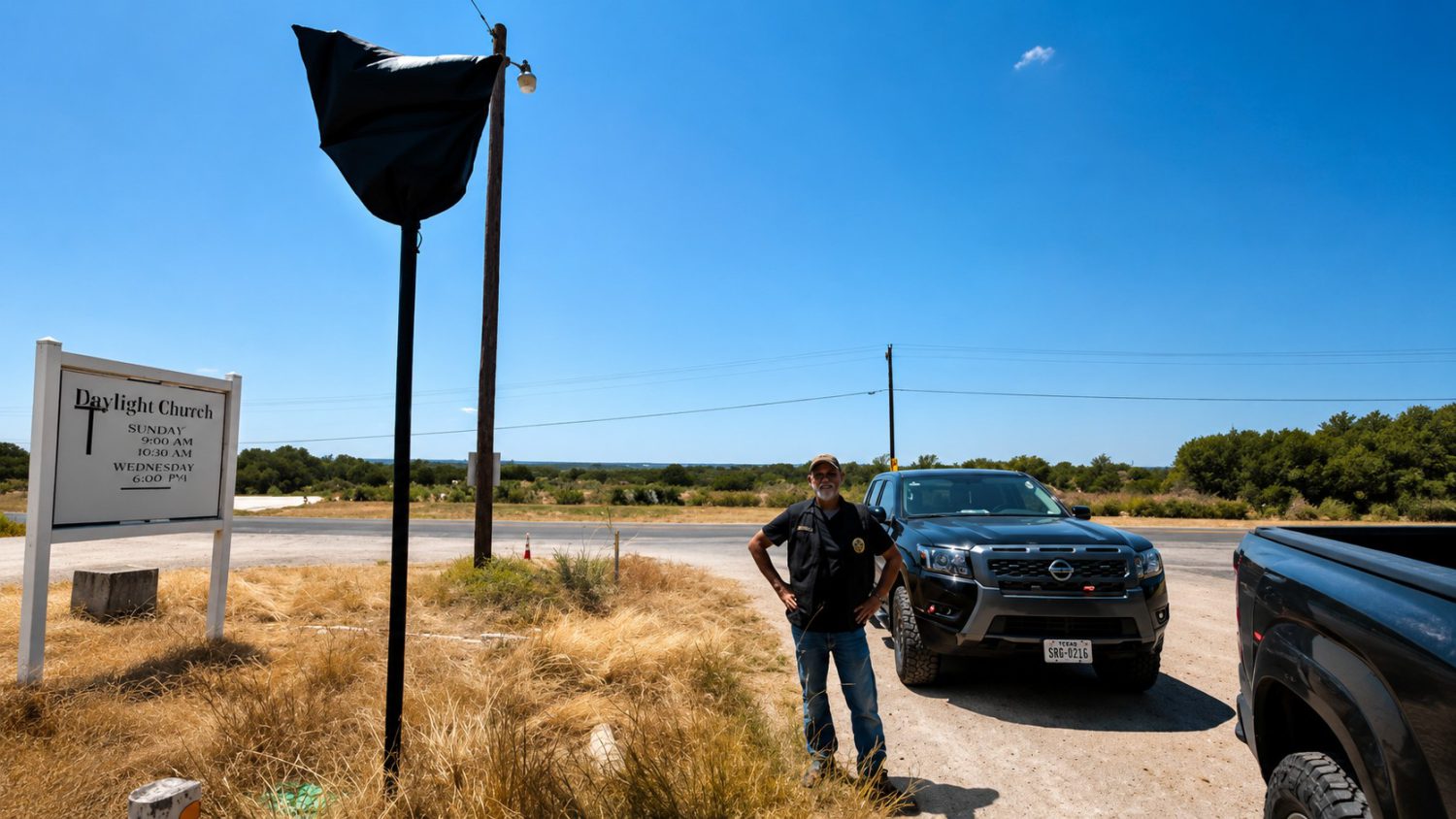
In mid-August 2026, Hood County Constable John D. Shirley posted photos to Facebook that looked like crime scene evidence—except the cameras were the suspects. Bagged, unplugged, neutralized. His message to Flock Safety: “Come get your garbage out of my county.” Hood County isn’t alone. Across Texas and nationally, a backlash is building against surveillance app-era tools like Flock Safety’s network of more than 120,000 AI-powered license plate reader cameras capturing billions of vehicle reads every month.
The Camera That Never Forgets Your Route
Flock’s system photographs every passing plate, timestamps it, and pushes the data to a cloud system searchable across county and state lines.
No faces, no audio—but a detailed movement log of your car’s comings and goings. Flock claims a 30-day default retention window, but no federal or Texas law makes that binding. Roughly 75% of departments using Flock opt into cross-jurisdictional data sharing, according to FOX 26 Houston. Privacy expert Harry Maugans puts it plainly: the system “captures 100% of cars that drive by,” building a dossier on the 99% not committing any crime. One plate scan on a public road is nothing. An accumulated map of where you park at night, whose house you visit, what clinic you passed on a Tuesday—that’s something else entirely.
Why Texas Is Pushing Back
From unlicensed operations to abortion investigations, the concerns go well beyond abstract privacy theory.
- Texas DPS issued Flock a cease-and-desist in September 2024 after finding the company had operated without the required state license since 2021.
- Flock data has reportedly been used in immigration enforcement and at least one abortion-related investigation in Texas, according to the Texas Observer.
- Lago Vista and Austin both ended or scaled back Flock contracts over data-sharing concerns.
- A 2025 congressional letter from Representatives Garcia and Krishnamoorthi warned that Flock enables “indiscriminate” tracking with zero opt-out for the public.
- Hood County commissioners voted unanimously in April 2026 to end the contract; Shirley completed the physical removal by mid-August.
“Privacy isn’t optional, and mass surveillance isn’t how we do things here.” — Constable John D. Shirley
Law Enforcement Says the Cameras Work. They’re Not Wrong.
The pro-Flock case is real—but it doesn’t settle the argument.
Police associations defend Flock as a legitimate crime-fighting tool: stolen vehicle recovery, hot-list alerts for wanted suspects, missing persons leads. Audit trails exist, and officers have been prosecuted for misuse. Flock claims it tightened data-sharing policies following Austin’s pushback. But Kevin Welch of EFF Austin argues the technology “has been and will continue to be used to secretly tracking users and violate people’s rights.” Structural risk doesn’t disappear because an audit log exists. Accepting “trust us, we won’t misuse it” as policy is the surveillance state’s version of clicking through a terms-and-conditions agreement—technically acknowledged, never actually read.
Austin considered letting Flock return under stricter rules. Hood County drew a hard line. Every municipality now faces the same uncomfortable question about what “public safety” actually requires. If your city hasn’t had this fight yet, it’s coming.