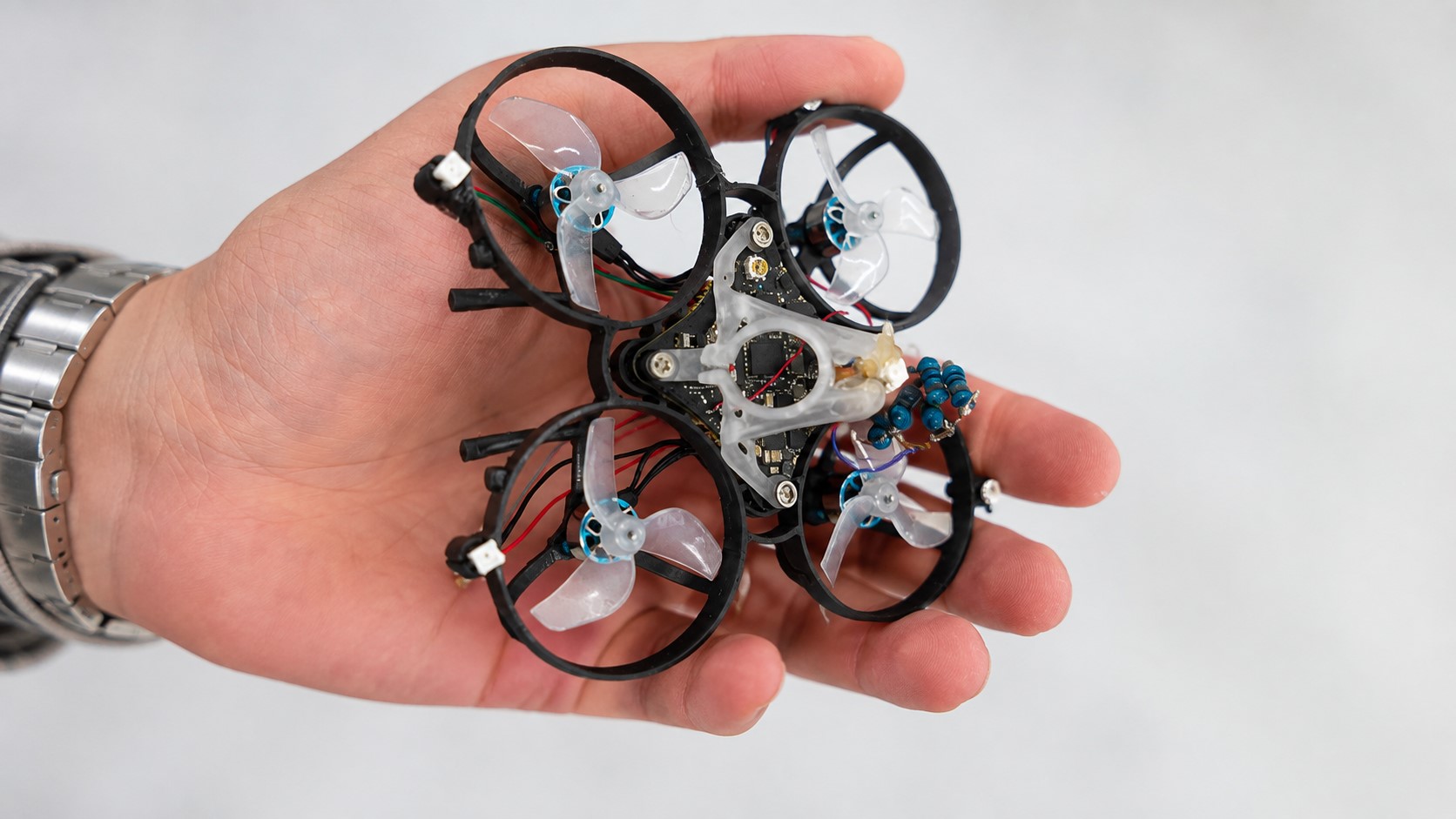
That 2 AM bedroom buzz is universally familiar — one mosquito turning a quiet night into a hostage situation. Tornyol Systems wants to solve that problem with a 40-gram autonomous drone that hunts insects by sound, not sight. The company recently shared footage of its first air-to-air insect kill — though the target was a moth, not a mosquito. Tornyol’s stated ambition: “completely eradicate mosquitoes from areas where humans live.” Bold words for experimental-stage hardware — part of a broader wave of smart gadgets promising to reshape everyday life.
Acoustic Hunting Is the Real Innovation Here
Forget cameras — this drone listens for its prey using 380 smartphone microphones and repurposed car parking sensors.
The engineering stack is genuinely clever. Tornyol’s LeSonar2 base station pairs 380 smartphone microphones in a phased-array sonar configuration with an Artix-7 FPGA processor. It identifies targets by wingbeat acoustic signature, detecting mosquitoes reportedly up to 3 meters away in complete darkness. The company claims intercept range reaches 8 meters (about 26 feet). The sensing components? Repurposed car parking assist sensors — like building a sniper scope from parts at AutoZone, a level of precision engineering more commonly associated with Hypersonic Missiles than consumer pest control.
Here’s what the spec sheet doesn’t emphasize:
- The demonstrated kill was a moth, reportedly chosen because it was easier to film and track than a mosquito-sized target.
- The drone itself is still being integrated into the full mosquito-kill chain.
- Tornyol claims 10 drones could cover one square kilometer, but that figure remains untested in real-world conditions.
- For U.S. customers, pricing sits at a $100 refundable deposit, then either $50 monthly or $1,100 outright.
- The concept itself debuted at Hackaday Supercon 2024, built around off-the-shelf electronics.
One Demo Does Not a Deployment Make
The gap between killing a moth on camera and eliminating mosquitoes at scale is enormous — and largely unaddressed.
Mosquito-borne diseases kill an estimated 700,000 to one million people annually, according to the World Health Organization. A viable non-chemical intervention would matter enormously. But the distance between Tornyol’s ambition and its evidence feels like early autonomous vehicle promises circa 2018 — impressive demos, timelines that kept slipping, physics that didn’t cooperate at scale. One moth kill in controlled conditions is a proof of concept, not proof of readiness — a challenge familiar to field robotics projects like snake robots bridging lab demos to real-world deployment. No independent researchers or field studies have verified the system’s performance outside a lab environment.
The hardest unanswered question is whether this system can reliably distinguish mosquitoes from beneficial insects in open environments. Tornyol says wingbeat frequency and harmonic structure let the system separate a target mosquito from a beneficial insect — but that claim has not been independently verified. It sits at the center of whether this technology is viable or actively harmful. Get it wrong at scale, and you’re not addressing malaria; you’re building a subscription-priced pollinator problem.
Watch for two developments: independent field testing and verified species-discrimination results outside controlled conditions. Until those exist, this remains a genuinely interesting demo in search of proof.