The FAA restricts civil supersonic flight over U.S. land because of sonic boom noise, a policy that dates to the Concorde era. NASA’s Quesst mission exists to generate the acoustic and community-response data that regulators would need to consider revising that restriction.
What the Aircraft Actually Is
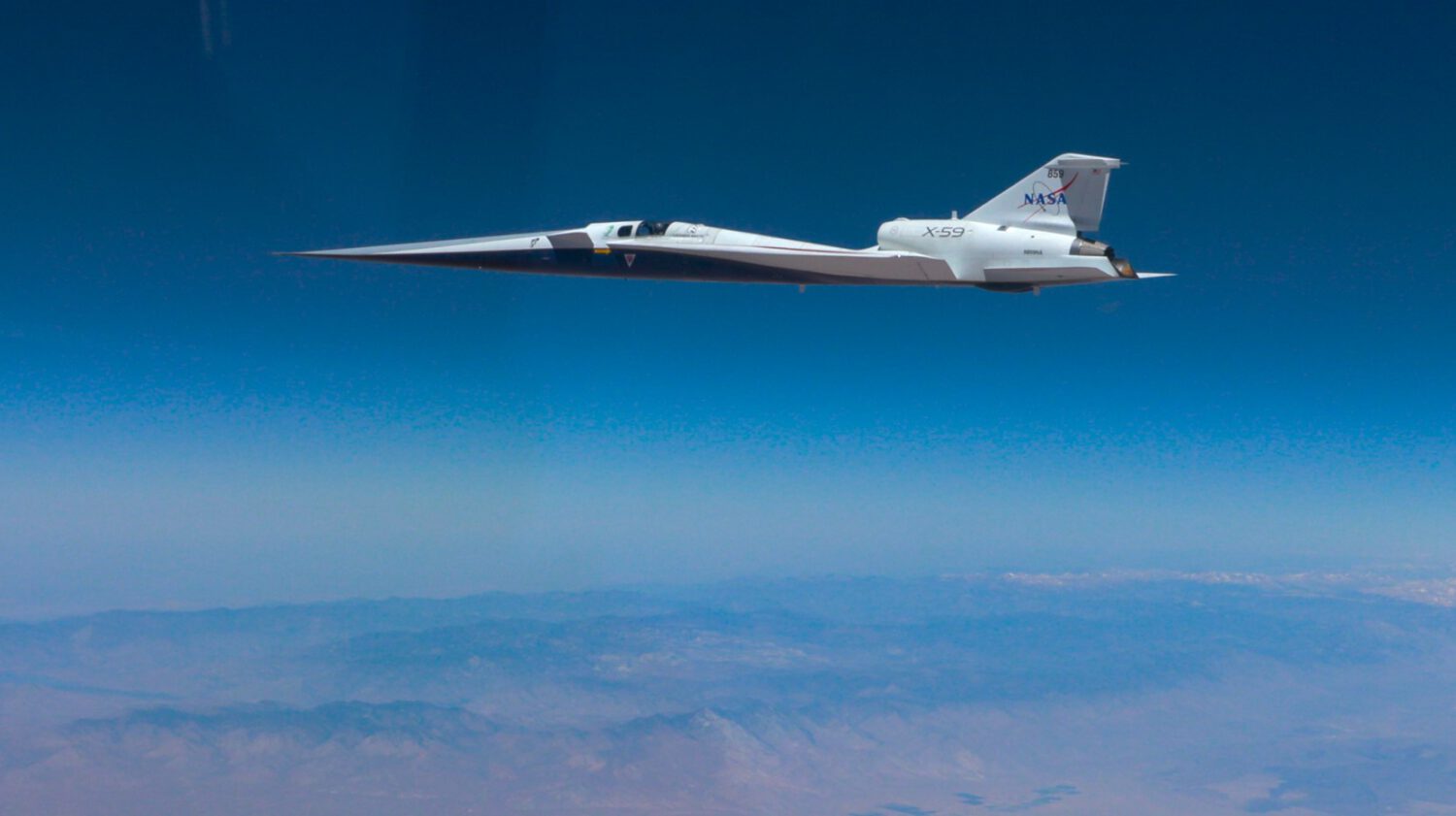
The X-59 is a single-seat experimental research platform, not a prototype for a future passenger jet.
NASA’s X-59 is designed to produce data, not carry travelers. This distinction matters because no outcome from this program will put passengers in supersonic seats; what it could do is give regulators documented evidence to consider when evaluating future overland supersonic rules.
NASA/Lori Losey
Two Milestones, One Week Apart
In June 2026, the X-59 completed its first supersonic flight and then reached its target mission conditions within a single week.
On June 5, 2026, the X-59 flew supersonically for the first time. NASA test pilot Jim “Clue” Less flew the aircraft to approximately Mach 1.1, or 713 mph, at 43,400 feet during an 81-minute flight.
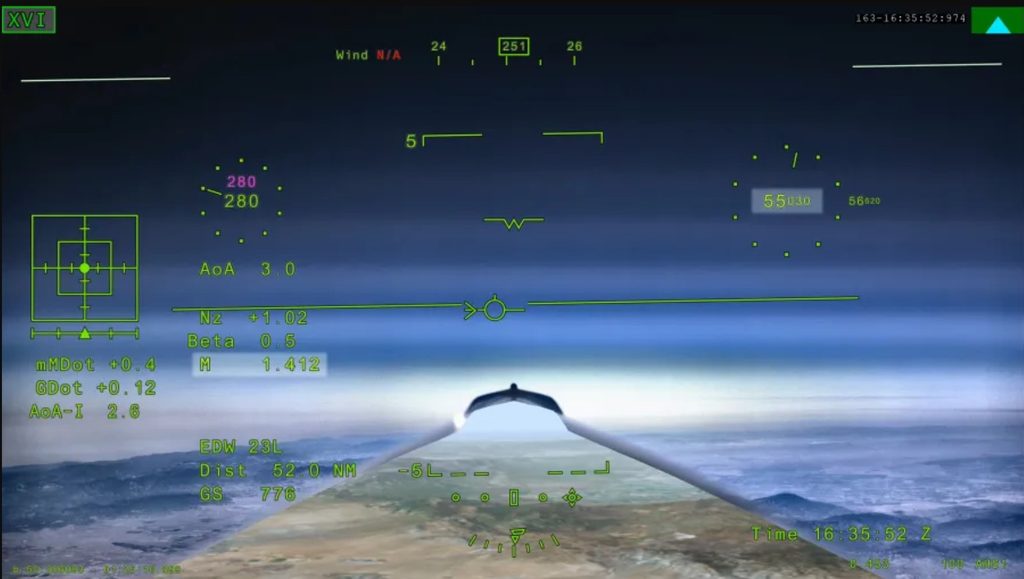
Seven days later, the aircraft reached its target mission conditions. On June 12, it climbed to 55,000 feet and hit Mach 1.4, roughly 924 mph, the speed and altitude NASA had set as benchmarks for the program’s community-overflight phase.
Engineering the Thump
The X-59’s design is intended to prevent the shockwave coalescence that produces a conventional sonic boom.
Conventional supersonic aircraft generate shockwaves from the nose, canopy, engine inlets, wings, and tail. Those waves can merge as they travel toward the ground, producing the sharp boom most people recognize.
The X-59’s 99.7-foot frame and long, tapered nose are shaped to prevent that merger. NASA says the intended result at ground level is a much quieter “sonic thump” rather than a disruptive boom, a concept that draws on the same aerodynamic principles that make faster than speed of sound travel so technically demanding.
A Complication NASA Is Tracking
A NASA F-15 chase aircraft accompanies early test flights, and its conventional sonic boom complicates acoustic measurement of the X-59.
Early supersonic test flights include a NASA F-15 flying alongside the X-59. The F-15 generates a conventional sonic boom that can mask the quieter signature the X-59 is designed to produce.
Acoustic validation is the phase where engineers confirm the X-59’s sound profile matches its design targets. That work must account for the F-15’s interference before clean measurements of the X-59’s signature are possible.
The Decisive Test Isn’t in the Sky
Flight performance gets the program to the threshold, but public tolerance will determine whether regulators step through it.
After acoustic validation, NASA plans to fly the X-59 over selected U.S. communities and collect residents’ reactions to what they hear. Those responses will be combined with acoustic measurements and delivered to U.S. and international regulators as evidence for evaluating potential new noise thresholds on overland supersonic flight.
What a Success Actually Means
A successful X-59 program produces a regulatory record, not an airline route.
A favorable result does not open supersonic air routes. It does not certify a commercial aircraft or set a ticket price.
What the program is intended to produce is a documented record showing a specific sound profile, at a measured intensity, alongside a measured level of public acceptance. Regulators would then decide whether that record supports updating rules shaped by the sonic-boom experience of an earlier era. The X-59 is, in that sense, an argument NASA is assembling one flight at a time.