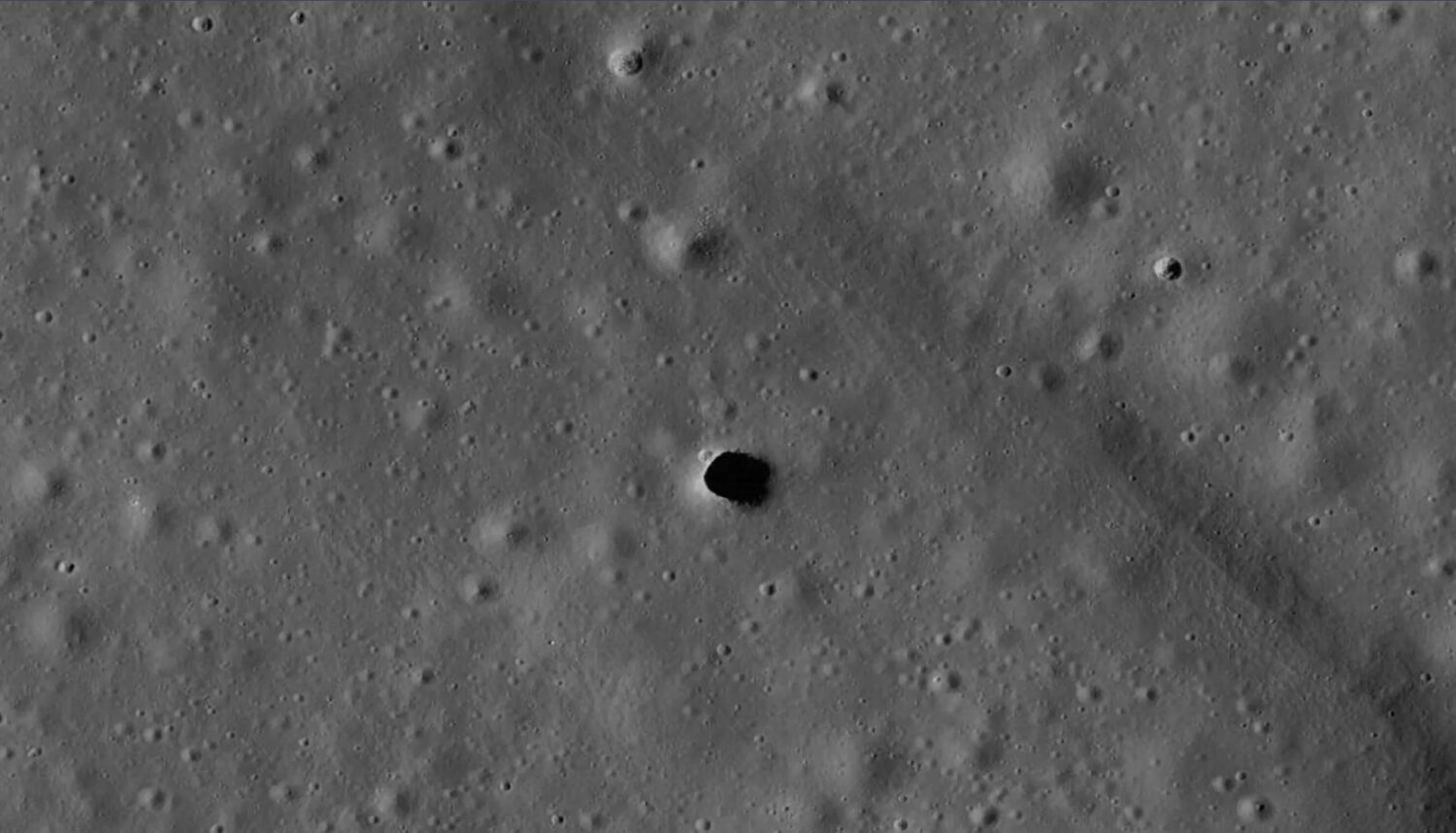
A hole in the Moon just got a lot more interesting. NASA has selected the GIMLI project to deploy geophysical instruments directly to the Marius Hills Pit, a roughly 34-meter-deep opening that may connect to a much larger underground lava tube. The answer could influence where future astronauts live and work on the Moon.
Three Instruments, One Central Question
GIMLI combines radar, seismic sensors, and gravimetry to probe what lies beneath a known lunar pit without descending into it.
Ground-penetrating radar will scan beneath and around the pit for subsurface boundaries and structural voids. Seismic sensors will measure how vibrations travel through surrounding material, with density changes or open cavities producing distinct signatures that researchers can analyze from the surface.
A gravimeter rounds out the suite by detecting local gravitational variations that could indicate differences in underground density consistent with a cavern. According to the Planetary Science Institute, the combined radar, seismic, and gravity measurements are intended to search for a void and estimate its size if one is detected.
Dr. Nathaniel Putzig, PSI Associate Director and Senior Scientist and the project’s principal investigator, described the sensor combination as a way to improve understanding of subsurface properties. He said the suite could also detect a lava tube extending from the pit, according to the PSI blog.
What a Cave Would Mean, and What Remains Unknown
A confirmed lava tube could offer astronauts natural protection from radiation and temperature extremes, but GIMLI’s selection confirms nothing about habitability.
If a substantial underground cavity exists, it could offer future astronauts natural shielding from radiation and the Moon’s severe surface temperature swings. That kind of protection is difficult and expensive to engineer from scratch.
GIMLI does not confirm any of that. Structural stability, physical access, communications infrastructure, and life-support logistics all require separate engineering assessment far beyond this mission’s scope.
The pit’s walls carry independent scientific value regardless of whether a cave is found. They expose geological layers normally buried beneath the lunar surface, offering a record of ancient volcanic activity.
A confirmed tube could also enable direct comparison with terrestrial lava tubes, sharpening models of how volcanic activity operated on the Moon. Even a negative result would advance understanding of how the opening itself formed.
Background and Next Steps
The Marius Hills Pit has been studied from orbit for years; GIMLI will be its first surface-level investigation.
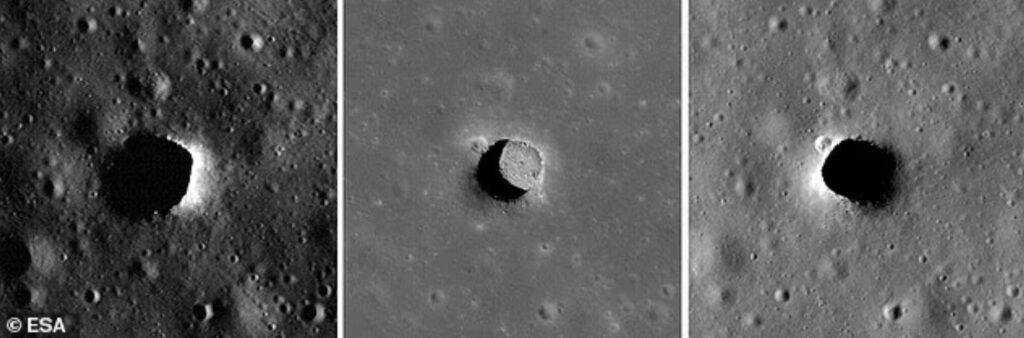
Orbital observation established the pit’s presence and approximate dimensions, roughly 65 by 90 meters across, but has not confirmed the extent of any connected cavity beneath it. If you are tracking NASA’s lunar exploration roadmap, this selection is worth watching.
GIMLI stands for Geophysical Instruments for Marius Lunar pit Investigation. It is funded through NASA’s PRISM program (Payloads and Research Investigations on the Surface of the Moon) and will deliver instruments via NASA’s Commercial Lunar Payload Services initiative. The selection was announced in late September and early October 2026.
What happens next depends on what the measurements reveal. A confirmed cave would move the site into consideration for detailed robotic reconnaissance, followed by structural and engineering assessment before any human presence could be evaluated. No cave still means the data could refine lunar volcanism models built largely on remote sensing. Either outcome advances the science.