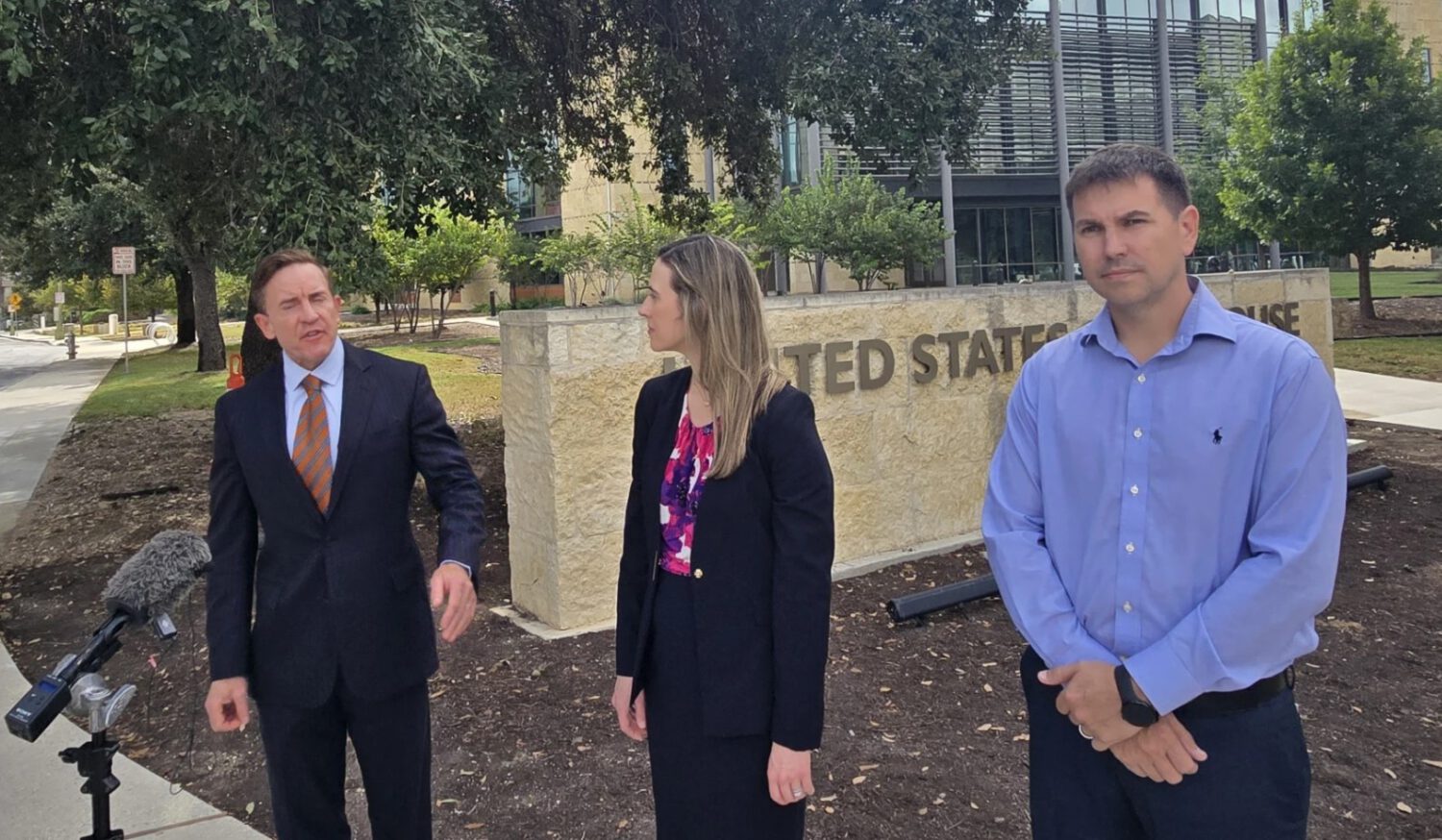
A federal jury in Texas has found that a traffic stop linked to license plate surveillance app violated a driver’s constitutional rights. The case has drawn renewed attention to a broader system that, according to Associated Press and ACLU reporting, already monitors the movements of millions of ordinary drivers.
License plate readers were once used primarily to locate specific wanted vehicles. According to the ACLU, that purpose has expanded: systems now assemble long-term travel histories and flag vehicles based on where they go, how often they travel, and which routes they take.
Cameras photograph your plate, record your location and timestamp, and software links those sightings into a movement profile that officers can treat as an investigative lead.
Pattern of Life, Pattern of Suspicion
A Texas jury verdict reveals how travel-pattern alerts can drive traffic stops with disputed legal justification.
Alek Schott was an oilfield-equipment salesman making a work trip from the Houston area toward the Texas border and back. He had no criminal record. A law-enforcement messaging group flagged his travel as suspicious after ALPR systems logged his route. Deputies then stopped him, citing a lane-line crossing as justification. Trial evidence challenged that explanation, according to the Houston Chronicle.
A federal jury awarded Schott $76 total, one dollar for each minute he was detained, after finding that the stop, detention, and search violated his Fourth Amendment rights. The verdict established Bexar County’s liability in Schott’s specific case; it did not declare license plate surveillance technology unconstitutional as a whole.
The mechanics behind the stop matter alongside the outcome. ALPR networks do not cover every road, and coverage gaps, data-sharing limitations, and equipment variables mean a missing camera hit may reflect geography rather than deception. When software treats that absence as suspicious, an ordinary gap in data can become the basis for an encounter.
That dynamic appeared in a separate, unverified account. A northern Virginia woman named Grace Knowles alleged that during a September 2025 road trip, an officer displayed a map of her vehicle’s recorded sightings and questioned her account of having visited New Orleans, a city where the system had logged no corresponding hit. Her account is a firsthand allegation and has not been independently corroborated.
A Federal System Watching Millions of Drivers
An Associated Press investigation found that Border Patrol uses travel-pattern monitoring to flag drivers nationwide and refer them to local police.
According to the AP, U.S. Border Patrol operates a predictive-intelligence program that monitors drivers across the country, flagging vehicles based on their origin, destination, and route. Federal agents then refer flagged vehicles to local law enforcement for stops, sometimes hundreds of miles from the border.
Through Flock Safety alone, Border Patrol reportedly had access at one point to at least 1,600 cameras across 22 states, according to the AP. The program also used hidden cameras and was designed to construct a vehicle’s “pattern of life,” tracking travel frequency and flagging movement the system calculated as abnormal.
Customs and Border Protection told the AP that its use of license plate readers is governed by federal law, constitutional protections, and a multilayered policy framework intended to identify threats and disrupt criminal networks.
The ACLU separately reported that Flock Safety promoted vehicle-association analysis as part of its suspicious-pattern capabilities. Under that approach, cars repeatedly observed near each other could be algorithmically linked without any evidence of a criminal relationship. A family member, coworker, or neighbor sharing a parking lot could enter that network.
What the Algorithm Cannot Tell You
Travel-pattern software identifies correlations but cannot determine intent, and an alert alone does not establish probable cause.
A long-distance route, repeated trips to a border region, or a stop in a particular state can each have many innocent explanations. An algorithm identifies correlations; it cannot establish intent or criminal conduct.
The Schott case illustrates the legal risk when that distinction blurs. A stated traffic justification does not automatically validate the intelligence record that prompted the stop, and the jury’s finding in Schott’s case reflects how that gap can result in a constitutional violation.
Advocates warn that the possibility of surveillance could produce a chilling effect even when no stop occurs. If routine travel can be labeled suspicious by software, drivers may begin avoiding lawful destinations or routes simply because of how those movements might appear to a system that cannot ask why you were there. These concerns echo documented cases of governments secretly tracking users through digital tools in ways that similarly chill lawful behavior.