More than 300 Boston Dynamics employees, roughly one-fifth of the company’s approximately 1,400-person workforce, signed a petition asking executives to cut ties with a contract routing the company’s Spot robots to U.S. Immigration and Customs Enforcement. Nearly half of those signatures were listed as anonymous.
The dispute is not about armed robots. It is about something harder to resolve: whether a surveillance-capable, autonomously mobile machine can be ethically sold to an agency whose record is this contested.
The Deal Behind the Protest
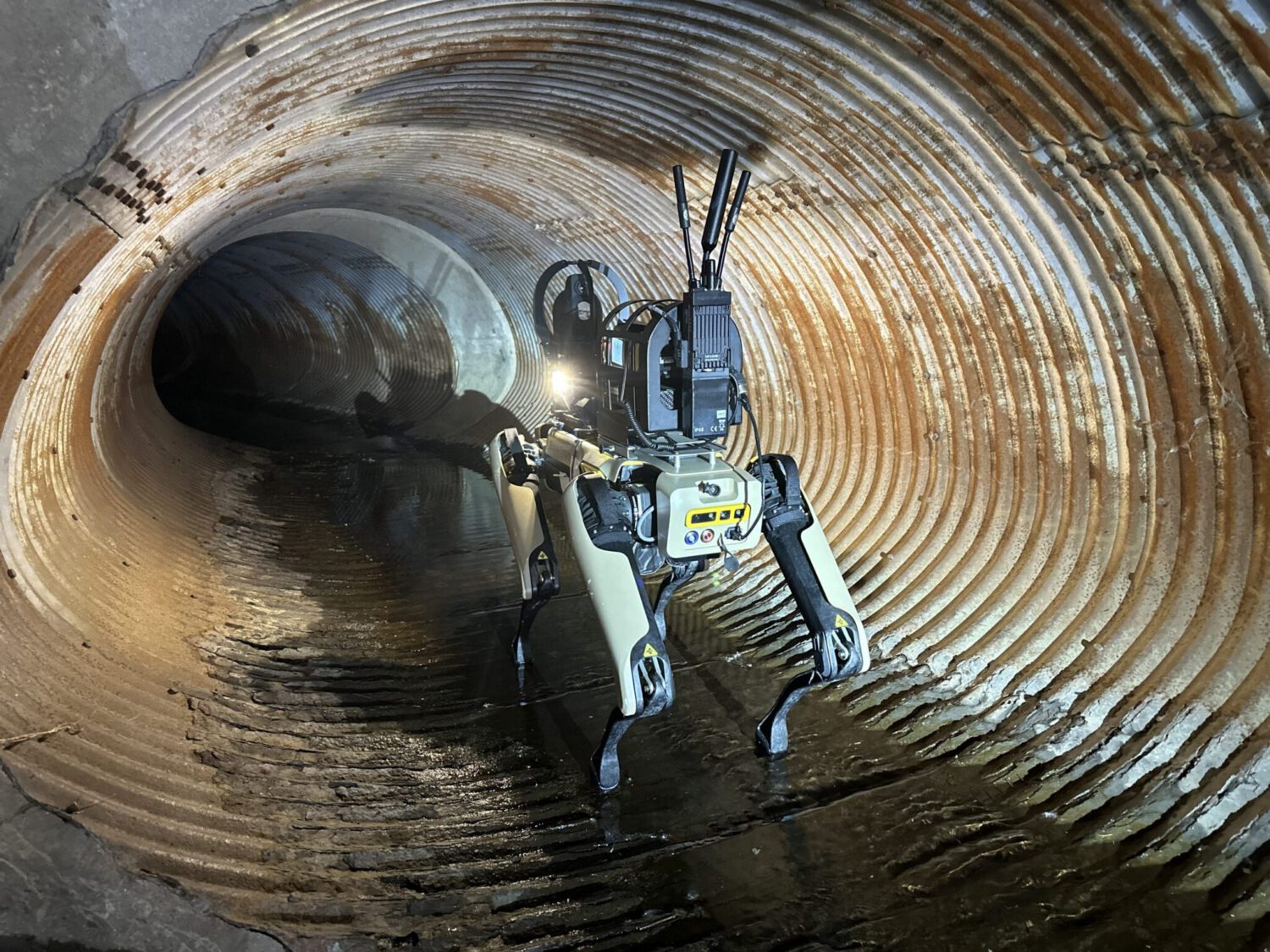
The contract involves four Spot robots modified by a Connecticut company into a platform called Cerberus, acquired by DHS for roughly $1.3 million.
Contract records show the Department of Homeland Security awarded Radeco, a Connecticut-based integrator, approximately $1.3 million for four modified Spot robots and supporting equipment. Radeco’s Cerberus configuration adds radiation and toxic-gas detection, explosive-threat sensing, oxygen monitoring, infrared thermal imaging, 360-degree cameras, and up to 30x optical zoom.
According to contract documents reported by CTInsider, the robots are intended for remote inspection of tunnels, hazardous confined spaces, and suspected human-smuggling routes. ICE and DHS describe them as tools that keep personnel out of dangerous environments before anyone enters. Snake Robots, by contrast, have been deployed in search-and-rescue scenarios, illustrating how differently the same class of technology can be applied.
Boston Dynamics is not the direct contractor, but the company is reported to provide technical support for the modified machines. That support links the Boston Dynamics brand to ICE regardless of how the procurement paperwork is structured.
Where “No Weapons” Falls Short
Employees argue that the company’s anti-weaponization policy addresses only part of the ethical problem.
The company’s stated position, reported by Ars Technica, is that Spot sales terms explicitly prohibit using the robots to harm or intimidate people, deploying them as weapons, or enabling weapons. Boston Dynamics says it has found no violations of those terms by DHS or other public-safety customers.
That policy matters. It is also not a complete ethics framework on its own.
Employees argued in the petition that surveillance capability, autonomous navigation, and remote inspection functions can facilitate operations they consider harmful, even without a weapon attached. The analogy closest to this problem comes from platform governance, not hardware: the tool does exactly what it was designed to do, but the context transforms its meaning entirely.
Former interim CEO Amanda McMaster reportedly told employees the decision was consistent with the company’s mission and asked them to respect it even in disagreement, according to the Boston Globe. Nearly half the signatories chose anonymity, a signal that the internal conversation carries real professional stakes for those involved.
Hyundai acquired Boston Dynamics in 2021. ICE later raided Hyundai’s Metaplant America facility in Georgia, detaining hundreds of mostly South Korean workers. According to reporting by Ars Technica, employees cited that raid in the petition as evidence of the kind of enforcement the company’s technology could now support.
The workforce stakes compound the ethical ones. The petition argued the ICE association could damage recruiting, retention, and morale. Boston Dynamics has announced a planned $100 million robotics and AI facility in Waltham, Massachusetts. The company targets approximately 1,250 new jobs by 2033, according to a Boston Dynamics announcement and the Boston Globe.
What the Industry Actually Owes People
The robotics industry needs enforceable standards that go beyond a ban on weapons.
Meaningful accountability looks specific: independent audits of how customers use these systems, explicit written policies covering surveillance and enforcement applications beyond weaponization alone, and a formal process for employees to raise ethical objections without resorting to anonymity. A prohibition on weapons sets a floor. The entire robotics industry needs to reckon with the gap between that floor and a genuine standard before the next contract lands somewhere even harder to explain. Advances in workplace safety robotics show what responsible deployment can look like when accountability is built in from the start.