AI-powered license plate reader cameras will come down at Penn State’s University Park campus after the university declined to renew its contract with Flock Safety. As of publication, no removal date has been announced.
UPPS cited cost, return on investment and operational value as the basis for its decision. A student-journalism investigation by The Daily Collegian surfaced broader questions about cross-network data access and public transparency that the budget decision alone does not settle.
What Penn State Is Cutting and Why
The university ran a cost-free, time-limited pilot of Flock cameras around the University Park perimeter before concluding the system did not justify renewal.
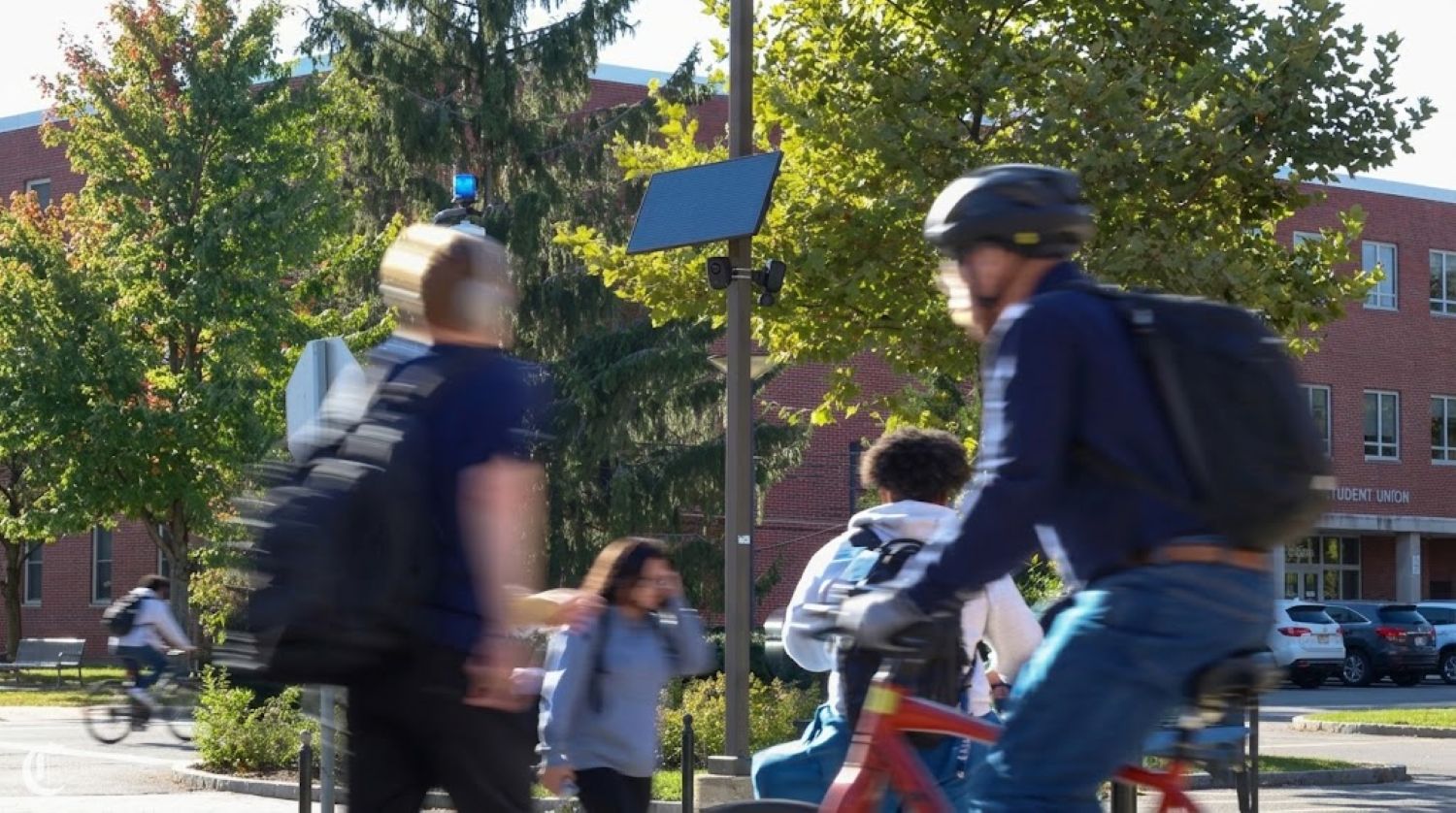
UPPS described the deployment as a “limited, time-bound pilot” positioned around the University Park perimeter, according to Chief Information Officer Jacqueline Sheader. DeFlock, an organization that tracks Flock camera deployments, reported 24 locations at Penn State; The Daily Collegian visited those sites and documented the cameras’ presence.
Flock cameras are automated license plate readers, not conventional security cameras. They use artificial intelligence to scan passing vehicles and catalog vehicle-related information, supporting functions such as stolen-vehicle recovery, missing-person cases and investigative leads.
Sheader confirmed the nonrenewal in an email to The Daily Collegian, citing a review of “cost, return on investment and operational value.” CFO Sara Thorndike separately confirmed the decision at a Faculty Senate plenary meeting, according to The Daily Collegian.
No replacement has been announced as of publication. UPPS says it will continue researching tools that could provide similar operational capabilities, leaving open whether the university will adopt another automated license plate reader system or step back from the technology entirely.
The Privacy Questions That Followed the Cameras
Community members raised concerns about disclosure and safeguards, and a student-newspaper investigation sharpened those questions by examining how the system connected to other Flock networks.
Community members questioned whether Penn State had adequately disclosed how the system operated and what safeguards existed against misuse. Those concerns grew more specific after The Daily Collegian published its investigation into the program.
Flock’s platform connects participating agencies and institutions, allowing them to query data from other Flock camera networks. The Daily Collegian reported that Penn State had accessed thousands of such networks during the pilot. UPPS attributed a portion of that activity to system testing.
UPPS maintained that access was restricted to trained, authorized personnel and that all system use was logged and audited. The public could not independently verify those assurances from the records identified in the investigation, raising concerns similar to those seen when a secretly tracking users story drew scrutiny over data-access transparency.
Penn State is a state-related university and holds a partial exemption from Pennsylvania’s Right-to-Know Law. Audit logs, usage records and collected data related to the Flock program may not be available through standard public-records requests, though Pennsylvania case law means records are not categorically shielded in every circumstance.
Penn State’s next move will signal how the university weighs public-safety goals against unresolved accountability questions. The choice ahead is straightforward: adopt a cheaper automated license plate reader alternative or abandon the technology entirely.