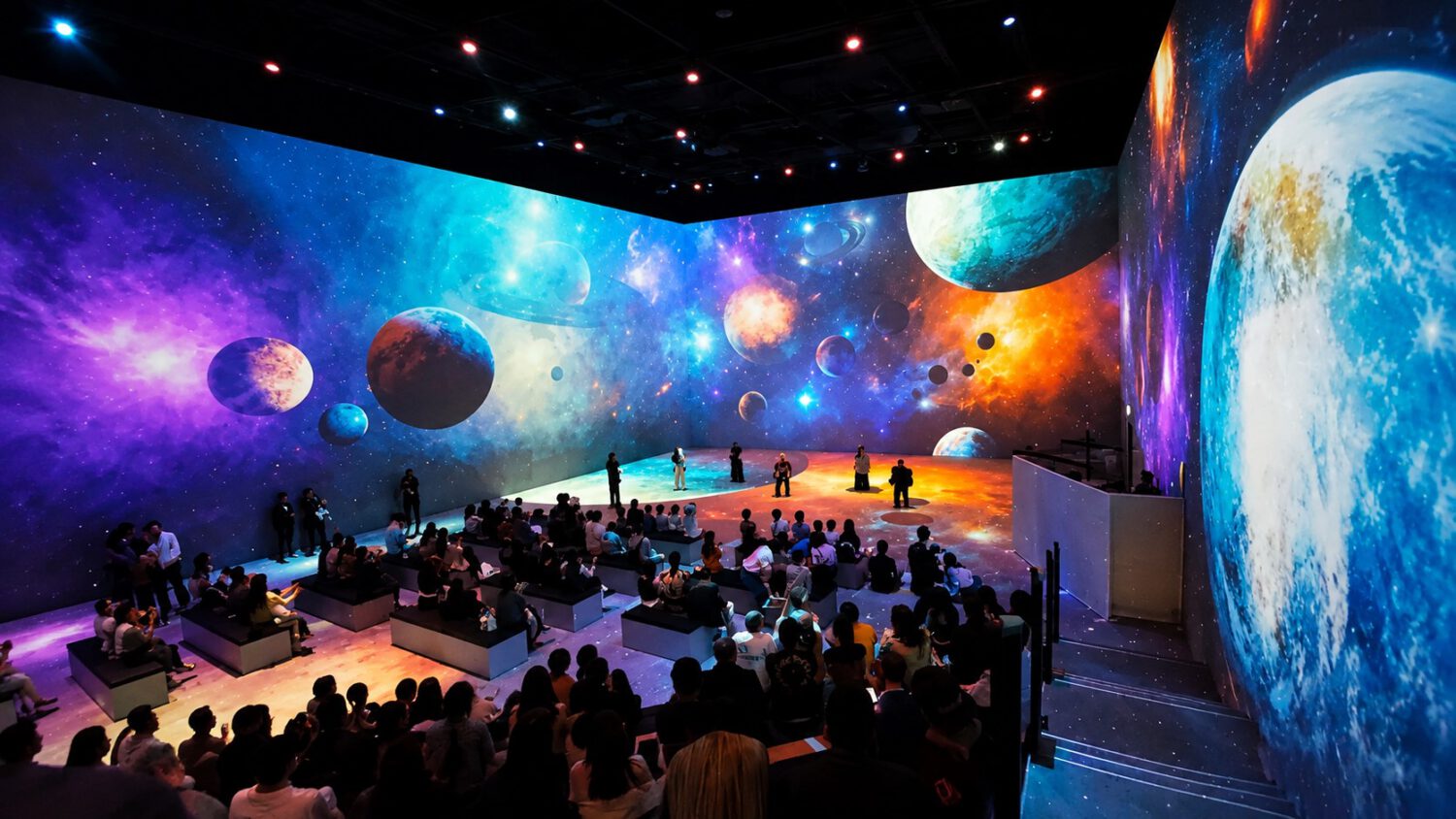
At Galaxy Robot Park in Seoul, interactive robot experiences range from portrait drawing to direct-control demonstrations where visitors engage with humanoid machines up close. Galaxy Corporation, the South Korean entertainment company linked to major K-pop acts, opened the park to position robots as entertainers and assistants. The central attraction is a K-pop robot performance, with separate robot-boxing content and additional interactive exhibits rounding out the venue.
Official materials confirm portrait drawing and robot boxing among the park’s attractions. Other reported exhibits include soccer demonstrations, though some details, including a cocktail-making machine, have not been confirmed by primary sources and should be treated as unverified.
What the Choreography Actually Tells You
A polished routine is not the same as a robot that understands what it is doing.
Synchronized robot performances are technically coordinated and visually compelling. Robots rotate, reposition, and execute sequences with enough precision to draw genuine admiration. Executing a choreographed routine under controlled conditions, however, is a different capability from perceiving an unfamiliar environment and adapting to it.
Official sources confirm that interactive experiences at the park include direct-control formats, meaning human operators mediate at least some of what appears to be spontaneous robot behavior. That distinction matters: the machine may look like it is responding to you, but a person nearby may be making the call. Demanding physical stunts also raise practical concerns, since more complex routines tend to break more robots and drive up operating costs, making a daily public show harder to sustain than a one-off showcase.
The featured Unitree G1 humanoids start at approximately $13,500, excluding taxes and shipping. Each unit weighs roughly 35 kilograms, carries 23 degrees of freedom in the base configuration, and runs on a stated battery life of about two hours. Unitree markets the platform using imitation learning and reinforcement learning; those are company claims about development direction, not independently verified performance guarantees.
The Part That Stays With You After You Leave
People project possibility onto human-shaped machines, and that projection has limits.
John McCormick, an artist and professor at Swinburne University of Technology, has observed that humanoids carry “a weight of possibilities” that people project onto them. Two arms, two legs, a head, and upright posture suggest a machine that could, in theory, do what a person does. That suggestion is powerful, and it is doing significant work at a venue like this one.
Visitor reactions at the park reportedly ranged from admiration to indifference. One visitor found the show impressive but said she would not return, preferring live performers and their imperfection, effort, and human presence. That reaction is not a failure of the technology; it is a signal about what performance actually means to an audience.
Humanoids make a single promise: one flexible machine, capable of handling varied tasks, that justifies the added complexity of legs, balance, and human-scale design. Specialized machines built around a narrow job, by contrast, tend to handle that job more reliably than a humanoid would. That promise, for now, remains a promise.
The decisive step for humanoid robotics is not a more spectacular dance. Robots must perceive unfamiliar spaces, recover from mistakes, and repeat tasks economically without a human holding a controller nearby. Seoul’s robot park shows you where things stand right now: further along than science fiction, and considerably shorter of the future being sold.