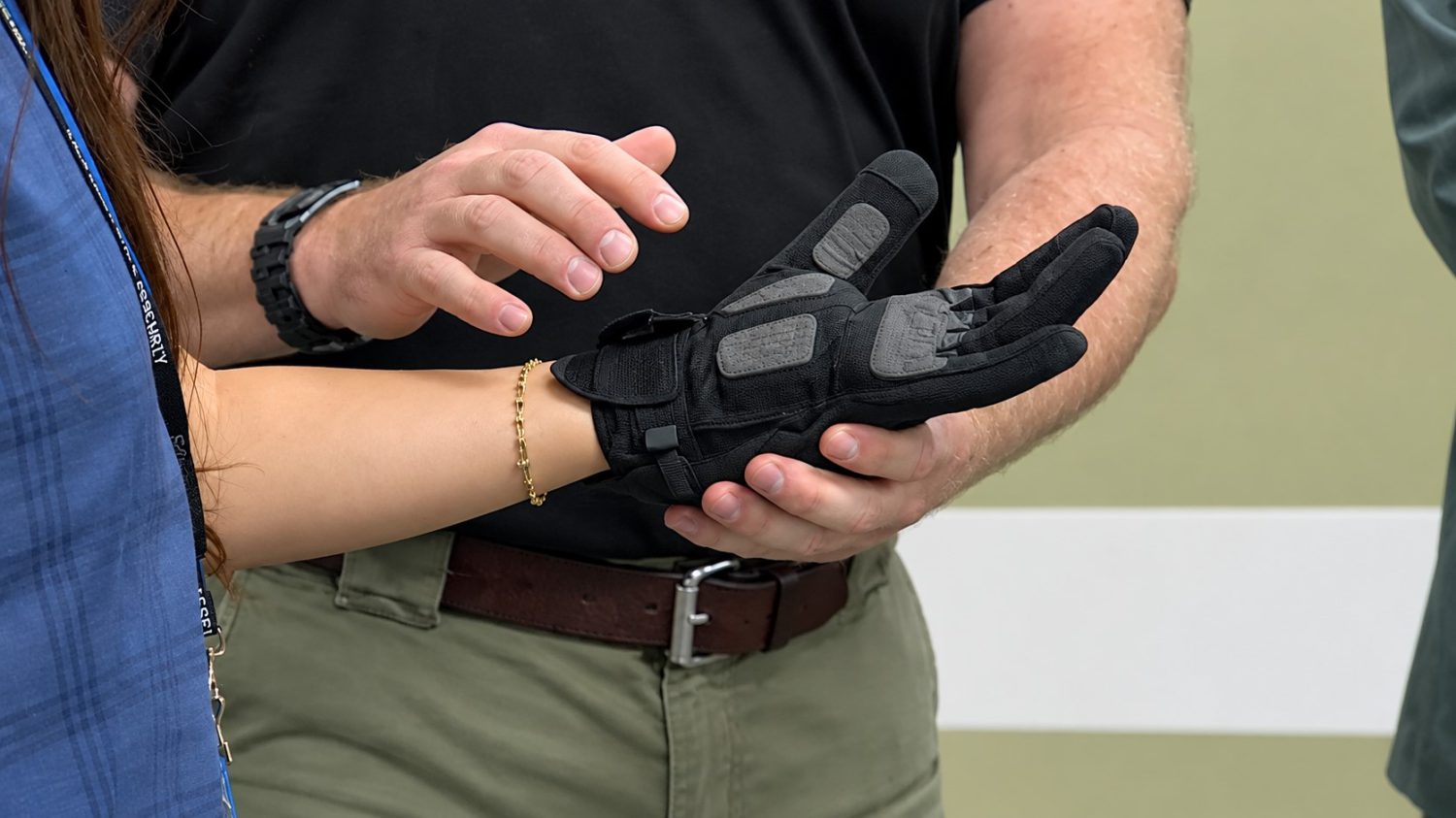
Gov. Gavin Newsom signed legislation on Sept. 29, 2026, prohibiting law-enforcement officers from using wearable electric-shock gloves in California. The law is a direct response to a federal contract awarded weeks earlier to equip immigration agents with the devices.
U.S. Immigration and Customs Enforcement awarded Compliant Technologies LLC, a Kentucky company, a no-bid contract worth approximately $16.7 million for 6,000 pairs of the gloves. The contract also covers equipment, support, and services over six months.
The gloves deliver an electrical shock when the wearer’s hand makes contact with a person’s skin. The California law covers local, state, and federal officers operating within the state, takes effect in 2027, and remains in force through 2030.
What the Law Does
A temporary prohibition with a state safety review built in, not a permanent ban.
The law requires the California Department of Justice to study the devices’ safety and report findings to lawmakers by 2029. The 2030 sunset means the legislature could extend, revise, or end the restriction based on that review.
Assemblymember LaShae Sharp-Collins introduced the bill after ICE’s contract became public. “There’s a lot of unrest and a lot of uncertainty. A lot of people are scared,” she told The Guardian. She framed the measure as a precautionary pause, arguing that new force technology should be demonstrated safe before deployment rather than after a serious injury or death.
The Constitutional Problem
California’s authority over federal agents is legally contested and remains unresolved.
Kevin Johnson, professor emeritus at the University of California, Davis School of Law, identified the central legal obstacle. “The state has very limited, if any, powers in dictating to the federal government how its officers are armed,” he told The Guardian.
The Supremacy Clause gives federal law priority over conflicting state law. California’s authority over its own agencies is clear; its authority over ICE agents is not.
This pattern has played out before. A federal judge blocked California’s first law restricting law-enforcement face coverings because it treated state and federal officers differently, and California subsequently rewrote the legislation to apply equally to all officers. The practical effect of the shock-glove ban on ICE operations remains uncertain pending any future litigation.
Competing Views on the Devices
ICE calls the gloves low-impact; critics and an unverified family allegation complicate that framing.
From the law-enforcement side, Sacramento County Sheriff Jim Cooper argued that the gloves are nonlethal tools officers may need when force is required and that the ban could make their work more difficult. ICE has characterized the gloves as a “low-impact” option for gaining compliance with people who resist arrest or pose a threat to officers.
Critics, including Sharp-Collins, dispute that framing, arguing that close-contact shocks may be harder for supervisors to monitor, creating conditions for potential abuse. Sharp-Collins also cited a 2024 Kentucky case in which a family alleged that a man died after being repeatedly shocked with electric gloves while in custody; that allegation has not been proven in court. The reviewed reporting did not identify a comprehensive independent safety record for the specific devices ICE plans to procure.
Broader Legislative Context
The ban is one part of a much larger state-level response to federal immigration enforcement.
California enacted at least two dozen immigration-related bills in 2026, according to an Associated Press analysis using Plural bill-tracking data. Across 17 Democratic-led states, more than 100 pro-immigrant measures passed the same year, per the same analysis.
Two questions will determine the law’s ultimate reach. Courts may have to decide whether California can legally bind federal agents to its equipment restrictions. The state DOJ’s safety report, due by 2029, could also influence whether legislators choose to extend the restriction past its 2030 expiration.