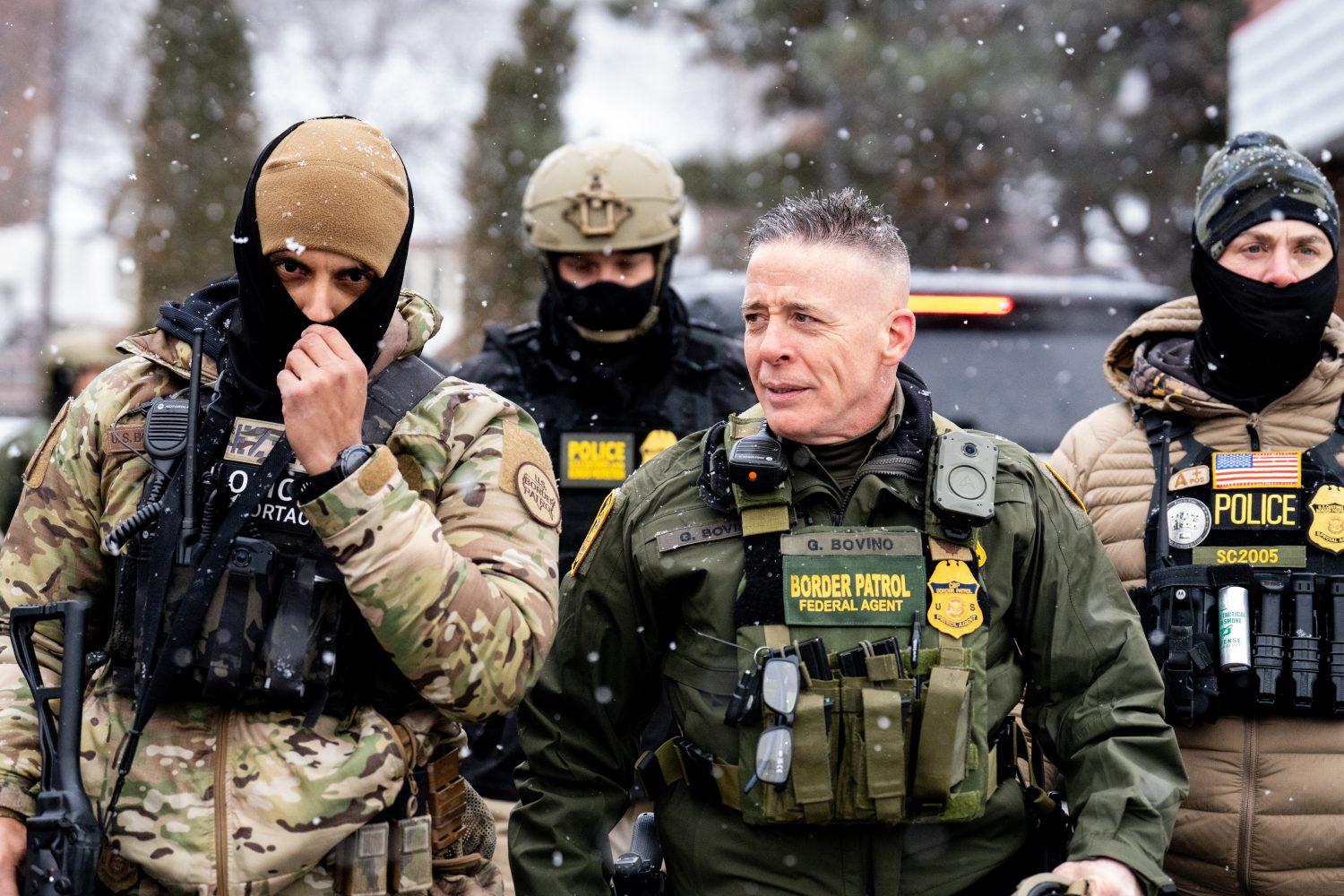
Landing at JFK now means your phone is fair game. In a ruling issued September 17, 2026, the U.S. Court of Appeals for the Second Circuit held in United States v. Alisigwe that border agents need neither a warrant nor any individualized suspicion to manually search a traveler’s cellphone at a U.S. port of entry.
The decision rests on the longstanding border search exception to the Fourth Amendment, which permits warrantless searches at ports of entry in the interest of national sovereignty. For travelers entering through New York, Connecticut, or Vermont, that exception now explicitly covers the contents of your phone.
The case began with Chinwendu Alisigwe, a lawful permanent resident whose phone was manually searched at JFK twice without a warrant: once in 2019 and again in 2021. Those searches surfaced evidence of identity theft and communications with co-conspirators, helping convict him of fraud and conspiracy to commit money laundering. He received a five-year prison sentence.
Judge Steven Menashi, writing for the majority, left little room for interpretation:
Under our precedents, no suspicion is required before the government searches a traveler’s property at the border. Because a cellphone is property, our precedents establish that the government does not need to have reasonable suspicion before searching a traveler’s cellphone at the border.
Judge Steven Menashi, majority opinion, United States v. Alisigwe, U.S. Court of Appeals for the Second Circuit, September 17, 2026
Your Phone, Their Call
The Second Circuit has now settled what several lower courts left in dispute, and the answer gives border agents broad, immediate authority.
Several district courts in New York had imposed a warrant requirement for border phone searches, treating digital devices as categorically different from luggage. The Second Circuit explicitly rejected those decisions as inconsistent with its precedents. It also distinguished the Supreme Court’s Riley v. California (2014) ruling, which requires a warrant to search phones incident to arrest; that rationale, the panel held, does not transfer to the border context.
Under this ruling, a manual border search can now reach:
- Text messages and call logs
- Photos and videos
- Browser and search history
- Financial and banking app data
- Location history and app data
No legal threshold is required beyond the fact of your arrival.
Judge Eunice Lee concurred in the judgment but argued that reasonable suspicion should still be required. As reported by NTD and other outlets, she warned in her separate opinion: “A standard that permits a search of every international traveler’s cell phone without suspicion means that any person who goes on vacation or a business trip anywhere outside the country can be subject, upon their return home, to review of their medical records, financial information, personal messages, internet search and viewing habits, location tracking, and any other private information…”
The Knight First Amendment Institute argued as amicus that searching expressive and associational content on phones demands a First Amendment warrant. The Second Circuit rejected that argument, holding that neither the Fourth nor the First Amendment carves out a special exemption for phones at the border.
Privacy advocates are urging travelers to practice data minimization before crossing, including using travel-specific devices, encrypted messaging apps, and keeping sensitive data off-device entirely. Whether forensic or cloud-connected searches require a higher legal threshold remains less settled under current law.