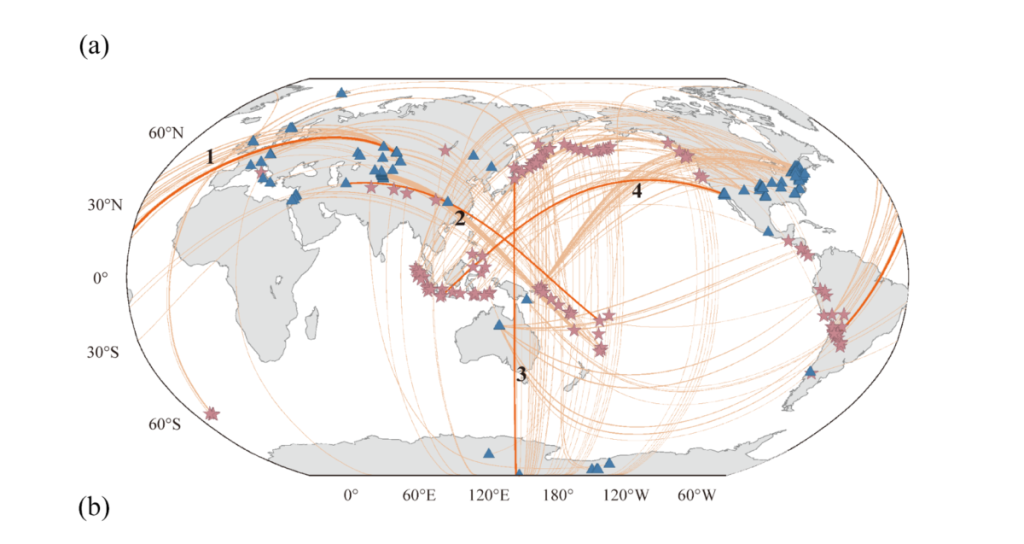
Nearly 35 years of seismic data. Over two million waveforms from roughly 5,000 magnitude-6-plus earthquakes. Manual analysis had picked through this archive for decades and kept missing something. A deep-learning system developed by researchers at the Chinese Academy of Sciences didn’t. It identified approximately 174,929 faint seismic signals — more than ten times every previous catalogue combined — and mapped six zones at Earth’s core-mantle boundary that nobody had documented before. The study appeared in the Journal of Geophysical Research: Solid Earth in late August 2026.
Training a Classifier on Earth’s Heartbeat
The AI method is as significant as the discovery itself.
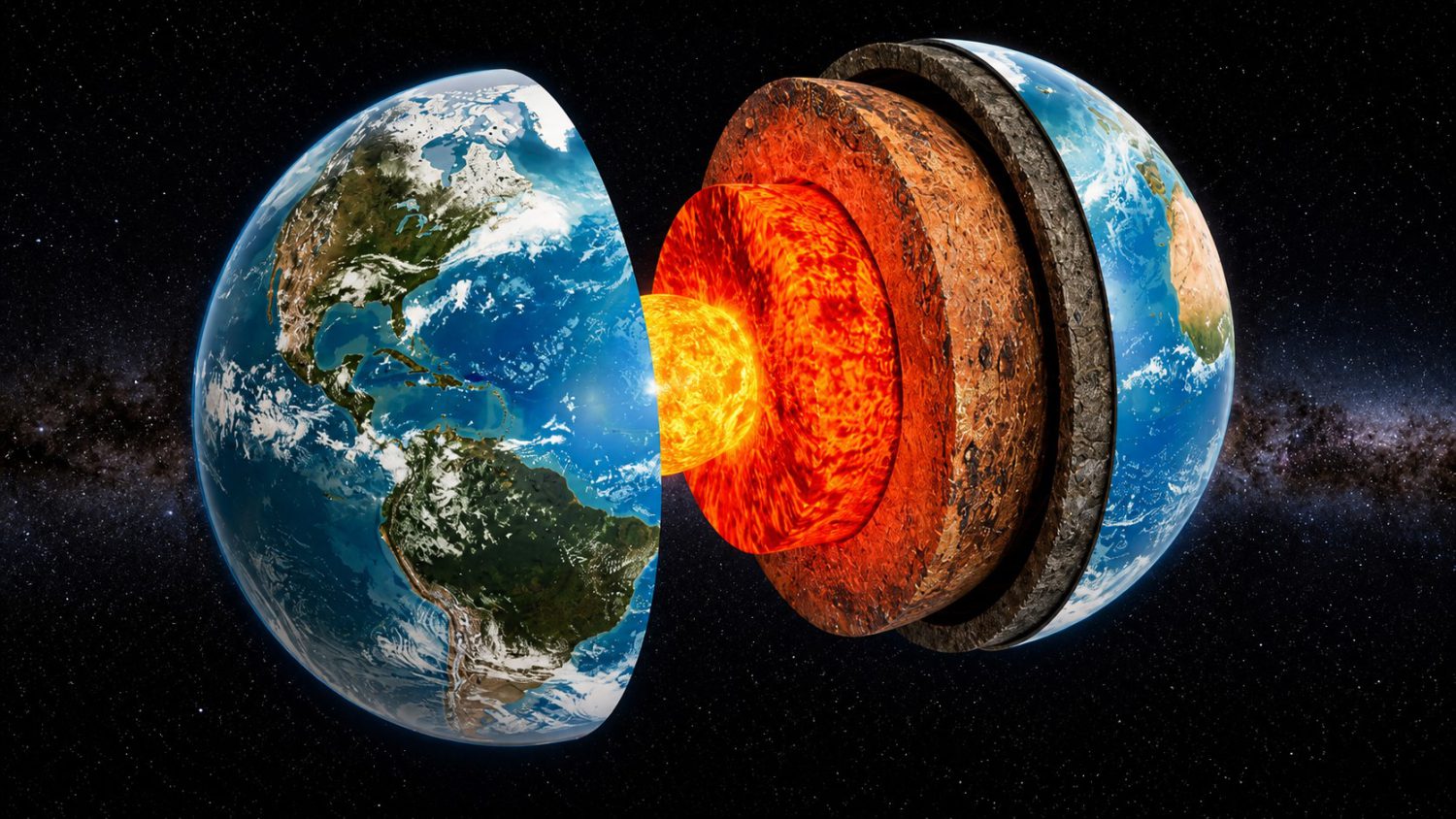
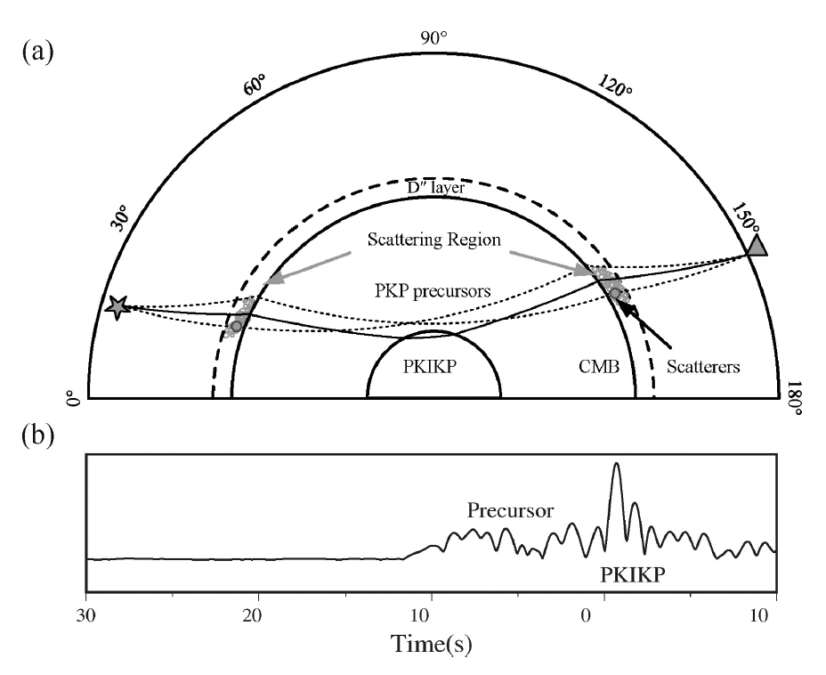
The signals in question are called PKP precursors: faint echoes that scatter off irregularities where solid mantle rock meets the liquid iron-nickel outer core, roughly 2,900 km down. They arrive just before the main seismic wave, weak enough to drown in noise. Finding them manually was slow, subjective, and geographically patchy.
The team trained a deep-learning classifier on human-labeled precursor examples, ran it across decades of archived recordings, then used iterative human-in-the-loop validation to sharpen accuracy — the same methodology behind content moderation systems, except the training data is earthquake noise instead of flagged posts. Think of it as training Shazam on every song ever recorded, then running it on silence, listening for the ghost of a melody.
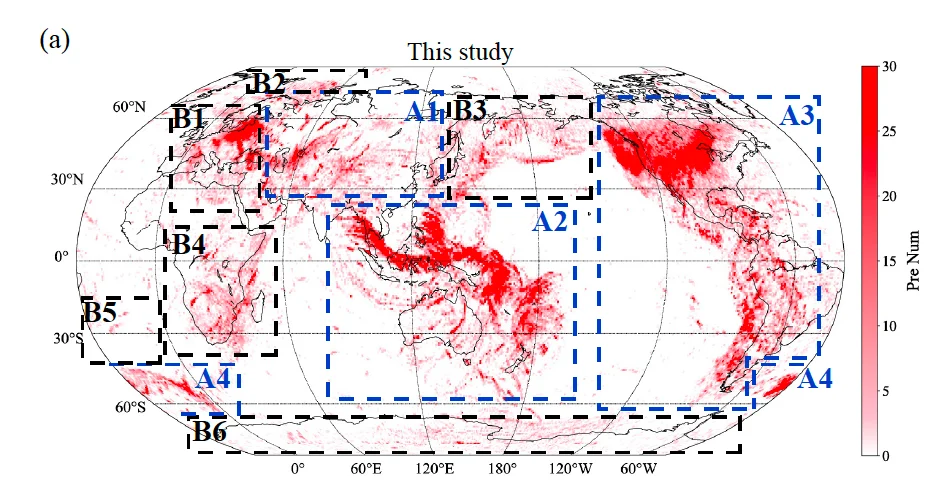
What the system found was six previously undocumented strong-scattering regions, labeled B1 through B6, beneath high-latitude Eurasia, Central Asia, the South Atlantic, and other undersampled zones. Earlier studies had seen isolated, seemingly random anomalies. The new dataset reveals something more striking: larger, belt-like zones extending across parts of the globe.
As the paper states: “We also discovered six areas that likely host significant heterogeneities that had never been documented before, providing clear priority targets for future exploration of Earth’s deep interior.”
What’s Actually Down There
Ancient subducted slabs, partial melting — and one very speculative cosmic collision.
The core-mantle boundary is already strange territory. Solid but malleable mantle rock meets liquid iron-nickel at roughly 5,500°C, with a temperature jump of around 1,000°C across the interface. Known features here — massive low-shear-velocity provinces beneath Africa and the Pacific — already fuel competing geodynamic models. Heat flow at this boundary drives Earth’s geodynamo, the mechanism behind the magnetic field protecting you from solar radiation.
The six new zones are regions where temperature and composition likely differ sharply from surrounding mantle material — what researchers cautiously describe as deep heterogeneities rather than fully mapped structures. Possible origins include:
- Subducted slab remnants dragged down over billions of years
- Localized partial melting
- Mineral phase transitions
Some coverage has floated a more dramatic hypothesis: that these zones could contain material from Theia, the Mars-sized object that collided with early Earth to form the Moon. That remains squarely in hypothesis territory. The seismic data confirms compositional difference. It says nothing about origin.
The Bigger Picture for AI in Science
The most consequential AI isn’t always the one in your pocket.
Domain-specific machine learning keeps delivering discoveries that consumer-facing AI products rarely touch. The PKP precursor catalogue will keep growing. Researchers expect it to sharpen fine-scale models of the lowermost mantle and eventually enable similar methods on other planets, once sufficient seismic data exists — a pattern already seen when airborne LiDAR reshaped archaeological understanding, or when earthquake rubble became a proving ground for sensor-driven robotics.
Six new targets. A method that scales. The planet beneath your feet is still giving up its secrets — and the tool that finally heard them wasn’t flashy. It was patient, precise, and pointed at the right archive.