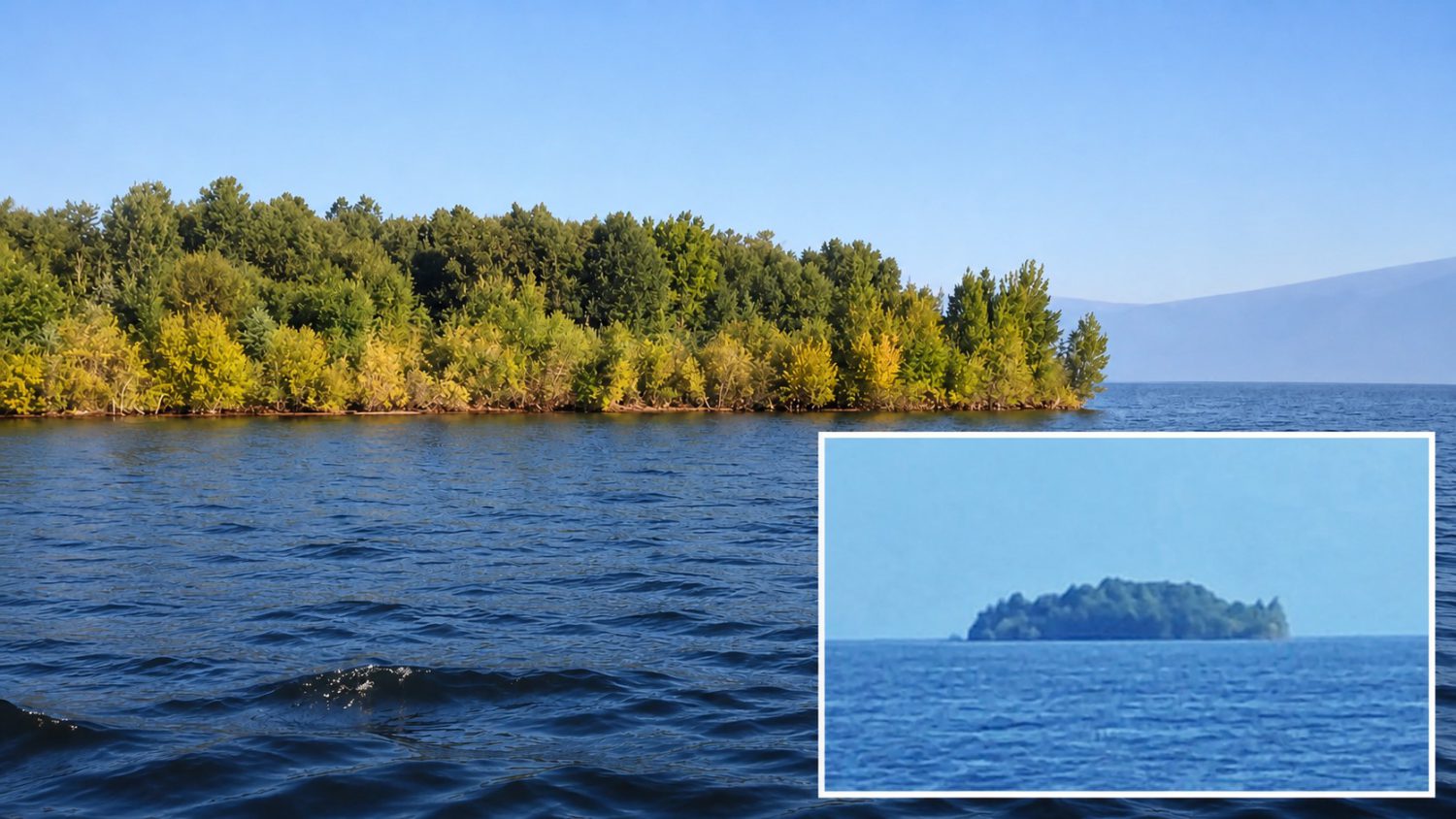
A forest broke off from the shore and started sailing. Not a metaphor. Not a rendering. An actual tree-covered landmass — 70 meters wide, 140 meters long, roughly 9,800 square meters — quietly detached from the edge of Williston Reservoir in northern British Columbia and began drifting across 680 square miles of open water. Then it vanished. Then someone spotted it again, miles away. This is what happens when a massive hydroelectric reservoir hits full capacity for the first time in 14 years, the shoreline releases decades of accumulated debris, and a floating bog goes completely rogue.
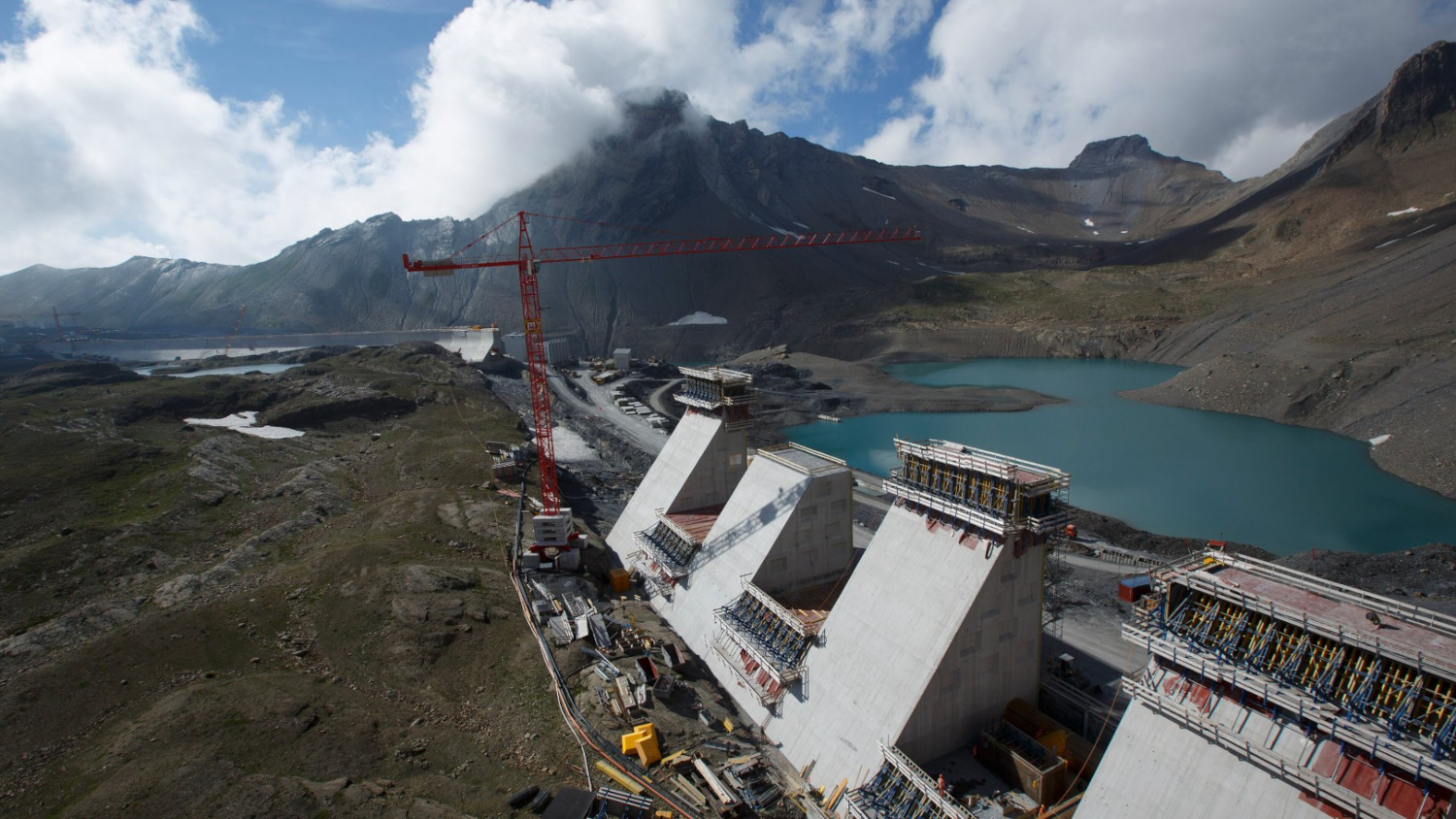
European Space Agency Sentinel-2 satellite imagery confirmed the island’s existence on July 21, 2026 — located roughly 62 miles west of the W.A.C. Bennett Dam. Before that confirmation landed, BC Hydro’s community relations coordinator Bob Gammer admitted he suspected the viral footage circulating online was AI-generated. That’s where things stand in 2026: even a utility managing one of the world’s largest reservoirs by volume has to verify whether a floating forest is real before going on record. Satellite data settled it.
What You Need to Know
- First confirmed July 21, 2026, via ESA Sentinel-2 imagery — roughly 62 miles west of the W.A.C. Bennett Dam
- Vanished from satellite view by August 5; resighted August 12 near Peace Reach, later near the Ospika River
- BC Hydro confirmed no impact on dam operations or power generation — navigation safety is the active concern
- Williston Reservoir reaching full capacity for the first time in approximately 14 years likely dislodged the mass
“A first for this reservoir,” Gammer told CBC News, calling the driftwood-origin explanation “reasonable.”
The science isn’t complicated, just slow. Driftwood and logging debris accumulate along sheltered shorelines over years, decomposing into a mulch platform dense enough for plants and trees to take root. The interlaced root system binds everything together. Water rises high enough, the raft breaks free. Wind catches the treetops like sails — and the whole thing moves. Floating bogs behave similarly in places like Lake Chippewa, Wisconsin. At this scale, inside a hydroelectric reservoir, BC Hydro says it’s a first for Williston.
A Hazard That Moves With the Wind
When a forested island drifts unpredictably across a vast reservoir, the navigation risk for boaters is very real.
If you’re boating or fishing on Williston Reservoir, that drifting forest isn’t a curiosity — it’s a collision risk. BC Hydro already warns the reservoir is “very large and potentially hazardous for the unwary,” maintains a safety radio service for hazard check-ins, and runs annual aerial debris reconnaissance surveys. Local Patrick Tutin of Dawson Creek, who’d seen plenty of root balls on the water before, called this one “something else,” “unreal,” according to Gizmodo. BC Hydro’s debris catchers have historically kept around 1,960 cubic yards of material out of the Ole Creek channel. One floating forest, apparently, is harder to catch.
As snowpack extremes and rainfall variability keep pushing reservoirs toward high-water thresholds, the phantom island of Williston is less a one-off weird story and more an early signal — the kind of thing that shows up first as a viral video, gets dismissed as AI, and then gets confirmed by a satellite orbiting 500 miles overhead.