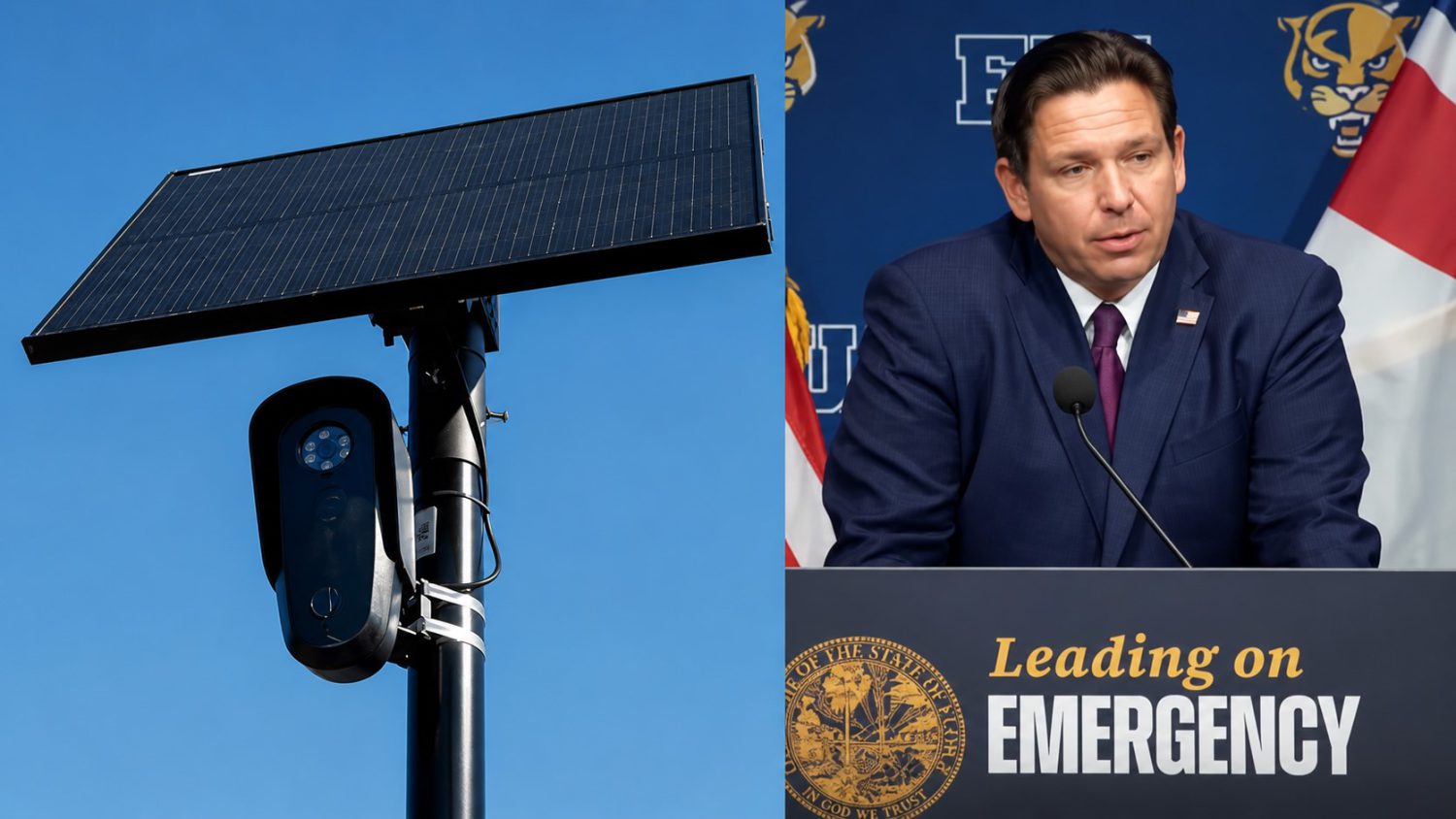
Every time you drove down Semoran Boulevard or Orange Blossom Trail, a camera logged your plate. No warrant required. No suspicion needed. That ended on August 31, 2026. FDOT’s Memo 26-01, signed by COO Will Watts, revoked every general-use permit for automated license plate readers on Florida’s State Highway System — interstates, U.S. highways, state roads — and gave agencies 30 days to pull their hardware. Anything still mounted after that deadline, FDOT removes itself. Roughly 700 Flock Safety cameras are coming down.
What the Memo Actually Does
A surveillance app just became Florida’s sharpest surveillance regulation tool.
FDOT grounded its authority in Florida Statute 316.0777, which governs traffic-enforcement device permits on state-controlled rights-of-way. The memo declares all previously issued ALPR permits “hereby revoked” — treating them as temporary regardless of their original terms — and explicitly halts all future approvals. The cameras go, and new ones don’t replace them.
Here’s the scope, because it matters:
- Cameras on interstates, U.S. highways, and Florida state roads: coming down within 30 days.
- County roads, city streets, and private property: outside FDOT’s jurisdiction and largely unaffected.
- Jacksonville Sheriff’s Office went further, voluntarily shutting down all LPR use across Duval County entirely.
- Okaloosa and Indian River counties are suspending programs pending further state guidance.
- Roughly 20 privately owned cameras on commercial property in Hernando County remain untouched.
“I Don’t Want Florida to Be a Surveillance State”
DeSantis is simultaneously one of America’s toughest-on-crime governors and, suddenly, its most prominent ALPR critic.
DeSantis made his sharpest argument with a single anecdote: “When I see a police officer using this to track like an ex-girlfriend, I’m like what the hell’s going on with this?” He called the proliferation of Flock cameras “out of control” and said Floridians are “right to be concerned,” while insisting he remains firmly pro-law-enforcement. Political analysts describe that stance as part of a growing bipartisan skepticism around tracking users nationally — less partisan flashpoint, more genuine reckoning with how fast this technology outpaced any oversight framework.
The ALPR debate isn’t uniquely Floridian. It just found its loudest political voice there first. San Jose’s Flock Problem offers a striking parallel — the same cameras, the same tensions, playing out on the other coast.
Law enforcement agencies aren’t wrong that these cameras recover stolen vehicles and accelerate investigations. That’s a real operational loss worth acknowledging. But DeSantis is signaling that legislation is coming — potentially including an “AI bill of rights” framework — and Florida’s highways are about to get considerably less watched. The rest of the country is taking careful notes.