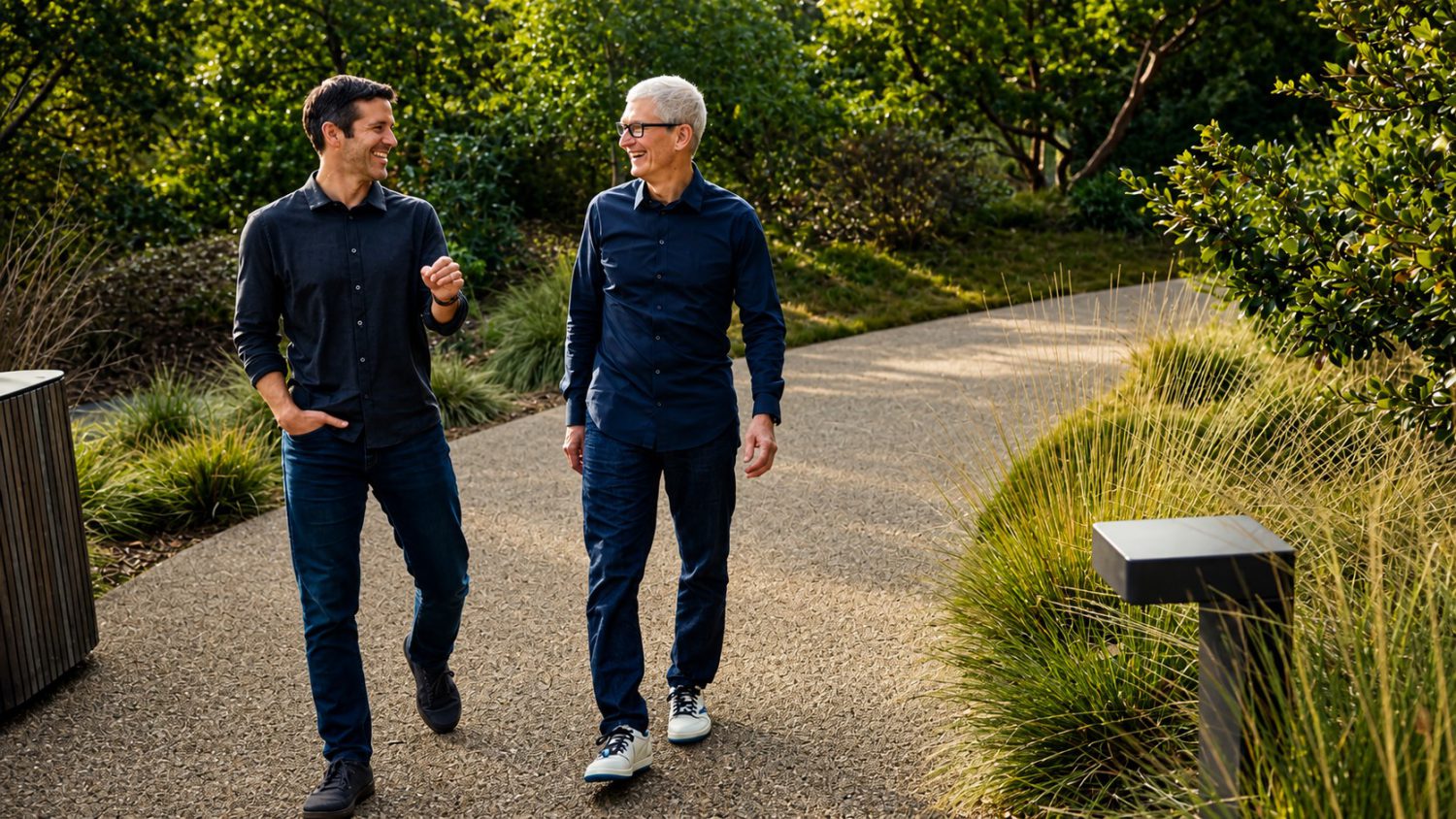
August 31, 2026. Tim Cook’s last day running the most valuable company on earth. His farewell memo didn’t promise a moonshot or tease a roadmap. It did something quieter and, arguably, more revealing: it handed a $4+ trillion company to a hardware engineer and called that the point. “I am not leaving Apple,” Cook wrote. “But I am stepping away from a role that I have loved deeply.” The machine keeps running. The driver just changed.
The Hardware Guy Takes the Wheel
John Ternus built the things you actually hold — now he runs the company that makes them.
John Ternus, Apple’s former hardware engineering chief, becomes CEO September 1. Bloomberg framed his appointment as a bet on “Jobs-era decisiveness” — which is either the highest compliment in Silicon Valley or a considerable amount of pressure for a Monday morning. His credentials aren’t hypothetical. Under his watch, Apple shipped the ultra-thin iPhone Air, the lower-cost MacBook Neo, and AirPods with hearing health features. These aren’t concept renders. They exist. You can buy them today.
Here’s what you need to know about the handoff:
- Cook named Ternus CEO effective September 1, 2026; Cook moves to executive chairman
- Cook’s memo: “Few people understand what it takes to build products that change the world the way John does”
- Cook invoked Steve Jobs’ “dent in the universe” ethos, framing culture as Apple’s defining asset
- Mac mini and Mac Studio were refreshed ahead of typical cycles, driven by AI demand; Apple claims up to 4x faster AI chips performance with M6 and M5-series chips
- Cook will continue managing U.S. government and China relationships as executive chairman
What the Memo Left Out
Cook said everything about culture and almost nothing about the actual fight ahead.
Read Cook’s farewell memo didn’t promise a strategy memo and you’ll leave hungry. AI gaps, China exposure, regulatory pressure, services growth — none of it appears. That silence isn’t accidental. Analysts cited by Reuters say Ternus’s appointment “signals a renewed emphasis on its core strength in devices and focus on fusing AI capabilities into existing products.” That’s the bet: hardware as the AI delivery system, not cloud platforms or developer ecosystems. It’s a coherent argument. Whether it holds against competitors sprinting on both fronts is the question Ternus actually has to answer.
Culture Triumphs Over Everything
Cook’s real legacy isn’t a single product — it’s the scaffolding Ternus now inhabits.
Cook took over from Steve Jobs in 2011 and turned Apple into a supply-chain colossus worth over $4 trillion. That’s not an accident of taste — it’s operational genius at civilizational scale. Now Ternus inherits that infrastructure and has to make it feel hungry again. Cook’s most pointed line wasn’t even about Ternus: “This place is proof that culture triumphs over everything.” With Cook staying on as executive chairman — managing Washington and Beijing while Ternus runs products — radical reinvention seems unlikely. This is succession, not revolution.
Cook built the machine. Ternus has to make it dream. In a world where AI is consuming software from the inside out, hardware might be the last place left to actually stand for something.