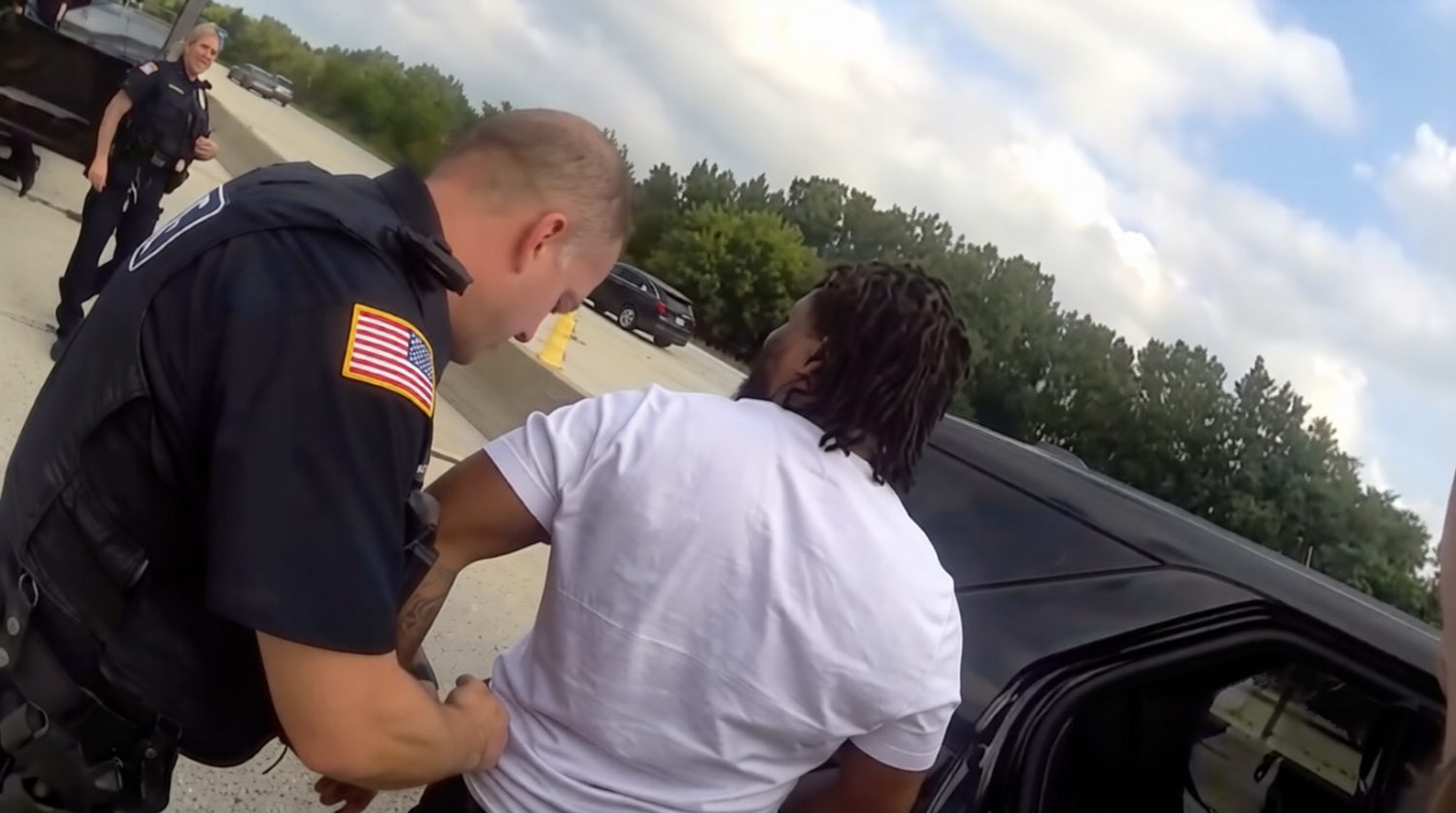
She had the paperwork in the truck. The vehicle had been seized, processed as evidence, and returned to her in July. On Aug. 6, 2026, driving that same truck on Interstate 94 in Waukesha County, Wisconsin, she found herself ordered out at gunpoint by Brookfield police officers responding to an active homicide alert. Nobody at Milwaukee PD had deleted a database entry. That one unfiled update was all it took.
How a Stale Database Entry Became an Armed Encounter
A routine drive became a guns-drawn felony stop because one investigative flag was never cleared.
Brookfield PD conducted a high-risk stop on I-94 based on an active Flock Safety ALPR alert tied to a Milwaukee homicide investigation. The vehicle had already been seized, processed as evidence, and returned to its owner weeks earlier in July 2026. MPD acknowledged staff “inadvertently did not remove” the alert — officially classified as human error, not a Flock system failure. Body-cam footage shows at least one occupant handcuffed, with an officer instructing another to “go ahead and put handcuffs on her.” Brookfield PD declined to identify which specific Flock cameras triggered the alert, citing “safety and security concerns.”
Standard plate readers scan and log. Flock’s networked system does something different — it broadcasts an armed-suspect warning to participating agencies across the region. When MPD flagged this vehicle as connected to a homicide with an armed suspect, every Flock camera in the area became a tripwire. Milwaukee Police later confirmed: “MPD staff inadvertently did not remove a vehicle alert from the system.” They were emphatic that “this was not a Flock issue.”
The system worked exactly as designed. That’s precisely the problem.
Everyone Was “Right.” Nobody Was Accountable.
Both departments defended their actions — and the body-cam footage told a different story.
Brookfield Chief Christopher Garcia defended his officers fully — they stopped the exact vehicle the alert flagged. Technically, he’s correct. But on body-cam, one officer calls the situation “unbelievable” and adds “it’s constant.” That off-script admission suggests stale data isn’t a one-time glitch — it’s a recurring friction point that frontline officers have learned to live with, even as the people in the stopped vehicles haven’t.
When the driver asks why her truck is still listed as wanted, an officer replies: “I don’t know. It’s Milwaukee, man.”
That line does more reporting than any press release.
Think of it as the policing equivalent of a fraud alert freezing your card mid-checkout because a bank algorithm never updated — except the consequences here are guns, handcuffs, and lasting trauma. The driver has since obtained an attorney. No independent legal expert or civil-liberties organization has yet commented publicly on the specific stop, though debates around wrongful ALPR targeting and data-accuracy standards are ongoing, much like concerns raised by a surveillance app built to target political dissidents.
Automated systems scale human decisions, including the failures. Until ALPR alert hygiene becomes mandatory protocol — with hard expiration dates on high-risk flags and forced confirmation steps before armed-suspect warnings propagate across agencies — the next “unbelievable” stop is already in the queue. The same dynamic that allows tracking users every few minutes without their knowledge illustrates how automated systems can entrench errors at scale.