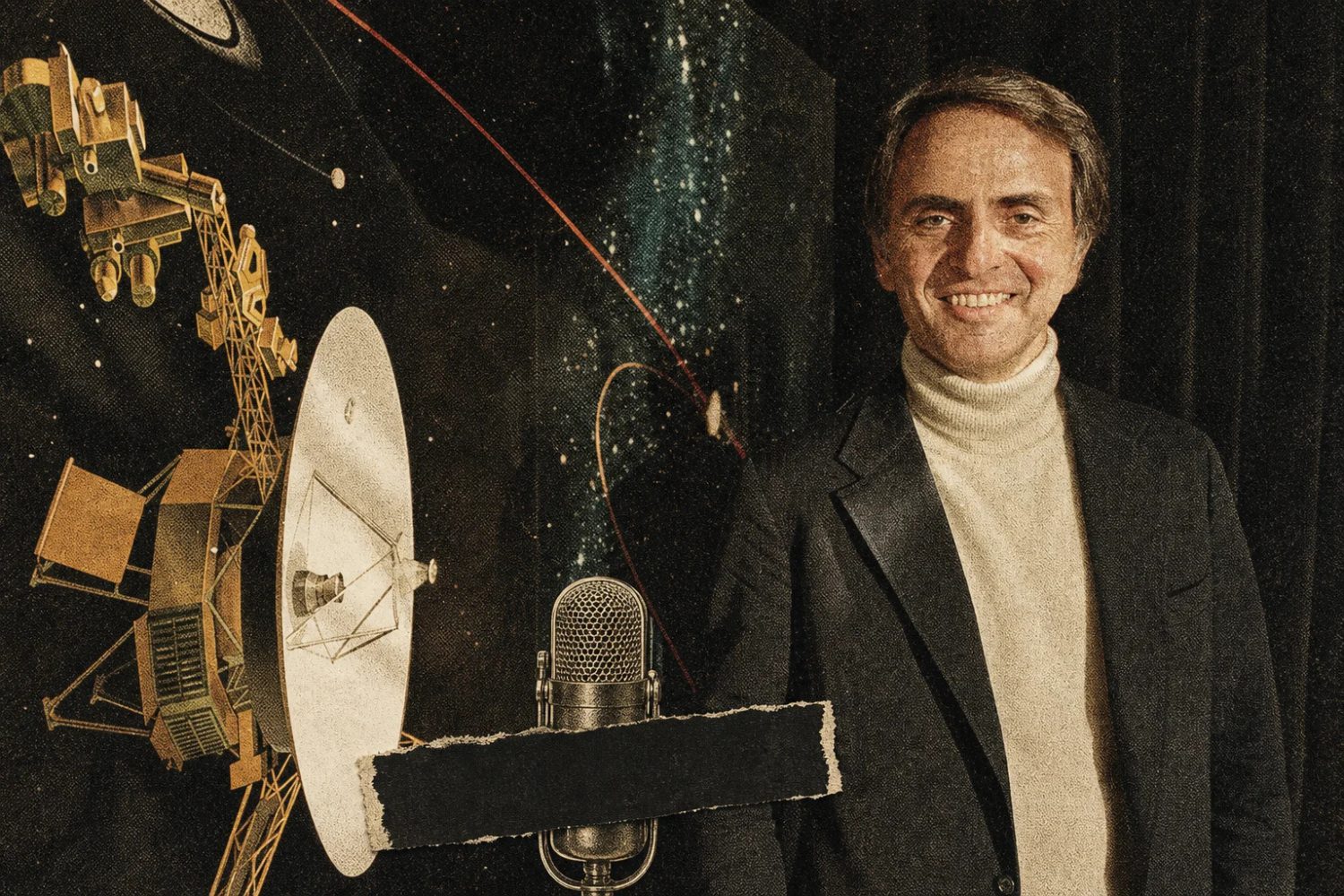
A company that banked $900 million in fresh funding apparently couldn’t clear eight seconds of audio. On August 25, 2026, Druyan-Sagan Associates — the company managing Carl Sagan’s intellectual property, run by his widow Ann Druyan — filed suit against generative video startup Luma AI in the Central District of California. The complaint alleges Luma used Sagan’s voice to sell its Ray 3.14 AI video platform without permission and, according to the estate, without stopping when told to. Cases like this echo broader industry controversies, including the leak that exposed thousands of Hollywood actors and directors through unauthorized data use.
Eight Seconds. 2.7 Million Views. One Very Angry Estate.
The complaint details a multi-platform campaign built around one of science communication’s most iconic lines — and a cease-and-desist that Luma allegedly ignored.
The complaint (case no. 2:26-cv-09474) alleges the following:
- Luma used Sagan saying “If you wish to make an apple pie from scratch, you must first invent the universe” — drawn directly from Cosmos: A Personal Voyage — as the centerpiece of a Ray 3.14 AI video platform ad
- Claims include copyright infringement, false endorsement, and common-law unfair competition
- Luma ran the campaign across Facebook, X, and Instagram; the Facebook post alone allegedly cleared 2.7 million views by the filing date
- After a cease-and-desist in early February 2026, Luma reportedly indicated it would remove the post — and, per the complaint, did not
“The hallmarks of willful and bad-faith misconduct” — Druyan-Sagan Associates, via counsel, describing Luma’s conduct in the complaint
That language carries legal weight. Willful infringement opens the door to enhanced damages beyond standard compensation. The estate is seeking an injunction to kill the ad, Luma’s profits tied to the infringement, enhanced damages, and attorney fees.
This is not a grievance from an estate that stumbled into litigation. Druyan-Sagan Associates has licensed Sagan’s voice for an Apple iPhone campaign in 2017, a Fiat Chrysler campaign in 2019, and a Netflix project in 2025. They know exactly what that voice is worth — and they charge accordingly.
“De Minimis” Is Not a Defense When You Have $900 Million
Luma’s apparent legal position runs headlong into both the scale of its own funding and the cultural weight of what it borrowed.
Luma’s reported position is that the clip was “de minimis” — legally too trivial to constitute infringement — and unlikely to confuse consumers. That argument lands differently when your November 2025 Series C, led by HUMAIN (a Saudi AI company backed by the Public Investment Fund) and joined by Andreessen Horowitz and AMD Ventures, valued your company at roughly $4 billion.
The 2024 Scarlett Johansson–OpenAI “Sky” voice dispute showed how recognizable voices — even when not directly sampled — can trigger legal pressure and significant public backlash. This case goes further. It involves an actual archival clip, used in a paid ad, promoting a product with no connection to cosmology whatsoever. Luma essentially borrowed Sagan’s sense of wonder to sell its own. That branding decision will now be litigated.
If the estate wins or forces a meaningful settlement, clearing archival clips becomes table stakes for every AI startup planning its next promo campaign. In a universe roughly 13.8 billion years old, IP clearance takes about a week.