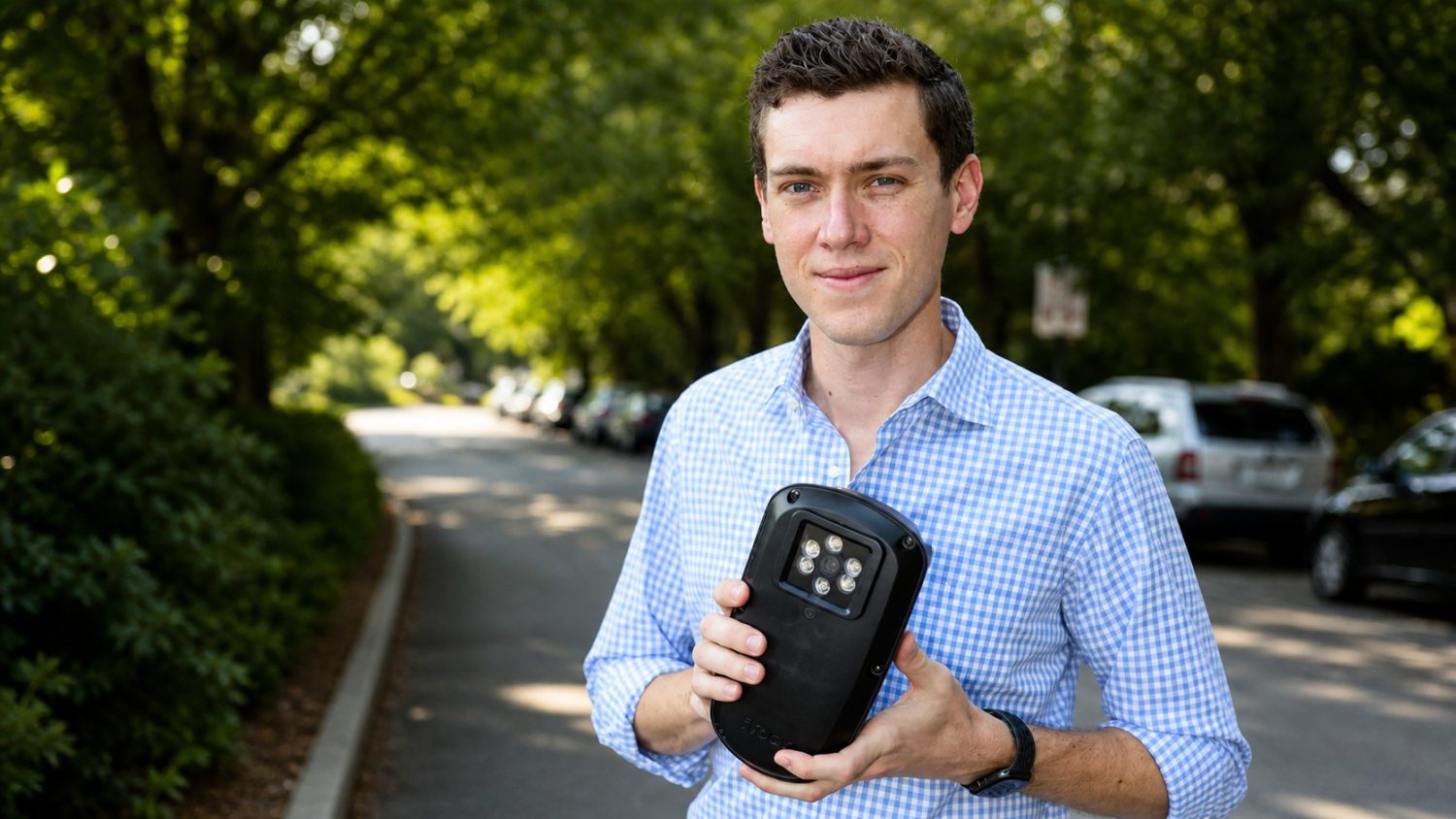
Forty-six law-enforcement officers accused of stalking women is not a PR problem. It’s a structural one. A Washington Post investigation documented those cases — all involving Flock Safety‘s license-plate cameras — out of 50 total officers accused of misusing automated license-plate recognition (ALPR) systems nationally. Flock’s network now spans 80,000 cameras across 49 states, feeding data to thousands of agencies. CEO Garrett Langley’s response? Go on Fox News and call for “compromise.”
What Flock Says It Fixed
The reforms sound reasonable until you look at what the fine print actually permits.
- Default data retention cut from 30 days to seven days
- Officers must enter a case code before querying the system
- “Evidence Mode” exists — and overrides both defaults, allowing retention to extend well beyond the seven-day window
- Langley claims the system has assisted over one million investigations and located 10,000 missing people
- Langley apologized to a stalking victim in a CBS News interview — “I apologize. It kills me that she went through that” — while separately stating that misuse is inevitable because “we’re not going to change humans, and humans make bad decisions”
“I don’t think that Flock created police abuse. I think we’re the first company to ever shine a light on it and build the tools to find it.” — Garrett Langley, CBS News interview, per TechCrunch
The seven-day default sounds like progress. Evidence Mode is the crack in that promise — think of it like a streaming free trial where canceling requires effort nobody actually takes. Your plate gets scanned leaving your neighborhood, your doctor’s office, your ex’s street. The default says that data disappears in a week. Evidence Mode says: not necessarily. The ACLU calls seven days “a step in the right direction” while warning it could be “just another Flock PR move,” depending on how Evidence Mode operates in practice. The ACLU’s preferred ceiling: 48 hours. Meanwhile, parallel cases of secretly tracking users across entirely different platforms reinforce that surveillance overreach is systemic, not isolated.
Bipartisan Backlash, Limited Solutions
When Bernie Sanders and House Republicans agree on something, that alignment is worth paying attention to.
Senator Bernie Sanders posted “STOP AI MASS SURVEILLANCE. STOP FLOCK.” House Republicans introduced H.R. 9800, which would bar federal agencies from purchasing ALPR systems — explicitly naming Flock Safety cameras. The PRIVACY Act (H.R. 9716) would require warrants before federal agencies query locally collected plate data. Neither bill bans the technology outright. State and local deployment continues, largely untouched.
“Today, it is too often that in Flock and in other technologies, there’s no regulation. There’s no accountability, and we think that’s wrong.” — Garrett Langley, per TechCrunch
Langley’s regulation push is revealing. He wants states to criminalize misuse by individual officers — accountability that lands downstream of the data collection, not upstream of it. Civil liberties advocates argue that punishing bad actors after the fact doesn’t dismantle the infrastructure enabling them. The broader concern extends to how a surveillance app can be weaponized against targeted populations with little oversight. If Evidence Mode stays permissive and federal bills stall, the “compromise” framing will collapse under its own weight — and the backlash may shift from demanding reform to demanding bans outright.