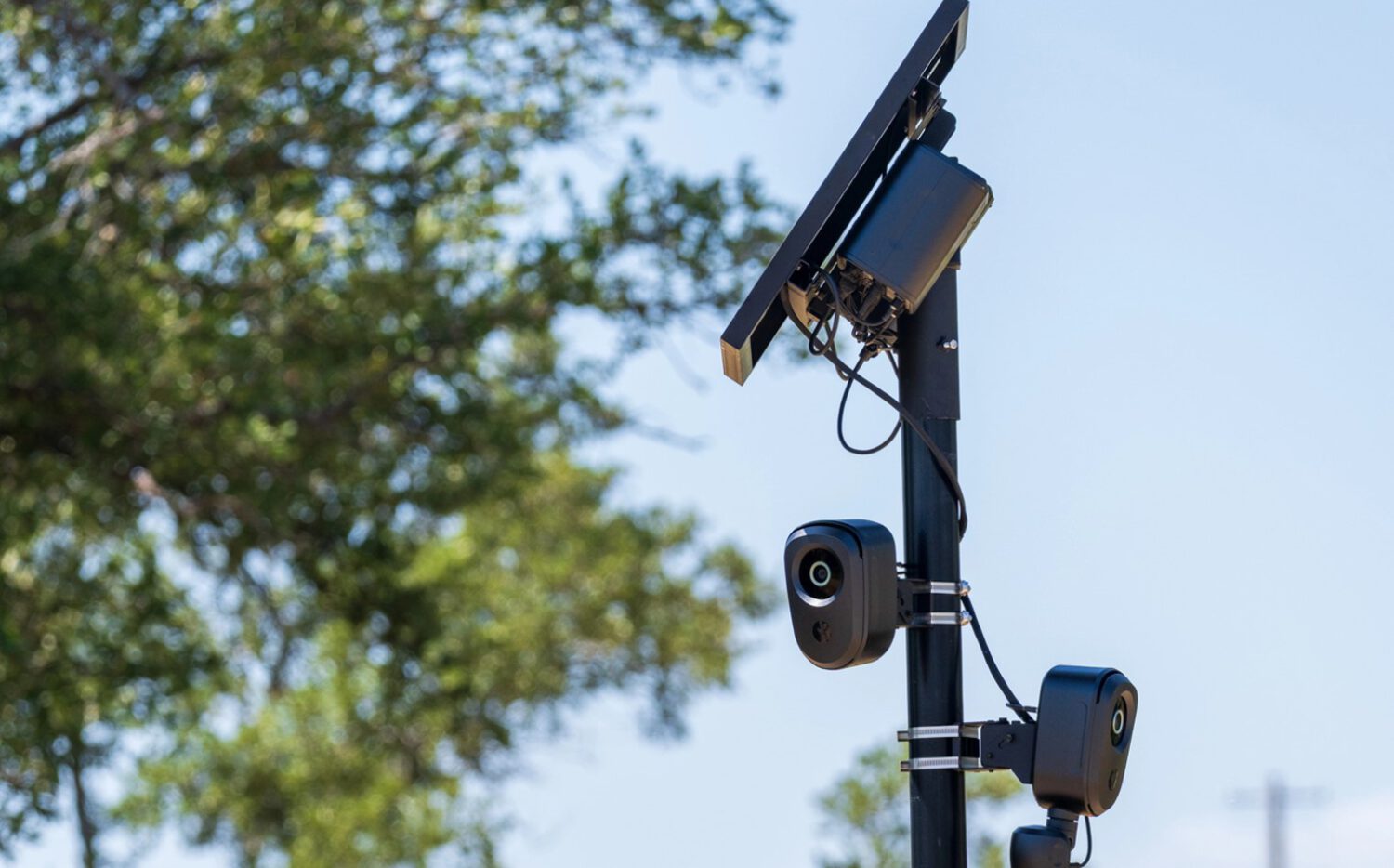
North Richland Hills, a Fort Worth suburb, quoted the Texas Privacy Coalition $2.3 million to hand over records about its Flock Safety license-plate cameras. The math: $15 an hour, roughly 14 years of labor, one terabyte of communications about errors, misuse and system effectiveness. This kind of obstructive pricing echoes the tactics documented in cases involving a covert surveillance app built to monitor civilians without consent.
That is not a records estimate. That is a closed door with a price tag on it.
A Number Designed to Say No
The fee gap between Texas agencies reveals that opacity, not logistics, is often the real policy.
Phil Mynona, who submitted the request on behalf of the Texas Privacy Coalition, called the figure “ludicrous” and described it as a way of stifling his search for public information, according to the Texas Tribune. His organization has sent similar requests to nearly 200 law-enforcement agencies across Texas. The responses look nothing alike.
Some departments supplied hundreds of thousands of pages at no cost. Others quoted thousands of dollars, and a Houston-area agency reportedly estimated $121,000, according to KPRC.
What the Records Would Actually Show
Audit logs are the paper trail that separates a public-safety tool from an unchecked surveillance system.
Flock audit logs can reveal where cameras sit, how often officers search the system, what justifications they provide and whether anyone is using a public-safety tool to track people they have no business tracking. That concern is not hypothetical. Patterns of government overreach have appeared elsewhere, including a secretly tracking users scandal involving a White House app that logged location data every four minutes.
Former Texas officer Zachary Anthony Klein reportedly pleaded guilty to 100 felony counts of misuse of official information. Records and a subsequent investigation are credited with exposing his conduct, though the specific sourcing for that attribution should be independently confirmed before publication.
Gov. Greg Abbott halted Flock-related state funding and stopped issuing permits amid broader scrutiny of the program, per the Texas Tribune. Pricing records out of reach does not make the underlying misuse disappear.
A Federal Judge Calls It What It Is
One federal court has found that searching historical plate-reader data can trigger Fourth Amendment protections.
“The Court finds that because the ALPR systems Alaniz used to search Kyle’s historical location information intruded on her reasonable expectation of privacy in the whole of her physical movements, it was a search under the Fourth Amendment.” U.S. District Judge Sara Hill, writing in a recent Oklahoma case reported by 404 Media, with the quotation drawn from the court opinion in United States v. Kyle.
The officer searched a woman’s plate because it was registered in California. He then pulled more than 50 records showing her movements across the country over roughly a month. Judge Hill described Flock’s network as resembling “indiscriminate mass surveillance” and ordered the evidence excluded.
Flock has argued the ruling is likely an outlier, and courts have generally permitted reasonable police access to ALPR data. The Oklahoma decision is one nonbinding federal district-court ruling involving a specific historical query, and it may be appealed. To at least one federal court, however, pulling historical location data from a networked plate-reader system looks like a warrantless search.
A Transparency Portal Nobody Uses
Flock’s optional disclosure tools are available to every agency and meaningfully used by almost none.
Flock offers optional transparency portals where agencies can publish camera counts, scan volumes, access policies and usage data. Spokesperson Andrew Smith described them as a public-facing way for agencies to explain their programs.
Hundreds of Texas agencies use Flock cameras. Only 59 use transparency portals, and only 16 of those make data publicly available, according to the Texas Tribune. San Jose has faced similar resistance, a dynamic explored in detail in the coverage of its Flock Problem.
Optional tools adopted by a fraction of agencies are not transparency; they are a starting point that most agencies have chosen to skip. What would actually move the needle: mandatory public disclosure, standardized audit reporting, defined retention limits and, where courts require it, warrant standards before officers search historical movement data.
If a participating camera captures your vehicle, the resulting plate and location record may enter the network. The question is whether the public gets any meaningful say in who accesses that data, and the current framework provides very little.